By Richard Slater, photographer and author of People In London
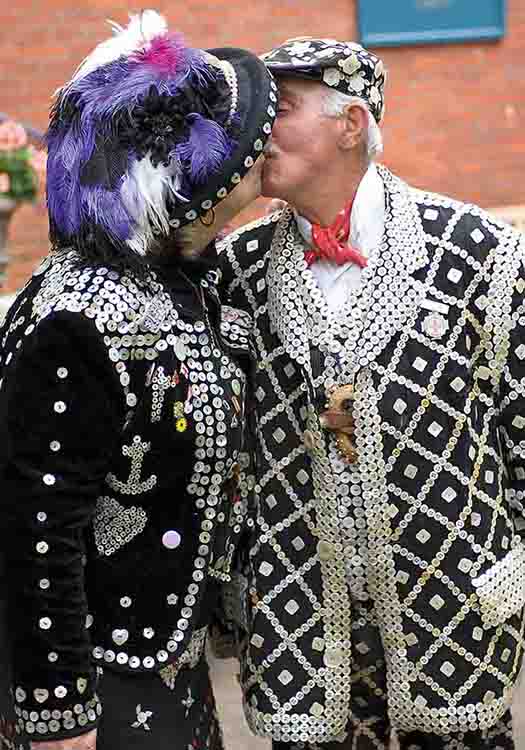
The Pearly tradition started among the costermongers – the original barrow-boys – of London’s fruit and vegetable markets. An orphan called Henry Croft who worked as a sweeper in the markets adopted a fashion among the costermongers and took it to new extremes. The flash boys sewed smoke pearl buttons down the seams of their bell-bottom trousers and on their jackets, waistcoats and caps. Henry used the same smoke pearl buttons but he didn’t limit himself to the seams. He smothered his clothes in them.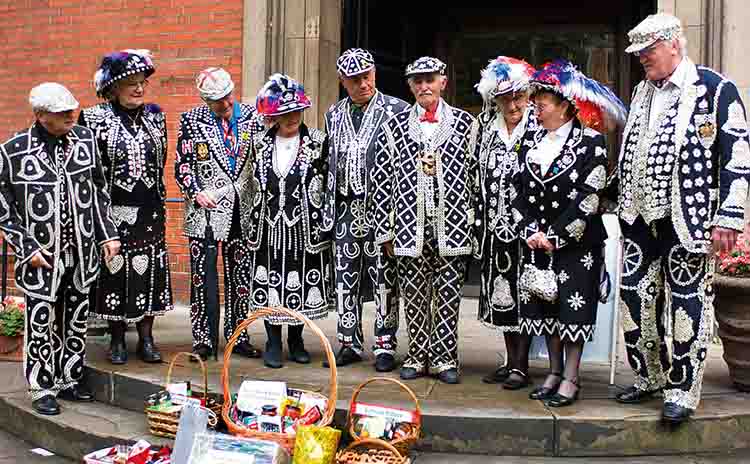
But not because he wanted to show off. Henry had also noticed a very attractive characteristic among the costermongers. They looked after anyone in their community who was ill or fell on hard times. And Henry wanted to raise money to do good too. He thought that people would notice him if he wore a suit that was covered in smoke pearl buttons and that they’d be more likely to open their wallets and purses. And he was right. Soon he became well known for his charity work.
Henry’s friends among the costermongers decided to follow his example and raise money for charity in the same way. Before long, there were twenty-eight Pearly families. It was all very territorial. Each London borough had a family and there was one for Westminster and one for the City too.
The tradition of the smoke pearl buttons lives on today. Twenty-first century Pearly Kings and Queens may not be pushing barrows round Covent Garden but they do still spend a huge amount of time raising money for good causes. You see them doing this all over London.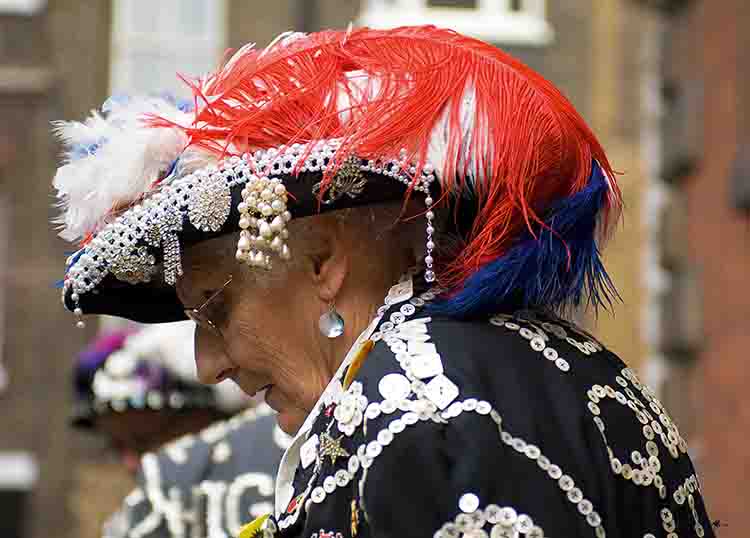
But if you want to see a large group of Pearlies together, go to St. Paul’s Church in Covent Garden on the second Sunday of October (12th October this year). They gather from all over London for the Harvest Festival service in the church, which is also known as the Actors’ Church because of its long association with the theatre community.
Pearly Kings and Queens have a long and close association with the church and with Covent Garden too. The portico at the rear of the church features in the first act of Shaw’s Pygmalion (and therefore also of My Fair Lady). Anyone who’s seen Pygmalion or My Fair Lady will know that Pearly Kings and Queens appear in the market scenes.