Lonely Planet author Joe Bindloss explores London’s myriad attractions by following that most iconic of rivers – the Thames.
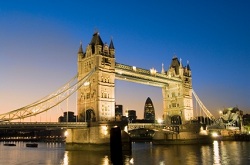 For centuries, London has called out like a beacon to entrepreneurs, dreamers and chancers from across the globe. In the 19th century, the docks along the River Thames formed a living map of the trade routes of the British Empire. The dimly-lit alleyways of Limehouse were home to London’s first Chinatown, while the docks of the East India company marked the first step on British soil for generations of Indian merchant sailors.
It seems appropriate in Olympic year, after an opening ceremony paying homage to the remarkable diversity of the capital, to look at London through the prism of the River Thames – the mighty trade conduit that made all this possible. Even the MV Empire Windrush, which made a papier-mâché cameo in the Olympic opening spectacle, made its first landfall after Jamaica on the banks of the River Thames.
A handy reference point
Like most Londoners, my mental map of the city places everything in relation to the river – all points are ‘north’ or ‘south’ of this central fulcrum – and the Thames is the one mandatory stop on the improvised city tour that I lay on for house guests from overseas, or visitors from out of town, or just about anyone willing to tag along.
Opinions are divided on the best vantage point from which to view the Thames. Many rate the stately views from the Royal Naval College at Greenwich; others insist on the epic view towards the Houses of Parliament from the London Eye. But for my money, the prime vantage point is halfway across the Millennium Bridge, with the dark brick chimney of the Tate Modern behind and the radiant dome of St Paul’s Cathedral ahead.
Roam the Thames Path
But why not work up to the perfect Thames view by picking up the Thames Path at Tower Bridge, with a detour into the narrow alleyways of Shad Thames, the last piece of London’s historic docklands to retain a trace of its Victorian atmosphere? The docks themselves moved downriver to Tilbury in the 20th century, but the walk to London’s Design Museum beneath the overlapping gangways of Shad Thames still conjures up images of smoke-filled alehouses full of seafarers, iniquity and adventure.
Returning west, duck into the Tower Bridge Exhibition to see the Victorian mechanism that once raised the bridge for tall ships, and peek over the walls of the Tower of London (film buffs might recognise the view from the final fight in Guy Ritchie’s lock-and-stock version of Sherlock Holmes).
Nearby, the Thames is immortalised in human form, posed on a giant anchor with trident in hand, on the frontage of 10 Trinity Square. The similarity between Old Father Thames and Neptune was deliberate, sending out a message of Britain as master of the seas. This striking building was used for the inaugural meeting of the United Nations in 1946 and the park in front commemorates the 36,000 merchant sailors who lost their lives in WWI and WWII.
Returning to the south bank, continue past the Norman Foster-designed motorcycle helmet that houses London’s City Hall and admire the fearsome profile of the warship HMS Belfast, camouflaged in shades of grey that blend remarkably with the architecture of the City of London.
Towards London Bridge
 The walk west towards London Bridge was a lot more dramatic before 1967, when John Rennie’s Haytor-granite bridge was moved stone and mortar to Arizona by the American millionaire Robert P McCulloch. In fact, it looked even more dramatic before 1824, when the medieval London Bridge was demolished to accommodate larger merchant ships. For a glimpse of the old old London Bridge, complete with chapels, shops and fortifications, check out the model in the church of St Magnus the Martyr on the north bank.
From the modern incarnation of London Bridge, there’s a grandstand view of Europe’s tallest building, Renzo Piano’s 309.6m-high Shard of Glass, which looms above the city like… well, like a shard of glass. The topping-out ceremony was held with appropriate fanfare on 30th March 2012; a few days later, a team of BASE jumpers revealed they had been leaping off the structure for years.
The next web of alleyways winds westwards past the Clink, London’s most notorious medieval prison (in use for 600 years, though repeatedly burned down by rioters), and a replica of Sir Francis Drake’s Golden Hinde, which circumnavigated the globe before finding a second career as a tourist attraction and filming location for chintzy seafaring movies. Almost across the road is the unglazed stone frame of the rose window from the 14th century Palace of Winchester.
Duck under a few more bridges and you’ll find yourself in front of Shakespeare’s Globe, which still does a commendable job of recreating the turnip-throwing glory of Elizabethan theatre, despite being conceived by Hollywood actor Sam Wanamaker (the ruins of Shakespeare’s original Globe are buried under a car park a few hundred metres downstream).
Stroll west to the Millennium Bridge
A few more steps west and bingo, there’s the Millennium Bridge, with those dreamlike views towards the gleaming dome of St Paul’s Cathedral, which was once stained almost black with pollution from the power station that now houses the Tate Modern. You could spend half a day in either, or continue west past the arty boutiques of Oxo Tower Wharf, built using the fortunes derived from Britain’s best-loved stock cube (which was actually invented by a German baron and manufactured in Argentina).
Continuing west along the river, an army of street performers heralds your arrival at the South Bank Centre, established as a ‘tonic for the nation’ during the 1951 Festival of Britain. Now London’s premier centre for the arts, these concrete precincts include such prestigious venues as the National Theatre, the British Film Institute and the Hayward Gallery (a tip from a local – the shows inside are much more interesting than all the keeping-still-while-sprayed-gold going on outside).
During the summer, events for families spill out onto the river bank, or you can observe a free show every day of the year, courtesy of the skateboarders flipping ollies in the undercroft of the Queen Elizabeth Hall. Pick up a second-hand novel in the book market beneath Waterloo Bridge, or leave a slice of ham as homage at the statue of Britain’s favourite thespian luvvie, Lawrence Olivier.
Waterloo sunset
Like the closing ceremony of the Olympics, my tour of the Thames finishes with a nod to Ray Davies and The Kinks at Waterloo. At sunset, soar high above the crowds of commuters on the London Eye to see the usually-murky waters of the Thames shimmering in the evening light – a good metaphor for London really: sometimes tarnished, but scratch the surface and you’ll find gold.
- For more on the sights and spectacles strung out along the River Thames, pick up Lonely Planet’s
- > London City Guide or
- > London Pocket Guide
- You may also be interested in the following London travel guides:
- > Not For Parents: London
- > London Discover Guide


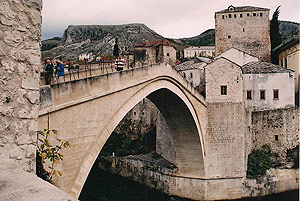 Mostar, synonymous with that beautiful bridge, the Stari Most, was high on my list of places I wanted to visit – but at the same time I wasn’t looking forward to it. The Balkan wars may have come to an end in the mid 90s, but Mostar in 2010 was still very much under repair. Ruins of any period, modern to ancient, fascinate me but the ruins of a comparatively recent war have not yet had the tragedy weathered away.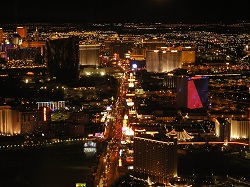
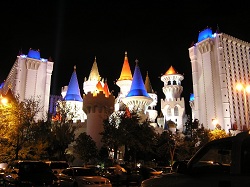 The best way of getting good first impression is a leisurely drive along The Strip. Here you will see all the major casinos, bars and shows. You’ll also see all the flashy cars you can imagine: sports cars, muscle cars, stretch limousines and big pick-up trucks.
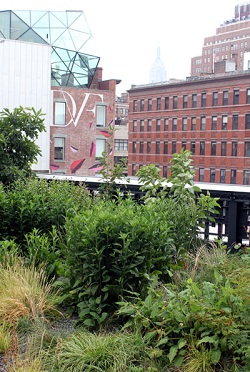 If ever there was a city that needed little introduction, it’s New York. The Big Apple’s attractions have been immortalised in literature, film and song – but while sights like the Empire State Building and Brooklyn Bridge remain timeless, NYC is constantly evolving into something more innovative and exciting.
 Everyone I know who has been to