A River Runs Through It (London, That Is)

Lonely Planet author Joe Bindloss explores London’s myriad attractions by following that most iconic of rivers – the Thames.
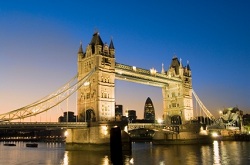
Tower BridgeFor centuries, London has called out like a beacon to entrepreneurs, dreamers and chancers from across the globe. In the 19th century, the docks along the River Thames formed a living map of the trade routes of the British Empire. The dimly-lit alleyways of Limehouse were home to London’s first Chinatown, while the docks of the East India company marked the first step on British soil for generations of Indian merchant sailors.

It seems appropriate in Olympic year, after an opening ceremony paying homage to the remarkable diversity of the capital, to look at London through the prism of the River Thames – the mighty trade conduit that made all this possible. Even the MV Empire Windrush, which made a papier-mâché cameo in the Olympic opening spectacle, made its first landfall after Jamaica on the banks of the River Thames.

A handy reference point

Like most Londoners, my mental map of the city places everything in relation to the river – all points are ‘north’ or ‘south’ of this central fulcrum – and the Thames is the one mandatory stop on the improvised city tour that I lay on for house guests from overseas, or visitors from out of town, or just about anyone willing to tag along.

Opinions are divided on the best vantage point from which to view the Thames. Many rate the stately views from the Royal Naval College at Greenwich; others insist on the epic view towards the Houses of Parliament from the London Eye. But for my money, the prime vantage point is halfway across the Millennium Bridge, with the dark brick chimney of the Tate Modern behind and the radiant dome of St Paul’s Cathedral ahead.

Roam the Thames Path

But why not work up to the perfect Thames view by picking up the Thames Path at Tower Bridge, with a detour into the narrow alleyways of Shad Thames, the last piece of London’s historic docklands to retain a trace of its Victorian atmosphere? The docks themselves moved downriver to Tilbury in the 20th century, but the walk to London’s Design Museum beneath the overlapping gangways of Shad Thames still conjures up images of smoke-filled alehouses full of seafarers, iniquity and adventure.

Returning west, duck into the Tower Bridge Exhibition to see the Victorian mechanism that once raised the bridge for tall ships, and peek over the walls of the Tower of London (film buffs might recognise the view from the final fight in Guy Ritchie’s lock-and-stock version of Sherlock Holmes).

Nearby, the Thames is immortalised in human form, posed on a giant anchor with trident in hand, on the frontage of 10 Trinity Square. The similarity between Old Father Thames and Neptune was deliberate, sending out a message of Britain as master of the seas. This striking building was used for the inaugural meeting of the United Nations in 1946 and the park in front commemorates the 36,000 merchant sailors who lost their lives in WWI and WWII.

Returning to the south bank, continue past the Norman Foster-designed motorcycle helmet that houses London’s City Hall and admire the fearsome profile of the warship HMS Belfast, camouflaged in shades of grey that blend remarkably with the architecture of the City of London.

Towards London Bridge

River ThamesThe walk west towards London Bridge was a lot more dramatic before 1967, when John Rennie’s Haytor-granite bridge was moved stone and mortar to Arizona by the American millionaire Robert P McCulloch. In fact, it looked even more dramatic before 1824, when the medieval London Bridge was demolished to accommodate larger merchant ships. For a glimpse of the old old London Bridge, complete with chapels, shops and fortifications, check out the model in the church of St Magnus the Martyr on the north bank.

From the modern incarnation of London Bridge, there’s a grandstand view of Europe’s tallest building, Renzo Piano’s 309.6m-high Shard of Glass, which looms above the city like… well, like a shard of glass. The topping-out ceremony was held with appropriate fanfare on 30th March 2012; a few days later, a team of BASE jumpers revealed they had been leaping off the structure for years.

The next web of alleyways winds westwards past the Clink, London’s most notorious medieval prison (in use for 600 years, though repeatedly burned down by rioters), and a replica of Sir Francis Drake’s Golden Hinde, which circumnavigated the globe before finding a second career as a tourist attraction and filming location for chintzy seafaring movies. Almost across the road is the unglazed stone frame of the rose window from the 14th century Palace of Winchester.

Duck under a few more bridges and you’ll find yourself in front of Shakespeare’s Globe, which still does a commendable job of recreating the turnip-throwing glory of Elizabethan theatre, despite being conceived by Hollywood actor Sam Wanamaker (the ruins of Shakespeare’s original Globe are buried under a car park a few hundred metres downstream).

Stroll west to the Millennium Bridge

A few more steps west and bingo, there’s the Millennium Bridge, with those dreamlike views towards the gleaming dome of St Paul’s Cathedral, which was once stained almost black with pollution from the power station that now houses the Tate Modern. You could spend half a day in either, or continue west past the arty boutiques of Oxo Tower Wharf, built using the fortunes derived from Britain’s best-loved stock cube (which was actually invented by a German baron and manufactured in Argentina).

Continuing west along the river, an army of street performers heralds your arrival at the South Bank Centre, established as a ‘tonic for the nation’ during the 1951 Festival of Britain. Now London’s premier centre for the arts, these concrete precincts include such prestigious venues as the National Theatre, the British Film Institute and the Hayward Gallery (a tip from a local – the shows inside are much more interesting than all the keeping-still-while-sprayed-gold going on outside).

During the summer, events for families spill out onto the river bank, or you can observe a free show every day of the year, courtesy of the skateboarders flipping ollies in the undercroft of the Queen Elizabeth Hall. Pick up a second-hand novel in the book market beneath Waterloo Bridge, or leave a slice of ham as homage at the statue of Britain’s favourite thespian luvvie, Lawrence Olivier.

Waterloo sunset

Like the closing ceremony of the Olympics, my tour of the Thames finishes with a nod to Ray Davies and The Kinks at Waterloo. At sunset, soar high above the crowds of commuters on the London Eye to see the usually-murky waters of the Thames shimmering in the evening light – a good metaphor for London really: sometimes tarnished, but scratch the surface and you’ll find gold.

For more on the sights and spectacles strung out along the River Thames, pick up Lonely Planet’s
> London City Guide or
> London Pocket Guide
You may also be interested in the following London travel guides:
> Not For Parents: London
> London Discover Guide

A Los Angeles and Southern California Adventure

Gregor Swiderek reserves a special place for southern California in his heart. Aside from the obvious attractions of Hollywood, Beverly Hills and Disneyland, he says it’s a land of “unexpected gems”.

LA freewayMy feelings towards Los Angeles are a little ambivalent. Many dismiss it as unattractive – only seeing freeways chock-full of traffic, a sea of bland suburbs, smog, and silicon people. 

However, I would argue that it’s difficult to understand modern America without visiting Los Angeles. It’s here where many trends were – and still are – created, and where US culture is constantly transformed. In my experience, LA is one of the best places to start a tour of the west coast. Flights to LA are cheaper than to other west coast cities, and car rental is usually excellent value.

My first visit there was a brief but eye-opening one – I was en route to a summer camp in Sierra Nevada and flew to LAX (probably the only airport in the world known almost exclusively by its IATA code) before catching the Greyhound bus to Fresno, even though this meant an overnight wait.

I ended up in a nearby hotel and it was probably the strangest place I’ve ever slept. I was served by a Sikh receptionist hiding behind bulletproof glass, who asked me for a fingerprint along with my passport. There were unsavoury characters everywhere, but luckily the view over downtown was quite nice.

My next visit a few months later couldn’t have been more different. Me and my friends strolled along Hollywood Boulevard looking at the Walk of Fame’s stars, drove past the mansions of Beverly Hills and generally enjoyed Los Angeles’ more revered side.

LA’s coastal communities

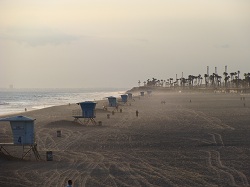
Huntington BeachBut it was another visit when I discovered the best part of this metropolis: its coastal communities. I stayed in a small independent hostel in Venice, just a few minutes from the ocean. It’s here I experienced the archetypical southern California lifestyle – strolling the Venice Beach boardwalk along the famous Muscle Beach (where Arnold Schwarzenegger used to train) all the way to Santa Monica and its historic pier.

People-watching is the prime activity here, and it’s fascinating. Attractive lifeguards, old people playing chess, skateboarding teenagers, surfers, hippies; you name it, they’re all there.

Getting around

Renting a car is essential in LA. There is public transport, but it’s rather skeletal and not really useful. A car will give you independence and give you the chance to cruise LA’s legendary freeways. The first thing you notice is how vast they are, often 10 to 12 lanes wide with five-level junctions.

Southern California: A land of contrasts

Travelling south from Los Angeles, down to San Diego, is a number of beach communities. The best way of enjoying them is a lazy drive – preferably in a convertible – along the coastal highway, stopping here and there whenever you feel like it.

On the other hand, just a few miles north of Los Angeles are the San Gabriel and San Bernardino Mountains. Reaching 3,000 and 3,500 metres respectively, these are wild and rugged areas offering great hiking or skiing. Because they are heavily forested, they are more reminiscent of Oregon than California.

In the mountains are small resort towns where LA folks escape the heat of summer and enjoy winter sports. One of them is the tiny Twin Peaks, where we drove because one of my friends is a huge fan of the famous TV series. Unfortunately, after asking locals, we learnt that the show wasn’t located or shot there (apparently we weren’t the only ones asking). However, driving up there was fun as the road from San Bernardino was very scenic, rising a vertigo-inducing 1,700 metres in about 15 miles.

My favourite part of ‘SoCal’ is the desert. One of the best places to experience the desert environment is Joshua Tree National Park. Located just two-and-a-half hours east of downtown LA, it’s easy to reach yet far enough to escape the crowds. I found it after consulting my trusty California atlas while looking for something interesting and wild but not far from LA.

Joshua Tree National Park

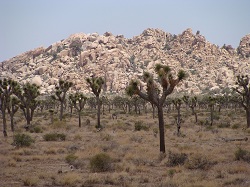
Joshua Tree National ParkDuring my visit in early June the park was almost empty – it’s one of a few places in the US where the high season is winter as summers are simply too hot. I pitched my tent at one of the best landscaped campgrounds I have ever seen, with tents nicely spread between rocks and boulders for privacy.

The park’s landscape is simply breathtaking. In addition to Joshua tree forests, the park’s western section includes some of the most interesting geological displays in California. The dominant features are hills of bare rock, usually broken up into loose boulders, while he flatland between the hills is sparsely forested with Joshua trees. Together with the boulder piles and Skull Rock, the trees make the landscape otherworldly. The only palm native to California, the California Fan Palm, occurs naturally in five oases in the park, which are perfect destinations for a hike. But due to the oppressive heat it was possible to hike only late in the afternoon and around sunset.

Unexpected gems

‘Unexpected’ is probably the best word to describe southern California. Yes, there icons like Hollywood, Disneyland, Beverly Hills and Santa Monica – but also plenty of hidden and unknown gems, a multi-ethnic population and great cuisine (away from the junk food, that is).

What’s really striking is just how many ways there are to have fun. Surfing, hiking, skiing, snowboarding, skateboarding, lounging on the beach, cruising along the coast in a convertible, shopping – just some ways of experiencing the legendary ‘SoCal’ lifestyle.

Southern California is one of the world’s top tourist destinations – and in my eyes, deservedly so.

If you’ve been inspired by Gregor’s Los Angeles and Southern California travel guide, take a look at one of these useful maps or travel guides:
> Los Angeles and Hollywood map
> California map
> Joshua Tree National Park map

Mostar: A City Restored

Mostar, home to the Old Bridge – one of Bosnia and Herzegovina’s most famous landmarks – has had a turbulent recent history. While the city has been beautifully restored since the end of the war in 1995, Caroline Sandes discovers that it hasn’t forgotten about the events of the early-to-mid 90s.

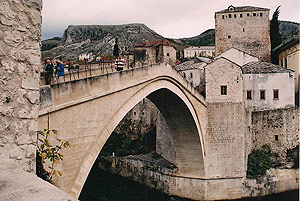
Mostar - Bosnia i HerzegovinaMostar, synonymous with that beautiful bridge, the Stari Most, was high on my list of places I wanted to visit – but at the same time I wasn’t looking forward to it. The Balkan wars may have come to an end in the mid 90s, but Mostar in 2010 was still very much under repair. Ruins of any period, modern to ancient, fascinate me but the ruins of a comparatively recent war have not yet had the tragedy weathered away.
The bus journey from Sarajevo to Mostar, once the rain had lifted, was lovely. The road twisted and turned through wooded and rocky gorges, the trees in various shades of autumnal colours, before settling into a more gentle route. Continue reading Mostar: A City Restored

Las Vegas: A 'Theme Park for Adults'

Las Vegas lays claim to being America’s most entertaining city. One of its biggest fans is seasoned traveller Gregor Swiderek, who explains why he keeps going back to the Entertainment Capital of the World.

Las Vegas BoulevardLas Vegas – A US destination I keep going back to. Why? Well, it’s a convenient base for quite a few attractions. Relatively close by are gems like the Grand Canyon, Hoover Dam, Zion National Park and Death Valley. But more importantly, Las Vegas is fun. Yes, it’s a cliche, but a cliche for a reason. While some pseudo-sophisticated artsy types may complain about kitsch, a lack of history and culture, it’s not something that bothers me.

I fell in love with Las Vegas ever since my first brief visit in 2001. Together with a few friends, I was driving across America – all the way from Florida to San Francisco. After spending some time at the Grand Canyon we were heading towards Yosemite National Park, and Las Vegas happened to be on our way.

Arriving in Las Vegas

It’s amazing from how far you can see Vegas’ famous lights. We were crossing the dark Arizona desert, still probably more than 100 miles away, when we spotted brightness on the horizon that grew bigger and shinier every minute. Initially, we weren’t sure what it was but then realised they were the lights of the Entertainment Capital of the World.

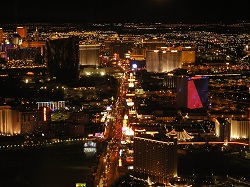
Las Vegas itself was hidden behind the mountains and invisible until crossing the Railroad Pass on the outskirts of its suburbs. It was an absolutely stunning view from there. In fact, driving from Arizona via US Highway 95 is probably the most spectacular approach to Sin City. From the pass you see the sea of lights filling most of the Las Vegas Valley, the brightest spot being the infamous Las Vegas Boulevard, aka The Strip.

To properly appreciate Las Vegas, arrive after sunset. I once drove into the city during the day and it didn’t have the same appeal – just another collection of malls, gas stations and fast food restaurants. But come night it’s completely transformed – countless neon lights, big bright screens, dancing fountains, music, even fireworks here and there; your senses will be overwhelmed.

The Las Vegas Strip

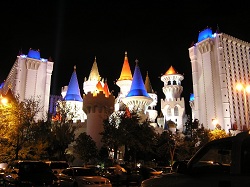
Las Vegas ExcaliburThe best way of getting good first impression is a leisurely drive along The Strip. Here you will see all the major casinos, bars and shows. You’ll also see all the flashy cars you can imagine: sports cars, muscle cars, stretch limousines and big pick-up trucks.
We arrived there around 11 pm and left by 3 am – the busiest time in this city which never sleeps – and visited famous casinos like New York New York, Excalibur, Bellagio and Ceasars Palace. We had a great time, and I knew I’d be back.

One thing you won’t be able to miss is the Luxor hotel and casino complex – a 111 metre-high, 30-storey dark glass pyramid located on the southern end of the Strip. The pyramid’s tip has a spotlight that points directly upward – it claims to be the brightest beam in the world.

Around the building is the usual Las Vegas kitsch – in this case the Egypt-themed 43 metre-high obelisk and a replica Great Sphinx of Giza, but it doesn’t change the fact that the Luxor is a superb example of 90s Postmodernist architecture.

The Strip is like no other place on Earth. Home to some of the biggest hotels in the world, the brightest lights and some of the weirdest shows, it’s definitely one of the America’s must-sees. Where else can you see dancing fountains, mock volcanic eruptions and sirens battling pirates on the same street?

America’s most entertaining city?

Las Vegas is one of my favourite cities because it’s essentially a theme park for adults – and often, those complaining miss the point. It’s oasis of fun stuck right in the middle of desert. If you treat it as such, you’re bound to have a whale of a time.

If you’ve been inspired by Gregor’s love of Las Vegas, take a look at one of these handy Las Vegas travel guides and maps:
> Las Vegas Eyewitness Top 10
> Laminated Las Vegas street plan
> Las Vegas PopOut Map

Top 5 New York Alternative Attractions

The High LineIf ever there was a city that needed little introduction, it’s New York. The Big Apple’s attractions have been immortalised in literature, film and song – but while sights like the Empire State Building and Brooklyn Bridge remain timeless, NYC is constantly evolving into something more innovative and exciting.
All visitors need to do is scratch the surface to discover some better-hidden delights–but to give you a helping hand, here’s our alternative New York travel guide

1. The High Line

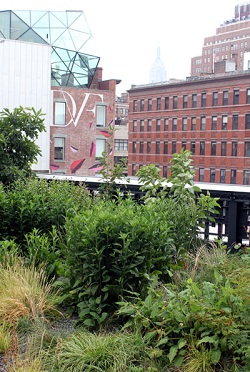
Located on Manhattan’s West Side, The High Line – a relatively new addition in New York guide books–is a beautiful mile-long linear park situated atop a former section of the elevated New York Central Railroad.

Opened in 2009, The High Line – adorned with flowers, plants and landscaped grassland – stretches from the trendy Meatpacking District through Chelsea and up to 30th Street.

Voted New Yorkers’ favourite NYC attraction, The High Line offers the perfect opportunity to get away from the Big Apple’s hustle and bustle while enjoying spectacular views of Midtown and the Hudson River. Continue reading Top 5 New York Alternative Attractions

As I Walked Out One Midsummer Morning

It sometimes makes sense to vary or change your routine. It can open your eyes to new perspectives, to things you hadn’t considered before. A walk to work is the perfect solution for urban commuter fatigue syndrome, which city dwellers the world over will have experienced at some point or other. Continue reading As I Walked Out One Midsummer Morning

Lima: A Misunderstood City?

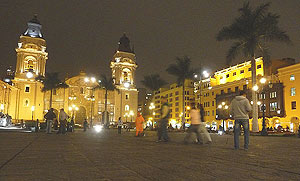
Lima Plaza de ArmasEveryone I know who has been to Peru’s capital advised me against spending any longer than a necessary stopover there. Words including ‘grey’, ‘dangerous’, ‘polluted’, ‘ugly’, ‘watch out for the earthquakes’ were thrown around from different sources describing Lima.

I’m happy to report that I found the city colourful, elegant, vibrant, and I ended up spending six days there at the very beginning of a South American trip.

Staying at HQ Villa Hostel in the suburban district of Miraflores undoubtedly helped my experience. There are many technical faults I could complain about with this hostel, but the fact that these could be overlooked was unquestionably due to the warmth of the staff who made it a chilled-out and homely haven. Continue reading Lima: A Misunderstood City?

Bristol – Ceramic Gorillas

Following the success of the Wow! Gorillas Event in Bristol in summer 2011, Wild in Art has launched its Gorilla Collection – an exciting range of limited edition scaled-down ceramic replicas of the most popular exhibits.

The gorillas are all available to buy at our Bristol store only. If you’d to purchase one, you can:

  • Pay us a visit at 29 Corn Street, Bristol, BS1 1HT
  • Call us on 0117 929 9966
  • Email us at [email protected]

Meet your favourite gorillas:

Blackbeardorilla

Blackbeardorilla

Launched in conjunction with International Talk Like a Pirate Day, which takes place on 19th September every year, Blackbeardorilla is the fearsome gorilla of the sea, and he’s come looking for his treasure. Matching the design of Chris Taylor’s original sculpture, only 1,000 of the miniature Blackbeardorillas have been made – so don’t miss out!

Price: £26.99

Paint Your Own Gorilla

Paint Your Own Gorilla

Get creative with the Paint Your Own gorilla kit! The 15 cm gorilla figurine is faithful to the official shape of its street-sized relative, so you can create your own unique design or re-create your favourite one from the streets of Bristol during the summer 2011.

Price: £15.99

WIN a Holiday to the ICEHOTEL in Swedish Lapland

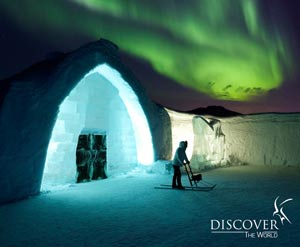
ICEHOTEL Swedish Lapland

*This competition is now closed.*

Searching for the Northern Lights? Discover the World can help you find them!

We are delighted to announce that Discover the World will be in our themed area at our Covent Garden store from 1st-30th September to help you discover the best places to see the northern lights. With over 30 years experience creating tailor-made holidays, today they are one of the UK’s leading specialist tour operators.

This coming season coincides with the peak of the ‘Solar Max’ meaning displays of the northern lights are expected to be more spectacular than ever, to celebrate this Discover the World are giving away a fabulous holiday for two to the ICEHOTEL and Abisko in Sweden. Continue reading WIN a Holiday to the ICEHOTEL in Swedish Lapland

Isobel Goes to India

A year ago I was wrapping up a two-month stint in a busy little seaside town on the Adriatic coast of Italy and if you had told me that 12 months later I’d be prepping to go to India I probably would have laughed in your face. I’m not even sure I believe it now and I leave in less than two weeks. Truth be told, until I stumbled upon Development in Action’s website at the start of July I’d never really given India much thought as a destination of choice. It’s not that I wasn’t interested, it’s just always seemed so much further away than the 4000+ miles.

People’s reaction to my news has been interesting; an unspoken question of ‘why there?’ lies beneath the bemused smile. I admit, there is a small part of me that thinks the whole thing is crazy and ridiculous but I’m becoming more inclined to think, why not there? The more I actually think about it, the less sense it makes that I’d never considered it before. It may only be one country but it is also 28 states, 7 union territories and more than 1.2 billion people. The cultural possibilities are practically endless. Continue reading Isobel Goes to India