 I have the distinct memory of standing high above Thulo Syabru, a ridge village in the Langtang region. The sun was highlighting the magnificent Langtang range we had just trekked through and it had turned into a good day, after a somewhat shaky start. Kay, Hori and I had just walked up 500m of steep mountainside, with over 600m to go.
The Langtang region is considered one of the most accessible trekking regions from Kathmandu, a mere 11 hours of a bottom-numbing bus journey away. Travel by public transport itself is an experience well worth the airfare to Nepal, from the early morning chaos of the bus station to the moment of realisation that you will be spending most of the day with 94 other passengers on a bus that has a maximum capacity of 45. There is a certain thrill to having your head out of the window, watching as the bus crawls mere millimetres from the edge of a 300m drop. It was a sobering moment when, two days after our arrival back in Kathmandu, we heard that a bus on the same journey went off the road, killing six Nepalis and injuring 14 trekkers.
Kay and I had resolved to complete a route encompassing the Rhododendron trek up the Langtang valley to Kyanjing, backtracking partway before heading up to the sacred Gosainkunda lakes and onwards into the Helambu circuit. All in 17 days, which apparently, was plenty of time. To this end we had hired a guide called Hori, partly because we felt a guide was necessary, partly to provide some input into the economy and partly because we wanted a Nepali involved in our exploration of Nepal.
The trek up the Langtang valley is one of the easier of the Nepal treks, climbing from Syabru Bensi (1,450m ) passing through various lodge villages to the next true village of Langtang (3,480m), over the space of three to four days, depending upon time restrictions and fitness. I would recommend that you take an additional day or two to experience the environment and to acclimatise to the altitude. From here it is a relatively easy trek to Kyanjin (3,950m) and beyond. The trek is magnificent, with ancient forests, steep climbs and, of course, the fabulous rhododendron flowers. Not mentioning the deer, monkeys, chuffs and mountains.
Being dependent upon trekkers for their income, various lodge villages have sprung up, catering for the hot and sweaty walker with solar showers, a basic but varied menu and genuine hospitality. Having a guide who knows the trek is definitely essential, as they can make your stays comfortable and entertaining.
The trek down the valley is easier, although we split off from the main trail, heading towards Thulo Syabru up what has to be the most mentally and physically ascent/descent/ascent stages of the whole trek. The village is a mixture of lodges and proper homes, most having an unrivalled view of the surrounding mountain ranges. From here there is another challenging ascent to Sing Gompa, through terraced fields, orchards and peaceful forests.
Sing Gompa has two main points of interest, an ancient and abandoned gompa on top of the peak, filled with beautiful Buddhist and Hindu wallpaintings, and a somewhat uninspiring cheese factory. Due to the early onset of the monsoon, the weather had become somewhat variable, and it was a wet and unnerving walk up to Laurebina Yak, assailed by an extremely heavy hailstorm and snow swiftly following our arrival.
Time and weather got the better of us, and forsaking our much anticipated visit to Gosainkunda, we headed back down to Sing Gompa. This was followed by a steep 1500m descent to the regional capital Dhunche, where we caught our bus back to Kathmandu.
Nepal is a fantastic country to visit, and to trek in. The people are almost universally friendly, often in spite of the changes wrought by tourism. Kathmandu and Bhaktapur are both highly intriguing cities, and each deserves a few days exploration. For new trekkers, the Langtang region is fairly strenuous but not overly so, requiring a decent level of fitness and some flexibility of time. It rewards with varied scenery and challenging treks. It is well set up for trekkers and although guides aren’t necessary, it is advisable for the reasons given earlier.
We took with us David Reed’s Rough Guide to Nepal, which is extremely well researched and contains some hair-raising and bloodthirsty tales from the history of this small nation. For the trek use the Langtang, Gosainkund & Helambu guide from Cicerone which, although slightly out of date, is accurate in the more important areas. We used the Himalayan Map House maps of the Langtang regions which was excellent and evoked envy in some fellow Japanese trekkers.
Browse our collection of travel guides and maps to Langtang
Author: Jose Kilbride
 Rivers are one of our planet’s natural highways. They can also provide a jolting, roller-coaster ride through a very big bathtub, an exhilarating tussle with the forces of nature. You don’t have to be experienced, you just need a healthy appetite for adventure, don’t mind being wet all day, have a sense of humour and the desire to experience something new.
 I can’t recall London’s weather conditions in February with any greater clarity than I could describe my prevailing mental state, but suffice it to say things were cold, damp and grey as usual and thus not very interesting – and the weather was little better. However, I had a solution.
 Ladakh, also described as Little Tibet, is an expanse of high, arid otherworldly mountains, devoid of vegetation, made of infinite shifting shades of brilliant brown and grey, dotted with the most colourfully dressed people I’ve ever seen.
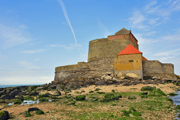 With our hemisphere spinning inexorably into winter, it was time to ‘fill the boots’. Having overspent the month already, a cheap local destination seemed prudent, with a chance to test a friend’s theory that often what is searched for far away can be found in the local. Thus the much unpublicised two-day coastal flanner from Calais to Bolougne seemed ideal.
 Rio de Janeiro has long exercised a magnetic lure for travellers. Escaping to Rio is a travel fantasy – unless you happen to be a Great Train Robber. The city is photogenic, passionate and exuberant. Its vibrancy is matched only by its inhabitants’ lust for life. The locals, known as “Cariocas”, are as romantic as Parisians, as animated as Italians and as nocturnal as the residents of Spain’s 24-hour cities. They personify the phrase “carpe diem”, embracing the present.
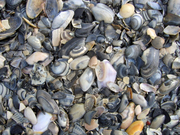 Last summer six cousins and I squeezed into a large estate car with all our camping gear and spent a few days pottering down the coast of northern France. We stayed at the many well-appointed campsites along the way (eg les Dunes at Plage St Gabriel – you can get a listing from the French Travel Centre).
 I gathered my seven words of French, my French dictionary, my maps and guidebooks – like every good journey this one started at the shelves of Stanfords – and set off for the forgotten southern corner of France.
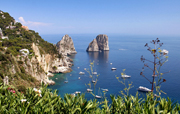 The further south you go in Italy, the more scooters dominate the motor population. The variety sharing the roads and streets is immense: the new generation of motorcycles next to the older models, the classy Vespas and the 50ccs that the young ones modify to go faster, at the same time succeeding in creating a powerful eardrum-breaking device. Scooters are the ideal means of transport in the narrow streets of old medieval town centres or on winding coastal roads and in the long southern summers, they are better than air-conditioning.
  The only cigarette shop that stayed open till late in the whole of Venice was inside the café next to La Fenice theatre. In June, during the summer exams session Silvia, my inseparable friend and study pal, and I would go on studying and revising till late. We would stop at midnight and go out for a walk.