Visiting Puerto Rico de Gran Canaria

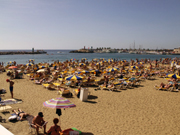
After deciding to break my own travel code, (never to visit the same place twice), I looked forward to visiting Puerto Rico in Gran Canaria once again.

Six years after I first enjoyed all that package holidays in the Canaries have to offer – cheap food and drink, baking hot sun and excellent fun – I was half hoping for a brand new holiday and half wanting to relive the old one!

Continue reading Visiting Puerto Rico de Gran Canaria

What To Do In Barcelona

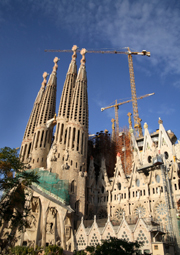
In Barcelona it’s best to play the Barcelonan and simply hang out in one of Europe’s most enchanting cities. Maybe it’s ambling the length of La Rambla surrounded by examples of all human life. You wind between flower stalls selling fragrant lilies, roses and orchids and stands trilling to the sound of caged birds. Then dine on tapas at a shaded patio, whilst an aged accordionist plays his rheumatic instrument, attended by a mature groupie who’s been a little slapdash with the Grecian 2000.

Perhaps it’s tucking into pastries and chocolate con churros at Café Moka aware it hasn’t changed since the civil guards barricaded themselves inside whilst George Orwell and his radical party colleagues fired on them from across the street in 1937. It could be dining on delicious king prawns at La Taxidermista. Once a shop for stuffed animals, patronised by Miró and Dalí, it’s now been revamped as a well designed restaurant combining old and new – minus the animals – or it could be while visiting Snowflake at the zoo in the Parc de la Ciutadella, the only albino gorilla in captivity in the world.

Continue reading What To Do In Barcelona

Cuba

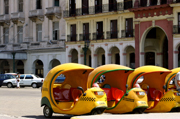
CubaOn the outskirts of the sleepy little beach town of Baracoa, in semi-tropical eastern Cuba, there is a chocolate factory. The local delicacy, somewhat bizarrely called Peter’s, is produced there – as all the guidebooks will inform you. What most of them don’t say is that this factory was inaugurated by none other than ‘El Che’ himself during his time as Minster of Industry (1961). There’s a great photo opportunity outside where a large billboard advertises the fact. Most taxi drivers will want to hurry you past with only a cursory glance but it is possible to arrange an impromptu tour – given the right relationship between dollars and palms! In town there’s a wonderful, shabby café that only serves chocolate, either in slabs with a knife and fork or as a rather glutinous hot or cold drink. My companion thought it was salty, I thought it was great – one thing’s for sure, it’s not Cadburys!

Baracoa pulsates at night with the sound of drums and serious partying floats over the tin roofs and palm trees. There are places to go dancing all over town – just head for the main plaza as a starting point where you’ll find La Casa de la Trova – if that doesn’t get you going just keep on walking. The cinema – also in the main triangle – is a fascinating experience for a quiet afternoon, low-budget kung fu movies dubbed into Spanish shown on a battered old TV in the foyer.

Relaxing by the pool of El Castillo hotel overlooking the bay and the tabletop mountain El Yunque is certainly another late-afternoon pleasure. In fact, if your dollars stretch that far, spend a few days in staying at El Castillo. Just be careful while you’re sitting on the thick stone walls of the fort soaking up the rays, sipping a mojito and watching lizards, that you don’t fall off – it’s a long way down onto that avocado tree at the foot of the cliff! Another interesting hotel in town is La Rusa – an ochre building on the rather drab, prefabricated Malecón. Alternatively, Baracoa has a wealth of casas particulares (one really good one we stayed in was Ykira Mahiquez).

Though not the only way, perhaps the best way to explore the eastern end of the island is by car or motorbike. You can hire your preferred transport from the ubiquitous Havanautos based at the airfield. Given the state of the roads we encountered, a 4WD is definitely a good option, albeit more expensive. A 20-minute drive west from Baracoa is Villa Maguana – a splendid little motel-type affair with its own white sand beach literally on the doorstep and local lads who will offer to cook you a variety of seafood for $4 per head. You can even snorkel out to the reef with them, if you want to watch your supper being caught! The lagoon is brilliant but don’t expect much in the way of marine life, I spent three days snorkelling without seeing much of interest beyond a few small barracuda and a strangely shaped purple and white crab!

Going east along the coast is highly recommendable. The driving is pretty tough – the dirt tracks are more pothole than road! There are few places to get petrol and few places to stop for food. One exception is a fruit juice stand about 10km outside Baracoa itself. You can buy a limited range of sweet, delicious fruit drinks, as well as tiny red bananas that taste of apples. Further on, expect a warm reception at Boca de Yumurí where the limestone gorge is definitely worth a visit, especially during the rainy season. Unfortunately the village itself has been really spoiled by irresponsible tourism. The degree of ‘pestering’ there has become quite OTT – for example, coconuts were dropped onto the car to force us to stop.

The brightly coloured snails called polimitas are for sale everywhere – most guidebooks are quite strict in pointing out not to accept these but they are pushed into your hand constantly. A far, far better village to stop off at is Bariguá, which overlooks a small lagoon ringed by palm trees. The tiny, little Jose Martí plaza there is simply brilliant. Continuing down the coast the verdant mountains gradually drop away and one finally ends up at the most easterly point of the island – the arid, cactus-riddled countryside round Maisí. The view from the top of the lighthouse here is spectacular whether the day is clear – when you can see Haiti on the horizon – or stormy when you can watch the natural show from the top! If you really enjoy being in the back of beyond, negotiate to stay in the village and you’ll be pretty much as off the beaten track as you can get.

Getting to Baracoa:

While the journey over La Farola – the highest road in Cuba – is not exactly alpine, it is a great experience – make sure your camera is to hand and that you have a few single dollar bills if you like real coffee beans for your grinder. For the quickest journey, take Víazul from Santiago de Cuba via Guantánamo. Their convoy of minibuses leaves at 6am ($14 single approx.), so you need to get up early! Alternatively, you can go in one of the Astro buses – a real must if you have the time and want to experience travel Cuban-style! One final option is to go round the back of the bus station in Santiago and negotiate a lift in one of the lorries or private cars – but this should only really be considered by serious travellers.

Working at Stanfords, I took seven guidebooks to compare! The Rough Guide to Cuba was by far the best for practical purposes. If you want a basic road map for pre-departure planning, the Cuba Nelles is by far the best.

Browse our collection of Cuba Maps and Guide books here >

Cuba travel information >

Author: Matt Godfrey

England – The Isle of Wight

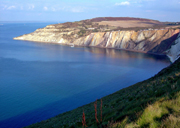
Isle of WightThe Isle of Wight first became a popular holiday destination due to Queen Victoria. The building of Osborne House suddenly made the island the place to be seen, and the development of Cowes as a playground for international yachtsmen helped foster this image.

Tourism still forms a vital part of the economy, and the island like all parts of the UK has had to re-invent itself as a holiday destination. The island status may add a romantic charm, but traveling the short distance across the water from the mainland inevitably adds to the costs of a holiday. So, is the Isle of Wight worth it?

I guess as I come from a family who have worked in, run and owned holiday flats, camping sites, caravan parks and hotels on the island, I may be slightly biased, but the answer has to be yes.

Whether you are walking, driving or sailing, there is a lot to see and do. The latest Official Pocket Guide lists over 40 visitor attractions within the 147 square miles. OK, some of these attractions may seem somewhat pedestrian, such as the multiplex cinema in Newport, and I’m really not sure that I would circumnavigate the globe to visit a model railway exhibition. But, there are a sufficient number of genuinely interesting places to visit: Osborne House itself, Carisbrooke Castle, Dinosaur Isle and the Wax Works in Brading.

In addition with over half of the island recognised as an area of ‘Outstanding Natural Beauty’ and 500 miles of footpaths, bridleways and cycle paths, the Isle of Wight is a walkers paradise. This year the Isle of Wight Walking Festival takes place between 11-26 May.

At the same time seaside holidays seem to be experiencing something of a revival, and The Seaview Hotel in Seaview, The George in Yarmouth and The Royal in Ventnor regularly receive glowing coverage in the travel sections of the national broadsheets.

Personally I prefer the Isle of Wight in the early summer, and the autumn, when the place is quieter, and the whole pace of life seems to slacken off.

Take with you the waterproof OS Outdoor Leisure map 29 The Isle of Wight and some boots.

Planning a trip to the Isle of Wight? Click here to browse all our Isle of Wight maps and guides >

Browse our collection of maps & guides:
> England travel guides
> England road maps and atlases
> Travel literature inspired by England

Author: Andrew Steed

Laos

Laos is a spectacularly beautiful country, but it is also one of the poorest countries in the world. This makes for hugely sharp contrasts between devastating scenery and desperate poverty. With no railways to speak of and only 2,000 miles of paved roads, the infrastructure for tourism is very undeveloped. Running water and electricity are scarce, although pylons run the length of Highway 13 now and millions of kilowatts of electricity are exported to Thailand each year.

Despite the glaringly obvious hardships the people in Laos were wonderfully friendly. The sight of us all streaming through their villages brought everybody out onto the roadside – quite what they thought we were doing we’ll never know, but we were always greeted with great charm and enthusiasm.

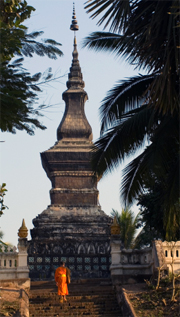
We started our ride in the Unesco World Heritage site of Luang Prabang and cycled all the way down Highway 13 to Vientiane, the capital of Laos. Luang Prabang is well loved by those who have travelled through it – it is a relaxed town up in the Annamite mountains, on the banks of the Mekong River. Monks in saffron robes stroll together between wats, visitors drink the ubiquitous Beer Lao in comfortably dilapidated cafes and somehow it feels like a monastic Cambridge or Oxford.

We left at dawn on a Monday, and could hear the drumming in the wats through the chilly mist rising off the river. Roadside food stalls were being set up as we pedalled through the town and out into the hills. We spent our first two days climbing here – 2,300m on the first day alone, punctuated by a Baci ceremony at noon.

At a village by the Nam Khan river, the bomber-jacketed headman recited words of blessing to us. A meal of sticky rice, a dried chicken and a petrol canister of the notorious lao lao fermented rice liquor was laid out on a wooden table, to persuade our body’s thirty-two residential spirits not to wander too far from us during our undertaking. The villagers then helped to tie white cotton threads or saisins around our wrists, which would offer us protection and luck. This is the single most important animist ritual in Laos, so powerful and integral to Lao culture that it is widely practised even among Lao Buddhists, who make up over half the population.

Although deeply forested, the mountains around us were almost silent. Birds here are seen and not heard – usually hanging brightly-feathered but dull-eyed from a doorpost, their feet bound with twine. The Hmong live in simple wooden huts on the edge of the mountain roads. Pot-bellied pigs, cows and turkeys rule the street, while children wriggle out of the glassless windows to shout ‘sabbadee!!’ (hello, we hope).

We stayed at night in the classrooms of local schools, burying ourselves deep into our sleeping bags as once the sun had set the temperature plummeted. Each morning we’d get up in the dark at 5.30, pack up, eat and be ready to set off at first light. Often we wouldn’t reach our destination until dusk – they were long days in the saddle! But magical – particularly the second morning where we were threading our way along the mountain ridge villages, and looking down into the cloud-filled valleys through the gaps between the huts. The descents were fantastic too – Highway 13 was paved in 1996 and carries little traffic so a 40km continuous downhill is pure cycling pleasure. As you start to drop into the plains incredible scenery presents itself in the distance – freestanding limestone karsts, clad in dense vegetation. Hazy in the heat you can also make out the highway like a river thousands of metres below you.

By Viang Vieng, a popular traveller’s haunt on a bend of the Nam Song River, you are out of the mountains and in the midst of this spectacular karst scenery. The children were coming out of school as we cycled into town, and the girls are dainty and elegant in their clean white cottons, pedalling gently with a parasol held in one hand for shade. We heard our first English here too, as the boldest of them asked, ‘How are you?’ and, ‘Where you from?’ as we pedalled alongside.

Out into the plains the next day, and it’s harvest time. It is mostly men and older boys working in the fields, watched lazily by water buffalo immersed in mud. We find ourselves longing to be water buffalo. The traffic is getting heavier as we near Vientiane, and a relative prosperity is becoming apparent – more people are travelling in motorized vehicles (scooters, cars, even the odd 4×4), the huts are now outnumbered by half brick, half wood houses with glazed windows. Adults at the roadside seem more reserved, even disinterested. The temperature soared in those last few days – at one point it was 36ºC in the shade – and we watched our forearms and legs cook in the constant exposure to the sun. This heat and an accumulated fatigue has blurred my memories of our arrival at Vientiane, although we did cycle past the immense golden temple complex of Pha That Luang, Laos’ most important national monument, and through Laos’ Arc de Triomphe, known as the Patouxi (Victory) monument.

But our journey didn’t quite end here – now garlanded with flowers it was back on the bikes for the final few kilometers to the much-dreamt of luxury of the Novotel Vientiane – with Lao massage and a swimming pool, perfect for showing off our Friesian suntans.

If you are going to cycle, take the TPC J-11D Central Laos, NE Thailand, Central Vietnam, a map which will give you contour lines and peak heights.

For general reference ITMB’s map covering Laos which includes a street plan of Vientiane, and the excellent Footprint Handbook to Laos.

Browse our collection of Laos Maps and Guide books here >

Laos travel information >

Author: Laura Stone
Turkey – Istanbul

Ever thought of heading for the furthest edge of Europe on your next city break? I was soaking up the early spring sun of Istanbul practically in the shadow of a huge mosque, enjoying another small glass of tea, gazing across the Bosphorus to Asia and contemplating my days ahead in this sprawling, lively and highly fascinating, truly Eurasian, city.

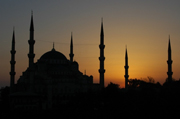
Inevitably my exploration starts in Sultanahmet, the home of most of the huge mind-boggling old landmarks and also accommodation for a variety of budgets. As always I am at the lower budget end, finding my place among the cheapest hostels, but there are also superb old-style luxury options in this part of town. The Blue Mosque with six minarets towering towards the heavens would dominate just about every other ancient city centre in the world, but here there are several that compete. This is my first destination, but I arrive at prayer time: “Sorry, come back later”.

Well there is a lot more to be seen, like the Ayasofya – the church turned mosque – known as the Hagia Sophia in Greek, the cathedral-like Yerebatab Saray Cistern with walkways above underground watercaverns illuminated in various colours, and Topkapi Palace. The latter holds such wonders as a tour of the Sultan’s harem – no longer inhabited in case you wondered – and vast museums and treasure chambers filled with delights like daggers set in emeralds or parts of the beard of the Prophet Mohammed.

Emerging from the extensive gardens of Topkapi, I go for a very affordable extensive sit-down kebab meal, displaying a far more diverse cuisine than you might know from your local kebab take-away elsewhere in the world. The meal is so good that the call to the evening prayer reverberates across town as we leave the restaurant – missed the Blue Mosque again! En route it takes a bit of effort avoiding the smooth-talking carpet or leather shop touts: “Hi, where are you from?” “You look just like a friend of mine”, “Do you want to come in for some apple tea?” and many more carpet pick-up lines.

If you have come for shopping or for just marvelling at others who do so, the Covered Market is one place to start. You will get lost, but who cares. I spend half a day roaming in and out of the more tourist-orientated parts – jewellery, carpets and clothing and the completely forgotten sections of just about anything else European and distinctly Asian. Finally, the splendour of the Blue Mosque interior rounds off a superb day, this time before prayer time. You could, of course, also relax in a hamam – Turkish Bath – to wind down from the sightseeing stress.

One visit is hardly enough, so back I come at the height of summer in August to go beyond the obvious, meet up with some Turkish friends and explore one step beyond. This is the wrong season to watch a football game with the fanatical fans of Galatasaray, but to see some Turks at play it’s the right season to take a ferry to the beaches on the Princes Islands. This is very much out of town, with Istanbul residents packing the beaches but there are real escape options in the quiet traffic-free back streets of wooden houses.

The evening continues in the modern centre of Taksim – a symbol for secular Turkey with money, modernity and nightlife – meeting up with my Turkish friends. This is the area where tourists and the fashionable Turkish youth congregate at night in restaurants, bars and clubs. But the very next day exploring not far from here, shows again the historical wealth of this varied city, be it down the slopes to the water (Golden Horn) finding forgotten synagogues or Armenian, Orthodox and other churches. And then I crossed to another continent, with Asian Istanbul showing more neighbourhoods of everyday Istanbul – truly the edge of Europe.

For shorter city breaks that ensure you do not miss anything essential try the easy to follow, well-illustrated Dorling Kindersley Eyewitness Guide to Istanbul or if you believe in carrying only a smaller practical book with all the essential basics there is the Istanbul Insight Pocket Guide. The Time Out guide to Istanbul is aimed at the younger city hopper but carries a wealth of information on all aspects.

The 1:7,500 GeoCenter map of Istanbul is a superb easy-to-read choice if you want to venture further into the suburbs.

Author: Gerhard Buttner

Browse all our maps and guides to Turkey here >

Visiting Warsaw

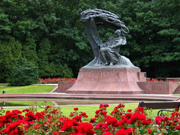
For anyone passionate about the music of Frederic Chopin, Warsaw is an absolute must. But be well prepared – there are few hotels around the city centre and in October they were all fully booked.

I found this town fascinating. The original old city centre, Stare Mjasta, was bombed during the Second World War and completely rebuilt as it was. They did such a good job, the buildings are now listed European architectural heritage. It is charming with its cobbled streets and skilfully decorated facades. A ghost of once upon a time, a city of Romantic virtuosos, men of science and explorers of uncharted heavens… Continue reading Visiting Warsaw

Bologna

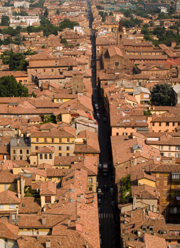
Bologna la Dotta, la Grassa, la Rossa – Bologna the Learned, the Opulent, the Red. This is how Bologna is commonly referred to and never were such nicknames better deserved.
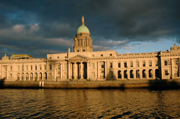
Its thousand-year-old university (the traditional date of founding is 1088) has made it one of the most important centres for academic studies in Italy and indeed in Europe. Students come from all over Italy to study medicine, law and humanities and bring a very special atmosphere to the city. The large presence of students accounts for the numerous and formidable bookshops, the alternative scene in entertainment and the best shops to buy vinyl in Italy.

The second two nicknames come from the amazing combination of the city’s and region’s status of traditional stronghold of communism and its wealthy economy. The first Italian Socialist party was founded in Romagna and the movement, moulded by the strong pragmatism of these people, gave birth to the co-operatives. After the Second World War the Communists took over the running of the co-ops and it was a triumph: public transport, housing development and social services became models for Europe.

Bologna the Opulent also points to the strong food traditions of the region: tortellini, tagliatelle and Parmesan cheese are among its most famous world exports. It is a delight to walk along the porticoed streets of the town centre and look into the many food shops and haberdashers, drug stores you could spend hours in just browsing through the range of pasta, herbs, sauces, teas and coffees, sweets and chocolates and then just choosing one of the trattorias, unpretentious, usually family-run small restaurants, to have a nice meal.

The never-ending porticos will take you from one side to the other of the old city (ideal when it’s raining!). When I walk along them I think of Medieval scholars strolling all day through these porticos meditating on the great metaphysical questions! They would have to be careful not to be run over by cars nowadays as the pedestrian-only porticos are interrupted at intervals by streets.

There is still very little on Bologna in English. Cadogan guide to Bologna and Emilia-Romagnahas finally filled the gap as far as guides are concerned and they have done it very well – so don’t think I am recommending it because it is the only one! It has excellent coverage of the whole region as well as of Bologna itself.

The best map is the LAC street plan of Bologna. If you want to visit more of the region and Ravenna, Ferrara and Parma definitely deserve a visit if you have the time, TCI map of Emilia-Romagna is the map you need.

Browse our collection of travel guides and maps to Bologna

Author: Marina De Santis

Dublin

I have been to Dublin a few times in the last three years and I recognise that the Irish capital is a very singular city but, in a way, full of contradictions which are really difficult to explain but easy to see when you are there. Dubliners are extremely friendly people and the city enjoys a wonderful literary atmosphere and lively music all the time.
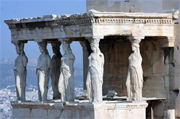
The Guinness Brewery is a must if you are visiting Dublin. Though it’s in a rough area, this symbol of the country is well worth a visit. Guided tours around the factory are available at all times and I am sure you will recognise at the end of the visit that Guinness “is good for you” with a complimentary pint. And definitely, the “black stout” tastes different up there. Slanté!

Dublin has a very intense theatrical tradition and I would advise paying a visit to one of the established companies. Not only theatre but many other cultural activities is what Dublin can offer to us. Very recommendable is the literary tour around the city following the steps of James Joyce, Oscar Wilde, Bernard Shaw and various other Irish writers.

But the best of Dublin is the city itself. Try to get lost and you will then be able to enjoy all the hidden gems in the form of little parks, obscure sculptures and those wonderful Georgian squares, still remaining almost intact. Don’t forget to go to one of the traditional pubs. The Long Hall is my favourite one without question.

I would recommend visiting Dublin twice: the first without any map or guides, just wandering around and following your instincts. For the second I would recommend the Time Out Guide for Dublin (out of print) as a first option and the Lonely Planet guide to Dublin as an alternative. The Blue Guide to Dublin is more recommendable if you are looking for more cultural background, such as history or archaeology.

Two maps: If you’re sure that it will rain (and it will), then the laminated one by Insight Guides map of Dublin will be a good option. Otherwise, Dublin Street Map by Ordnance Survey Ireland is one of my favourites.

A final recommendation – if your favourite Dubliner is as naturally inclined to pessimism as mine (a bit like that other famous Dubliner Samuel Beckett!), don’t let them ruin your visit!

Browse our collection of travel guides and maps to Dublin

Author: Julio Gil

Athens and Mainland

Athens. The look is definitely more LA than BC.

The high-rise concrete apartment blocks, six-lane motorways and notorious smog that sprawl above this ancient city are enough to make a Blue Guide cry. In the high summer the immense heat never relents, even through the nights. As the air temperature creeps finally into the low 30s, the concrete and tarmac respond by releasing the heat they’ve been hoarding over the last twelve hours. Mix in the traffic fumes and it seems that for Athenians smoking is just an opportunity to breathe a different flavoured air.

Visitors to Greece don’t tend to spend long in Athens. Once the Acropolis, Plaka and the National Museum have been covered, most people tend to move onto Corinth and the Peloponnese, or get a connecting ferry or flight to the islands. They miss going to an open air cinema, where light-lorn bugs splat themselves with abandon on the white teeth of movie stars. They miss the late-night pavement bars of the city’s squares, where you can join in the national sport of drinking whisky (which the Greeks are world leaders at). And if you go to the Zappeion (just off Syntagma Square), you can do all this while watching Greece’s top musicians playing live and discovering your inner primate with the pistachio nuts.

Last time we went to Greece we headed north out of the city in an Ascona that was built before I was born. Chalkidiki is a long, long drive from Athens if you don’t have air-con and if your car’s engine expires above 55mph. But the scenery on the E-75 can be varied – you can pine for the sea near Aghios Konstandinos, swelter as you pass Larissa, ‘the oven of Greece’ and cool off as you descend into the shady Valley of Tembi. Cloudy and aloof, Mount Olympus towers above you before the final leg round the plains of Thessaloniki and into the red clay and fragrant pines of Chalkidiki’s three peninsulas.

The Gulf of Kassandra has numerous sandy coves which are shunned by the locals and Greek visitors, as they prefer their beaches pebbly. The water is cool and very clear, with colourful fish that will swirl and shimmer around you if you dive deep to join them. And when you tire of playing the sphougaras (sponge-diver), eat fresh fish and watermelon for lunch and have a lazy, shady sleep. Emerge for gossip over a frappe in the late afternoon, splash back into the sea for a sunset swim, then make for the town once it’s dark. As the lights of the fishing boats head out for the night, eat, drink, then eat a sweet, and in the small hours start on the whisky. Which is one Greek habit that most of us have no difficulty in coming to terms with!

For travelling around Greece, I have always taken the latest Rough Guide to Greece as I prefer their background coverage. The Blue Guide to Greece is invaluable if you’re going to do the archaeological and historical bit seriously. Useful features include marking toll stations on the motorways (though if you’re lucky, they’ll be on strike), kilometre distance points (good for navigating without road signs) and very clear road hierarchies, even including scenic routes.

Browse our collection of map and guides:
> Athens travel guides
> Athens road maps and atlases

Author: Laura Stone