Voluntary work abroad is not just for gap year students – whether you’re taking a career break, considering new opportunities, recently retired, or the kids have flown the nest; whatever the reason, more of us want to volunteer overseas, challenge ourselves in a new way and give something back.
Sarah, Alastair and Katie all became volunteer managers with youth and education charity Raleigh, and they recently completed the organisation’s 10-week spring expeditions in Costa Rica, Nicaragua and Borneo. Here they share some of their experiences…

 Freelance travel journalist Sarah Neale made the decision to take a career break after a family tragedy. Sarah joined Raleigh’s 10-week spring expedition in Costa Rica as communications officer and loved it so much she is staying out to volunteer again as project manager on the 2010 summer expedition. She says:
Four months before I signed up for Raleigh my brother was killed in a climbing accident. I was finding it difficult to write, so I decided to do something positive and constructive with my time, away from normal routines. Taking on a new challenge in a safe, structured environment, and one which nurtures personal development, with a charity organisation that had been recommended by close friends, seemed to tick a lot of boxes for me.
My role on the expedition was communications officer which is predominantly a field-based role. The induction phase prepared me really well; I enjoyed the training and as our expedition was so large, it was great to get to know the field-base crew before the mass of venturers arrived. I thought that the training itself was excellent and I felt well equipped to start the expedition come deployment day.
My key responsibilities included: setting up and maintaining the expedition blog, producing the merchandise (magazines and t-shirts) and documenting the expedition images. I really enjoyed the blog; I worked hard to develop the Google blogger website during the induction, and aimed to post updates on a daily basis. In the main part, we achieved this. I was really happy that I managed to get the venturers involved in writing blogs as it’s a great opportunity for them to get writing published, and I expect parents at home appreciated this too.
I also loved spending time out in the field, talking with the venturers and project managers, getting a better insight into expedition life, and seeing a lot of the two countries.
My role on the expedition has given me focus and purpose at a difficult time in my life, and introduced me to an amazing, supportive and inspiring network of people. I hope that during my second expedition, by taking on a project manager role, I can push myself, learn new leadership and negotiation skills, and learn to work better as part of a team.

I spent three months describing my days via the blog; here are a couple of snippets:
Field base day:
It’s Sunday morning. By 6am, the swirling white mist that hovers over the dairy farm is starting to lift. The first mellow rays of sun have just crept over the horizon, warming my cheeks as I wander up the dirt track. It is 100 metres from my bed to the office.
I stick the kettle on and make some coffee. Outside the kitchen door, a couple of rickety chairs and a table are the makings of a breakfast room which gazes out over the farm. Chocolate brown cows peacefully munch the grass in a field dotted with vast trees bearing bright orange flowers. Brightly coloured birds flit playfully from tree to tree. The black-and-white cat that sleeps on the terrace lazily lifts his head and gives them a cursory glance before curling back up to sleep. It’s far too early for chasing birds.
A couple of kilometres away, at the edge of the valley floor, the landscape starts to rise. The emerald green grass changes to deep-green forest, lights from dwellings twinkle on the hillside and the slumbering giant of Volcan Turrialba looms above, a pillowy plume of smoke lingering on its summit like cotton wool.
I love this time of the day – the late-night owls are still sleeping, the early morning joggers are out pounding the back lanes and here in the office there’s an hour of absolute peace and calm. The start of another fine day at field base.
Trek day:
When I boarded the plane bound for Costa Rica I pictured a lush, jungled land; uniformly green, brimming with wildlife and swelteringly hot. Instead, I found something of a melting pot of landscapes – cloud forests, dry forests, mangroves, ashen volcanoes, bustling cities and fields bursting with fresh produce. It wasn’t until the end of expedition phase three that I discovered the place that I had imagined back in January: deep in the tropical south, Corcovado National Park stretches across the Osa Peninsula, a pristine bastion of biodiversity that left me open-jawed and wide-eyed. For me, it was the absolute highlight of my time in Costa Rica; I saw more wildlife in three days than I’ve seen in any other place on earth, even miraculously stumbling across a female puma and her cub during an early morning stroll through the jungle.
To spend time in this haven is a privilege: we work closely with the national park authorities to maintain and improve facilities in these protected pockets and, in return, we are granted access permits to explore the incredible ecosystems within. During my six days with ‘Zulu One’, we skirted a coastline that was peppered with sharks, crocodiles and dolphins; we watched sunsets that ranged from deep golden through dusky pink to blood red; we swam in crystal-clear rivers and slept in wooden-stilted ranger stations serenaded by the sounds of the jungle at night. We saw tapir, four different kinds of monkey, anteater, sloth, agouti, spiders, snakes and dozens of insects and butterflies. The vegetation included root buttresses the size of buses, Ceiba trees that towered 100m above the jungle floor, strangler figs, giant palms and thousands more. It was a truly magical experience.
My highlights so far include the people I’ve met – both in the UK and Costa Rica, and both volunteer managers and venturers; wild swimming in Corcovado National Park; wild camping on Playa Blanca (Santa Rosa National Park); field-base road trips; trekking; Catie swimming pool at dawn; coffee – sticky, sweet and delicious; discovering how much fun you can have not drinking; jungle camps; spotting rainbows through the rain in Guanacaste National Park.
The expedition has certainly built my confidence and energised me. I’m now able to spend a full day writing to a brief, and stay focused and positive. It’s also made me realise what you can achieve in a day when you get up at 3.30am! It’s made me aware of how little you need materially to succeed, and it has pushed me to be more resourceful and creative.
The experience has been a breath of fresh air. The rigid structure of training means you achieve so much during the expedition. It’s relentless at times, challenging and inspiring; it gives you a chance to explore environments that are simply not accessible to guidebook-toting backpackers, within a nurturing environment that encourages personal development. You also make some incredible friends – these alone are reasons enough to sign up!
 Two years into a graduate programme at a business and technical consultancy firm, Alastair Parry decided to take a structured sabbatical in which he joined Raleigh’s expedition in Borneo. He enjoyed it so much; he decided to stay on as volunteer manager in a trek leader role. He says:
Since graduating two years ago from Durham University, I’ve been on a graduate programme with a business and technical consultancy firm. As part of a structured sabbatical, I first took part on an expedition as a venturer and then continued into the spring 2010 expedition as a trek leader.
From my time out, I wanted to see the world and to travel and I wanted to experience Malaysia as a participant rather than just a traveller. I also needed to get away as I was becoming a bit blinded by life in London.
What attracted me to Raleigh was its team’s diversity. As a venturer you are thrown in with people from all over the UK as well as the rest of the world. As a volunteer manager you have to manage that diversity, and the conflicts that arise which is good experience.
My key responsibilities were as follows:
1. Getting up to 13 venturers through a trekking phase without injuring themselves.
2. Getting up to 13 venturers through a trekking phase having enjoyed it!
In my role as trek leader I had a variety of responsibilities including looking after rationing and making sure the group were hydrated enough. I also had to provide support and facilitate group activity, maintaining all contact with field base. During the first part of the expedition phase, I had to lead and facilitate group bonding, as well as ensure that personal development and one-to-ones took place. I was constantly enforcing health and safety, and was a key point of contact with guides and supporting organisations such as the Sabah Forestry Park.

This role has been brilliant for my self-development. Motivating a group of 18-24-year-olds to get up and trek at 6am is challenging. You have to be constantly motivated and upbeat. You also have to learn how to delegate. I was always the day-leader’s back up.
I have learnt new hard and soft skills to fulfil my role. Hard skills I’ve learnt include trekking, using a parang (a Malayan machete), building bashas and camps, open-fire cooking, and diving.
Soft skills I’ve learnt include management, motivation, delegation, facilitation, how to do one-to-ones and conflict management. The last three skills have been completely new to me and developing these has been a process of trial and error, and learning on the go. Learning this way has been much more fun than studying the theory and then implementing it.
One of my best moments on the expedition was hearing a clouded leopard moving in the background, which was a real highlight after a hard day’s trekking. One of the most challenging moments on the expedition was trekking along the ridge at Crocker Range National Park, knowing there was a distinct lack of water and trying to keep both myself and the group calm. I also had to keep field base informed with our progress and liaise with the guides to make educated decisions on what steps to take next.
To sum up my experience: wholesome. You see a side of the country you’d never normally see unless you were working there, and you attain a sense of achievement you wouldn’t get unless you’ve pushed your emotional, physical and mental capabilities.
 Keen for a career break, luxury travel specialist Katie Aston joined Raleigh’s 10-week spring expedition in Costa Rica and Nicaragua as the logistics coordinator and project manager.
At the beginning of 2009 I moved from London to live with my boyfriend in Jersey. My background is in luxury travel, but I was restricted with the jobs I was able to apply for. I ended up juggling three jobs; working in a cafe; waitressing for an upmarket catering company, and, amusingly, making sausages for a local farmer and developing his food products.
I felt that volunteering may be a way to regain my confidence in the workplace, allow me to live and work in Latin America and equip me with new skills. Raleigh was my only consideration, as I knew of its reputation. I had attended an open evening in London and knew that it operated in Costa Rica and Nicaragua – places I had always wanted to visit.
As logistics coordinator, I was in charge of designing suitable menus, placing orders with the wholesaler and allocating food to the groups, working within a tight budget. As a member of the field base staff, I was also required to assist other members of staff and operate the radio.
I enjoyed the camaraderie at field base, the variety of the job, the chance to go on road trips to see some spectacular projects, working alongside some fabulous Costa Ricans, improving my Spanish and answering the radio. It was also great getting an idea of where the groups were and what they were up to, despite being dispersed so far and wide.
The fact that you have to hit the ground running with the job is challenging, as is working to a deadline with last-minute changes to the numbers of people in the groups and having to deal with late deliveries.

In the role of project manager, I was responsible for the welfare, happiness, safety and personal development of a group of 17-24-year-olds. I enjoyed the support that everyone gives each other on a trek, the highs that followed the lows every day, the physical challenge, the breathtaking scenery and the chance to visit communities far off the beaten track.
In terms of soft skills I learnt on the expedition; I developed my knowledge of Microsoft Excel as well as learning how to upload posts and messages onto the Raleigh blog. I have practised my Spanish extensively – this is the most that I have ever been required to use the language – so it has improved enormously.
The soft skills used at field base are communication (working on the radio is a newly acquired skill) and teamwork. Out on the project sites I had to solve problems, resolve conflict, give feedback, and work as both a leader and team member. I have found that being thrown in at the deep end is the best way to learn and develop.
A typical day on an expedition would go something like this:
As the logistic coordinator at field base, I am usually up at 6.30am and eating breakfast at my desk by 7.30am. For the rest of the morning I could be checking the food allocation spreadsheets, inputting invoices, offloading a delivery from the wholesaler, or counting packets of peanuts and raisins in the bodega. Hopefully someone will have thrown lunch together, and in the afternoon it could be a visit to the wholesaler, photocopying for the administrator, updating the blog or answering the radio. A trip to Maxi Bodega to pick up provisions is a regular occurrence, and in the evening I may be cooking a shepherd’s pie for the rest of the field-base staff, followed by time checking my email or Facebook, or if I could be persuaded, joining in a game of cards.
For me the expedition highlights were successfully distributing the food for the first phase with not too many dramas. Completing the Guanacaste trek and living in El Terrero in Miraflor, Nicaragua, sharing the house with pigs and chickens!
Volunteering has given me confidence to realise that I can be thrown into a variety of situations and that I can cope well outside my comfort zone: I previously felt uncomfortable speaking in front of a group and was overly concerned about how I came across to people. In completing the trek I realise that I am mentally and physically stronger that I originally thought. I realise that I am more positive than I thought and that I am able to lead a group of young people. I have enjoyed the teamwork at field base and the variety of tasks that are presented.
It has been the chance of a lifetime, combining living in a region of the world that I have always wanted to visit, working for a worthwhile organisation and being put in challenging situations surrounded by other inspiring volunteer managers – and having a lot of fun in the process.
My time as a volunteer manager has introduced me to some wonderful, dedicated people and given me experiences that I would never otherwise have been exposed to. It has given me the confidence I was lacking. The key for me was to take myself out of my comfort zone – be it completing a trek that I would never have thought I was capable of, or acting as a translator on a building project in Nicaragua.
Raleigh, the youth and education charity, runs overseas volunteer expeditions in Borneo, Costa Rica, Nicaragua and India. They need a variety of volunteer managers aged between 25 and 75 to help run expeditions in a number of roles. 
Date: 08/06/2010
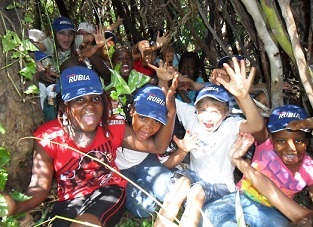 Even as I begin writing this, I know I am going to have a tough time reliving the wonderful experiences that I have had over the past six months. Although I am glad to be home with my family, it feels as though I have left behind a little piece of me with my second family in South Africa. When I first decided that I wanted to take part in a voluntary overseas placement, I did so in the complete knowledge that it would be one of the hardest things I have ever had to do. I expected to feel homesick, lost, out of place and out of my comfort zone. I did – but I got so much back in return.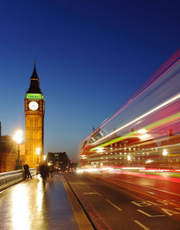
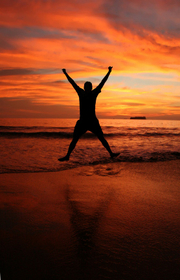
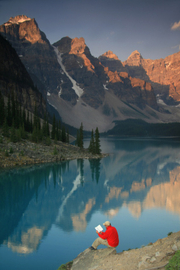
 What better way to get a feel for the city and its different areas than to simply wander the streets? Places are closer to each other in London than the tube would have you think. There are many books to guide you around particular sights, or more vigorous treks across the city and its parks. Here are just a few ideas…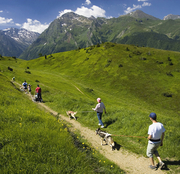
 There are some unusual, attractive and just plain funny names of countries, islands, towns and even glaciers all round the world. Here are our favourites…