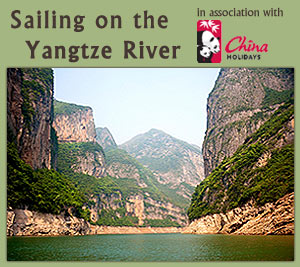
Win a Yangtze River Cruise!

Win a Yangtze River Cruise

This competition is now closed.

We’re delighted to welcome China Holidays to our Covent Garden store’s themed area for the duration of February – and to celebrate, we’ve teamed up to offer one lucky winner two places on a three-day cruise along the River Yangtze* worth £650!

Founded in 1997, China Holidays is the longest-running UK tour operator dealing exclusively with China. It specialises in a range of personalised tailor-made and small-group tours, taking in sights beyond Beijing, Xian and Shanghai such as Qufu, the birthplace of Confucius, and Ya’an, the perfect place to see pandas.

The cruise is one of China Holidays’ newest additions, with guests sailing on the MS Yangtze 2, one of the finest vessels in China. En route from Chengdu to the imperial legacy of Beijing, holidaymakers will discover generation-defining dynasties, breathtaking landscapes and delicious Chinese cuisine. Continue reading Win a Yangtze River Cruise!

The Shard: Top 10 Views From the Top

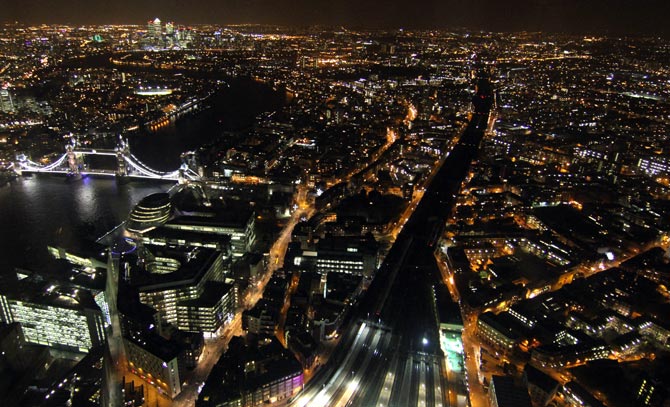
At 310m, it’s the tallest building in western Europe (the Eiffel Tower is taller at 324m, but that’s a structure rather than a building), and after the Shard opened to the public last Friday, we thought we’d pay London’s latest tourist attraction a visit. On a particularly clear night, these are the top 10 views you can expect:

Shard: East towards Canary Wharf

Continue reading The Shard: Top 10 Views From the Top

Simon Calder's 2013 Travel Tips

Simon Calder

We spoke exclusively to Simon Calder, The Independent’s Travel Editor at Large, about where he’ll be travelling this year, the location of the world’s most beautiful place, and why he has a “slight issue” with Sri Lanka.

He’s the UK’s most-recognised travel journalist, a one-time record holder of the fastest hitchhike between Land’s End and John o’ Groats, and has a degree in mathematics from Warwick University. He also happens to be a fan of Stanfords, popping into our Long Acre store last week ahead of his next trip. So where’s next on Simon Calder’s to-visit list?

“There are two destinations I’m really excited about this year, the first of which is Alaska,” he explains. “It’s been off the map pretty much for the last 20 years, but hooray for Icelandair – they’ve decided to launch two flights to Anchorage from Reykjavik per week in May. That means from leaving London, Manchester or Glasgow, you can arrive in the US’s northernmost city later that afternoon. It’s unbelievable – and it’s also very, very cheap.

“I’ll be heading down the coast towards Juneau, a really exciting place to be. I’ve only been to Alaska before very briefly in the olden days when British Airways flew non-stop from Heathrow – but that wasn’t in the middle of summer, which is when I’ll be travelling this time, and I’m looking forward to it very much indeed.”
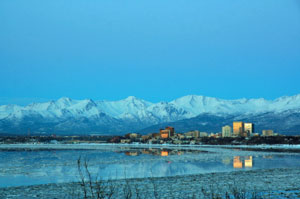
Anchorage

From Alaska it’s almost 5,000 miles south-east to a Portuguese Atlantic archipelago that’s home to some of the world’s highest mountains (if measured from their base on the bottom of the ocean) – the second overseas destination on Simon’s must-visit list. “I’m buying the Bradt guidebook to the Azores,” he says. “I’ve always wanted to go but haven’t quite made it yet, but I’m going to get there soon.”

It’s almost surprising that any countries have been left untrodden by the former Holiday presenter, so just how many nations has Simon visited? “I’ve got absolutely no idea,” he says, “and I suppose I’ve got better things to do than work it out. The great thing about coming here is stumbling across something and working out where I’d like to go next – I found myself looking at the Central Asia section and thought, ‘Ooh, I want to go there, there’s the Caucasus, Armenia, Georgia, Azerbaijan – why haven’t I been there yet? Get on with it!’ – and hopefully I will do.”

If Alaska and the Azores are a little ‘out there’, what does Simon make of Sri Lanka and Burma, two destinations tipped to return to travellers’ radars in 2013? “I have a bit of an issue with Sri Lanka,” he explains. “Many people are saying it’s the place to go this year, but I can’t see that there’s anything much transformed.
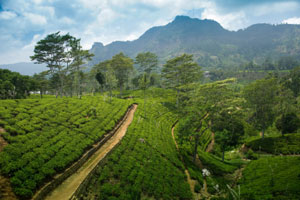
Sri Lanka tea

“Of course the civil war is over, unfortunately in very bloody fashion, but the best news I’ve seen recently is that the Sri Lankan rupee is down 10 per cent against sterling, though this isn’t enough to make me want to go there just yet I’m afraid. With Burma, the potential problem is that everybody is travelling there, so I think I’ll give it a couple of years.”

Despite the emergence of new far-flung destinations, it’s unlikely the travel journalist will lose sight of his favourite three countries: France, Cuba and Scotland, the latter of which Simon shall be returning thanks to wife, Charlotte, being inspired by crime writer Ann Cleeves, whose books are set on Shetland.

“We’ll be travelling to the islands later this year,” he says, “which is very good news because the Scottish islands are quite possibly the most beautiful parts of the entire planet – so I’ll be checking out the Ordnance Survey maps and guidebooks here at Stanfords to see what I need to be consulting!”
Christchurch: Top 5 Tips

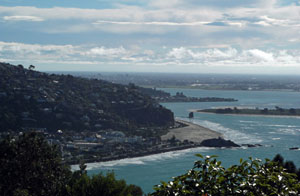
Christchurch coast

After experiencing Christchurch‘s earthquake first-hand in 2011, Chloe McInnes, who spent two years living and working in New Zealand, uncovers a rebuilt city that’s beginning to welcome back visitors.

Whenever I mention living in Christchurch, the most commonly-asked questions are “Wasn’t there an earthquake there?” and “Was it scary?” Well, yes, and (obviously) yes. And I’m beginning to find this discouraging, because it’s almost two years since the quake, and the people of Christchurch have worked tirelessly to rebuild the city and its surrounding suburbs.

Continue reading Christchurch: Top 5 Tips

Win One of the New Marco Polo Travel Guides!

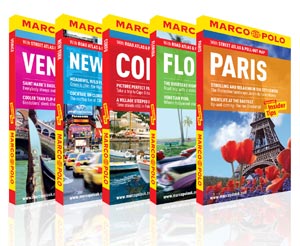
Marco Polo travel guides

This competition is now closed.

With holiday planning season firmly underway, we’ve teamed up with Marco Polo to offer 20 lucky holidaymakers a guidebook of their choice to one of the publisher’s 20 new destinations!

According to a Marco Polo survey, 92 per cent of us are planning a trip abroad this year, while almost three quarters say a holiday is one of their 2013 priorities.

So whether you’re thinking of two weeks on the Costa del Sol, seeing the Northern Lights in Iceland or a backpacking adventure in Cambodia, let Marco Polo show you the way!

To be in with a chance of winning, simply correctly answer the travel trivia question below and submit your details below by Friday 1st March. Good luck! Continue reading Win One of the New Marco Polo Travel Guides!

Kolkata: The Nostalgic Indian Megacity

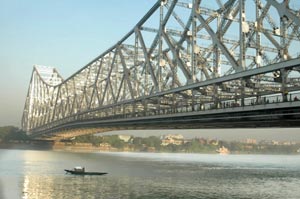
Howrah Bridge Calcutta

Travel blogger Aditya Akhauri explains the appeal of Kolkata, a city he believes is defined by its appetite for nostalgia.

Every Indian metropolis has its own distinct character. The style and pace of Mumbai, the sights and smells of all-powerful Delhi, the culture and traditionalist attitude of Chennai and the nostalgia that is the very air of Kolkata. Yes, nostalgia is what makes Kolkata great.

It is a city of the past, where the old meets the new, but unlike other places it’s the old that’s powerful. Things change slowly in Kolkata. One can see the remnants of the British Raj everywhere in the city – from the trams that crawl the streets like giant rats to the architecture in the old quarters, everything strikes of modern Indian history.

Kolkata – perhaps still better known as Calcutta – is the only Indian metropolis where the ideologies of Marx are still taken seriously and beyond textbooks. In fact, the hundreds of closed factories on the Howrah side of the city are testament to its relationship with socialism. Political graffiti, monuments and heritage buildings coupled with the fact that all the city’s landmarks were constructed during the Raj make this the ultimate place to experience the history of colonialism and Kolkata’s fraught relationship with it, one that pushed the city into the arms of Marxism.

Kolkata’s culture is perhaps its most vibrant attribute. It has its uniqueness still intact. Here, folk still take pride in selecting a fish from the bazaar rather than buying from a supermarket, which is fast becoming the trend elsewhere. It is a city of people who are as yet undaunted by the modern emphasis on looks and adhere to the view that what matters is what’s in your head. In Kolkata people like to take things slowly – they don’t chase money with the madness of Delhi nor are they in a perpetual rush like the hordes of Mumbai. Office lunch hours are often an extended affair (indeed, cab drivers working the commercial areas often refuse passengers during lunch) and evenings are spent on tea stalls chatting with neighbours. Perhaps no other metropolis in the world has such a leisurely pace of life – be it rich or poor, seemingly everybody indulges in keeping things slow.

As the strides of capitalism try to shake things up, Kolkata as we know it is changing. The pace of life is picking up and many things are no longer as they were. Marxist parties have given way to pseudo capitalism and high rises are cropping up – structures that are fast becoming new landmarks. Old mansions adorned with dates like 1821 or 1835 are crumbling and people are finding it increasingly difficult to find time to sit down and chat. There is a struggle that is going on; one that will change the city forever.

Perhaps today we are in a position to see the city in all its historical glory for the last time. It is changing and straddles a precarious position between the new and the old. What paths it will take no-one knows. What we do know is that all Kolkata’s fans are praying that some things don’t change – the awesome cuisine, the warmth of the people, the beautiful buildings from the colonial era and its deep affection for past – arguably this Indian megacity’s defining attribute.

Ahmedabad-based travel writer Aditya Akhauri writes for the Lonelyronin blog.

> Discover more of Kolkata with our range of travel guides and maps.

Our Top 7 Reads for 2013

Stanfords staff reveal which books they’re looking forward to reading in 2013:

Alone on the Ice

David Mantero

Alone on the Ice: The Greatest Survival Story in the History of Exploration, David Roberts

David, our travel guides specialist, is looking forward to the release of David Roberts’ Alone on the Ice: The Greatest Survival Story in the History of Exploration – a confident title for a story that, at first glance, is scarcely believable. In January 1913, the Australasian Antarctic Expedition was pulling a sledge towards base camp, 100 miles away. Suddenly, the dogs at the front were gone, and not long after, Douglas Mawson, the expedition’s leader, fell through the same snow bridge. An extraordinary tale of survival followed. Despite crawling for much of the way and the soles of his feet detaching from the rest of his body, a skeletal Mawson arrived at base camp, against all odds, just over three weeks later. With the release of this book, David believes Mawson may become one of polar exploration’s legendary figures. Continue reading Our Top 7 Reads for 2013

Canary Islands: Top 5 Hiking Holidays

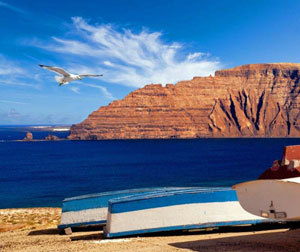
La Graciosa Canaries

Travel writer and Canaries expert Ervin Cenmurati reveals his top five hiking destinations in the Spanish archipelago.

The Canary Islands are a heaven for holidaymakers, with the archipelago attracting visitors throughout the year. Aside from the guaranteed sun and fantastic beaches, the Canaries are blessed with other natural wonders that relatively few have explored. The fact that the 13 islands are sitting on one of the largest volcanic regions in the world means the landscape has constantly changed. What better way to appreciate this unique setting than a hiking holiday? Here’s our guide to the top five hiking destinations in the Canaries:

1. La Gomera

Crossing over to this small island is well worth it. Here you’ll find a trekking haven for beginners and those who prefer something more challenging. Just over 40 minutes from Tenerife by ferry (there is a small local airport but it closes early in the evenings), La Gomera boasts lush mini rainforests, jaw-dropping gorges, banana plantations and a community that’s developed one of the best languages a man can know: whistling. Yes, that’s right, ‘El Silbo’ is a recognised language that inhabitants of La Gomera use to communicate over long distances, spreading the word for various events such as weddings. It has been proclaimed one of the Masterpieces of the Oral and Intangible Heritage of Humanity by UNESCO, and is so natural to listen to that many confuse it with the sound of local birdsong.

2. Tenerife

One of the largest of the Canaries, Tenerife offers the visitor a fantastic range of hiking and trekking tours. One of the best known is an exploration of Mount Teide, the islands’ largest and highest peak. One for real trekking enthusiasts, this is a challenge that promises beautiful gorges and a breathtaking landscape on the approach to Masca Village: a small and traditional inland settlement that can also be accessed by car – but that’s cheating. Other famous treks worth considering are crossing over to nearby El Hierro, or finding hidden beaches like Playa Bollullo, Playa de los Patos or – the most challenging but also the most rewarding – Playa del Ancón.

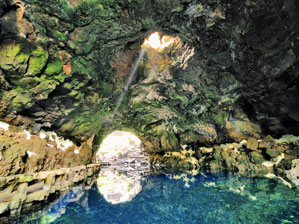
Jameos Del Agua

3. Lanzarote

Lanzarote offers great choice for hikers, especially around the coastal areas of Risco de Famara, Charco del Paolo and La Galeria de Famara. If you like the luxury of a private pool – but the way that nature intended – then from Costa Teguise trek to Cueva del Agua, where a stunning natural pool has been formed among the rocks. Lanzarote’s landscape offers fantastic walks inland too, especially in the Timanfaya National Park – though for more of an unusual challenge it’s worth visiting the smaller neighbouring islands of La Graciola and Isla del Lobos. One word of advice: Lanzarote’s cooled magma and the rocky landscape means it’s necessary to invest in some proper trekking shoes.

4. Gran Canaria

Famous for the sand dunes of Maspalomas and the fantastic scenery at dawn or dusk for romantic walk, this is Gran Canaria – where keen hikers find inhabited cave villages like Guayadeque and the breathtaking scenery and vertical cliffs of the Barranco Hormiguero Canyon near San Felipes. Off the beaten tracks and spectacular mountain scenery are abundant in Gran Canaria, and when you throw in the year-round beautiful weather it’s hard to resist the temptation of not visiting the second-most populous of the Canary Islands.

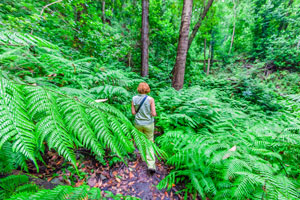
La Palma National Park

5. Fuerteventura

Last but not least is Fuerteventura – an island famous for its watersports, especially windsurfing, where every year the world championships and rallies are hosted.  The second-largest Canary Island offers easier-going treks than its island neighbours as its landscape is generally flatter. An excellent selection of coastal hikes can be found throughout the island, especially around Dunes Natural Park near Corralejo or Jandia Natural Park. Other routes to be considered are the volcanic mountain range in the north of the island near Colorada Mountain, or a coast to coast trek from Costa Calma to La Pared.

Ervin Cenmurati is an expert travel consultant at Directline Holidays and a freelance travel writer in his free time. He has travelled extensively around Europe and particularly enjoys finding rarities and venturing off the beaten path.

Visiting Kenya: Top 5 Tips

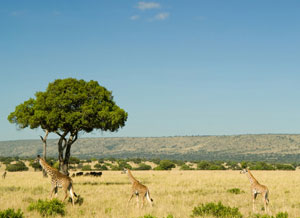
Kenya landscape

Ronny Lavie reveals her top five tips for travellers wishing to make the most of Kenya, an east African nation famed for game reserves, safaris and an idyllic coast.

Spending time in Kenya was one of the most powerful and incredible experiences of my life. There are many books and travel guides that will help in deciding where to stay and what to see, so I wanted to compile a list, from personal experience, of little things I believe will enrich your experience. Here are my top five suggestions:

1. Prone to motion sickness? Reconsider

A huge majority of Kenya’s roads are unpaved; not good in such a vast country. Add those two together and you get one extremely bumpy ride! I think the longest we travelled was seven hours in the safari car, being literally thrown about the vehicle. Rest stops are few and far between (though surprisingly well equipped). Of course when you get to the next amazing destination it’s all worth it, but I would at the very least advise stocking up on some anti-motion sickness sweets and possibly a few plastic bags.

2. Be patient

It is highly recommended to hire a local guide/driver. They’ll speak the native language and know the dos and don’ts, which in a country like Kenya is important. Also, they’ll have a mini-cab like radio system in their cars which they use to inform each other of animals’ whereabouts. Our driver got told of a tiger sighting and we drove to it, along with 15 other cars (we counted). After a while people started driving off, but my sister, who is cat mad, insisted on staying. When we were left on our own, the tiger jumped off its perch on one of the trees and started walking towards us, crossing the road right in front of our car. It had just started getting dark and we were there alone in the silence watching this magnificent animal from just a few feet away.

3. Beware of the monkeys

Monkeys are adorable, no question about that. However, they are also clever, capable and very greedy. Everywhere you go, you’ll be advised to make sure all doors and windows in your rooms and cars are locked, as otherwise you might come back to find your valuables missing and a monkey resting in a nearby tree sporting your sun hat. Do not be fooled – yes, they have cute little faces, but you are a guest at the hotel, they live there. You are invading their territory. My sister and I attempted to coo over a small monkey on our balcony, only for it to hiss at us and look set to attack. We screeched the place down and ran back inside. Consider yourselves warned!

Masai children

4. Bring toys for the Masai kids

One of the must-do experiences when in Kenya is to visit a Masai Village. My family and I had doubts as to how much of it was for the tourists’ sake, but it is fascinating regardless. By far the best thing about it is the children – they don’t really talk but they are very friendly and sweet. We brought small toys and, the kids’ favourite, balloons. Seeing them smile at you and wave goodbye as they play with their new toys is a wonderful experience and really made our trip.

5. Appreciate where you are

With the bugs, dirt roads and humidity, it is easy to forget what’s important – Kenya is absolutely stunning. Being surrounded by nature at its wildest and most primal form literally takes your breath away. We saw elephants that were several times bigger than our car, as well as ones shorter than me (and I’m not tall); lion cubs walked right by us; giraffes and hippos were in their most natural habitat right outside out hotel room door. Nothing I have ever seen compares to watching these incredible animals just going about their lives, barely even aware of our existence. It made me feel small and meek in the best possible way.

> Discover more with our range of Kenya travel guides and maps.