
Our Book of the Month is 36 Islands: In Search of the Hidden Wonders of the Lake District by Robert Twigger. Here Robert tells us the best ways to explore the Lake District’s islands:
1. Packraft or inflatable canoe
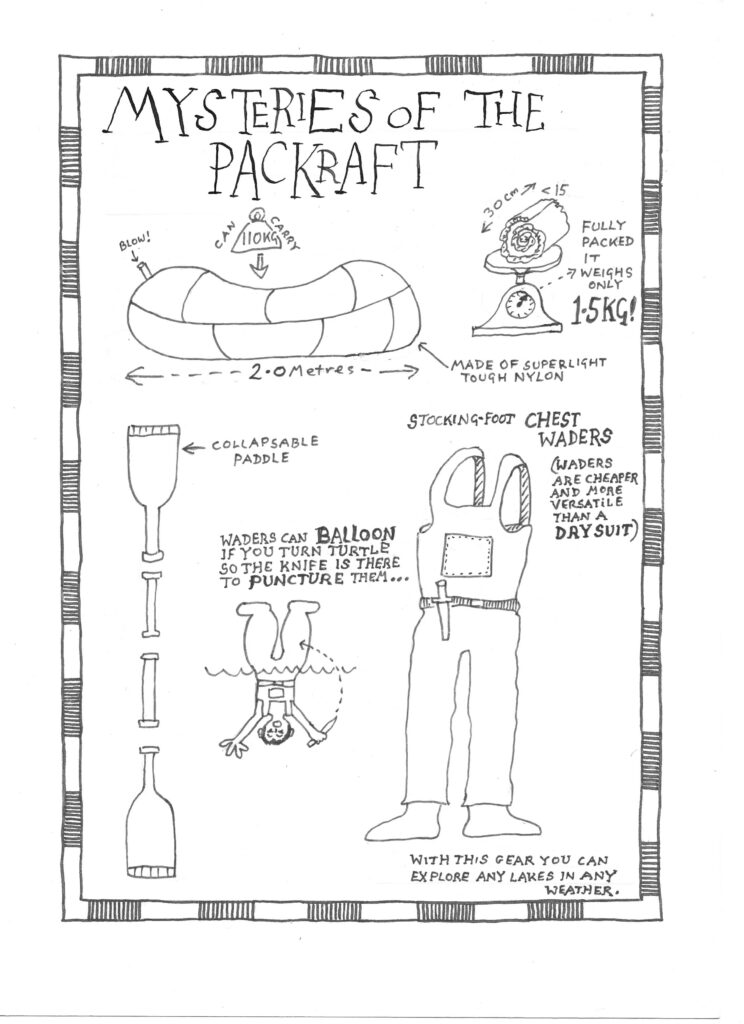
Some lakes are next to convenient roads but not all are. Many Scottish lochs with interesting islands and ruined castles are deep in the wilderness and you have no choice but to walk there. In the Lake District, where I searched out the 36 islands to be found on twelve of the lakes there, quite a few are not that easy to access. Take Devoke Water, far on the western side between Wast Water and Ennerdale- without a very transportable form of boat it would be impossible to reach the tiny island Watness Coy, which is to be found there. This island, called by Wordsworth a ‘bare rock’, is in fact a perfect place for a one person camp. It has a single tree and a gravel beach and can be reached after crossing 200 metres of lake. Providing you are able to carry your boat in. That’s where the inflatable packraft comes in. Made of super-light and super-strong materials and weighing between 1.5 and 2.5 Kg you slip this craft rolled up into your rucksack and walk happily over the worst terrain to get to your objective. With dismountable paddles and a lightweight lifejacket of the kind used by fisherman such remote islands are fairly easy to reach. The joy at approaching an uninhabited island which is rarely visited is a great experience and with a packraft or inflatable canoe you can easily carry enough gear to set up camp and have a wonderfully remote time ‘stealth camping’ ie. trespassing in the nicest possible way…
2. Swimming
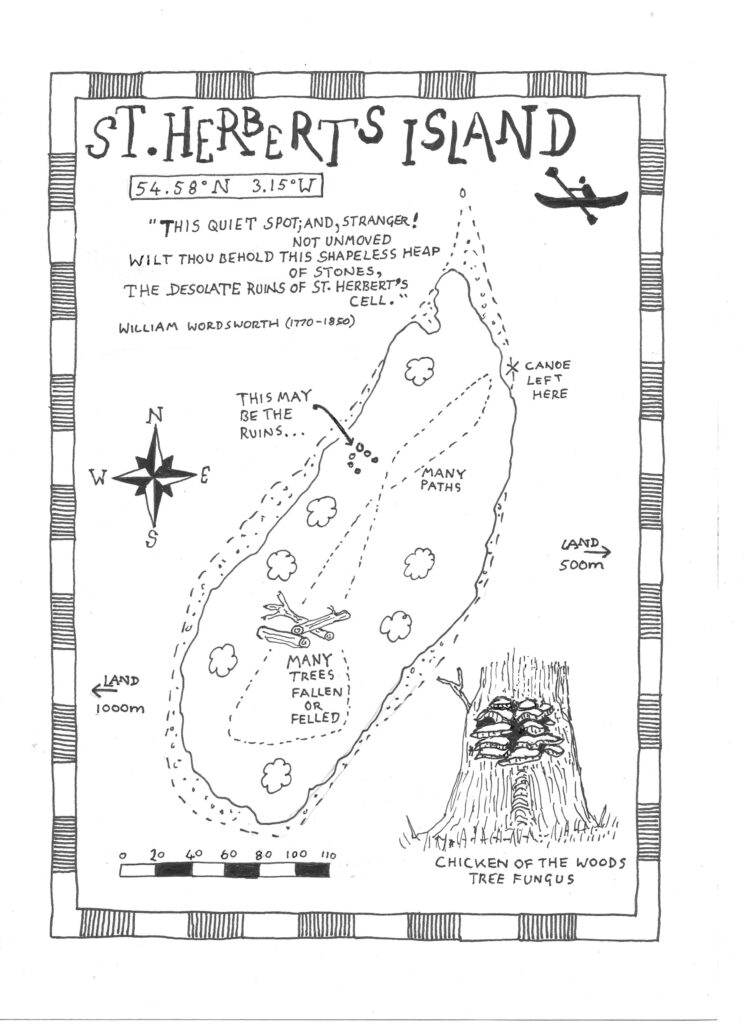
I recently met someone who intends to swim to every single island in the Lake District. It’s a good plan, an achievable plan, but some islands will be harder than others. Those on Derwent water- such as St Herbert’s Island are hundreds of metres from the land. Those on Thirlmere are so close they are sometimes joined when the water levels go down. So you need to be a good and confident swimmer. Wearing a wetsuit is sensible in all but the most summery months, as is a dry bag you can tow behind with a towel and maybe a fleece inside for when you land. And landing can be an issue as not every island has a nice beach. On many, such as the Woodholme islands of Crummock water you will have to pull yourself out using low hanging branches will balancing on submerged rocks.
3. Wading
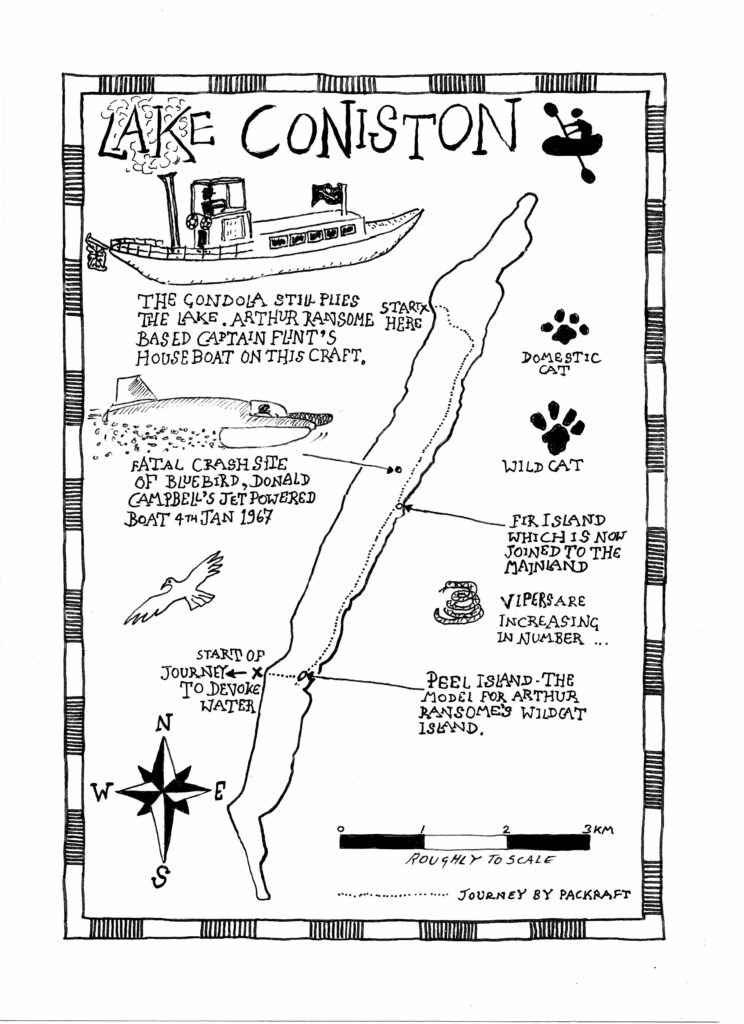
A few lakes are quite shallow, most in the Lake District are not, but Rydal water has a perfectly formed tiny island that is only about ten metres from the land. I was able to wade out to it in waders, though I could have equally have waded out in shorts and only got the lower part of the legs wet. Stocking foot waders are quite light and easy to carry and you can wear your trainers or boots over the feet so walking out into water seems quite a stable thing to do. Other wadable islands can be found at Hawes Water and Coniston where Fir island is really now joined to the mainland.
4. SUP- Stand Up Paddleboard
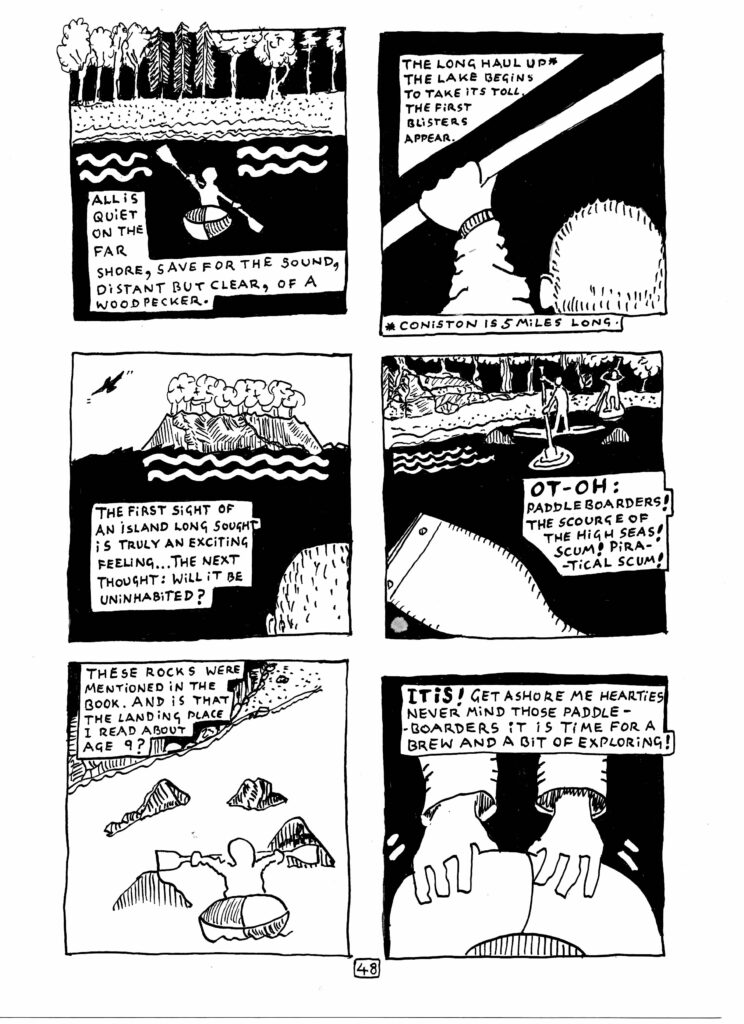
Paddleboards have been around in the UK for fifteen years now but it is the inflatable version that has really taken off recently. Paddleboarding gets easier the faster you are moving. When you are stationery the board gets quite wobbly. So you need to be prepared for a dunking followed by drying off in the wind. Even more than swimming a wetsuit is advisable. You can carry gear on a paddleboard, but probably not enough to camp on an island. The islands of Ullswater and Coniston seem to attract the most paddleboarders and it makes sense to go in a group in case you get into trouble, though unlike a boat, a paddleboard can never sink though I have seen people get exhausted trying ineptly to get back on one in choppy weather. Which brings me to their main limitation: in windy bad weather a paddleboard is seriously hard to manage.
5. Hardshell canoe or boat
The classic Canadian canoe or fibreglass kayak are of course excellent tools for lake exploration once you have got to the lake- probably with your car, though some canoes can be towed by a bicycle. But what about those lakes that are high up in the hills? Dragging a canoe on a trolley over dirt tracks very soon palls as a fun way to spend time so the hardshell boat is restricted to those more popular and populous lakes that border roads. In the Lake District that includes Windermere, Derwent water and Ullswater- all of which have wonderful islands for exploring. Derwent Water and Windermere have the two main inhabited islands in the Lake District, both with houses that today we revere as classical but were seriously looked down upon by Wordsworth in the early 19th century. As a true poet Wordsworth preferred his island uninhabited – which, thankfully, 95% of the Lake District ones are. Having camped on many and explored more of such uninhabited islands I can say this is a great form of adventure just waiting on your doorstep!
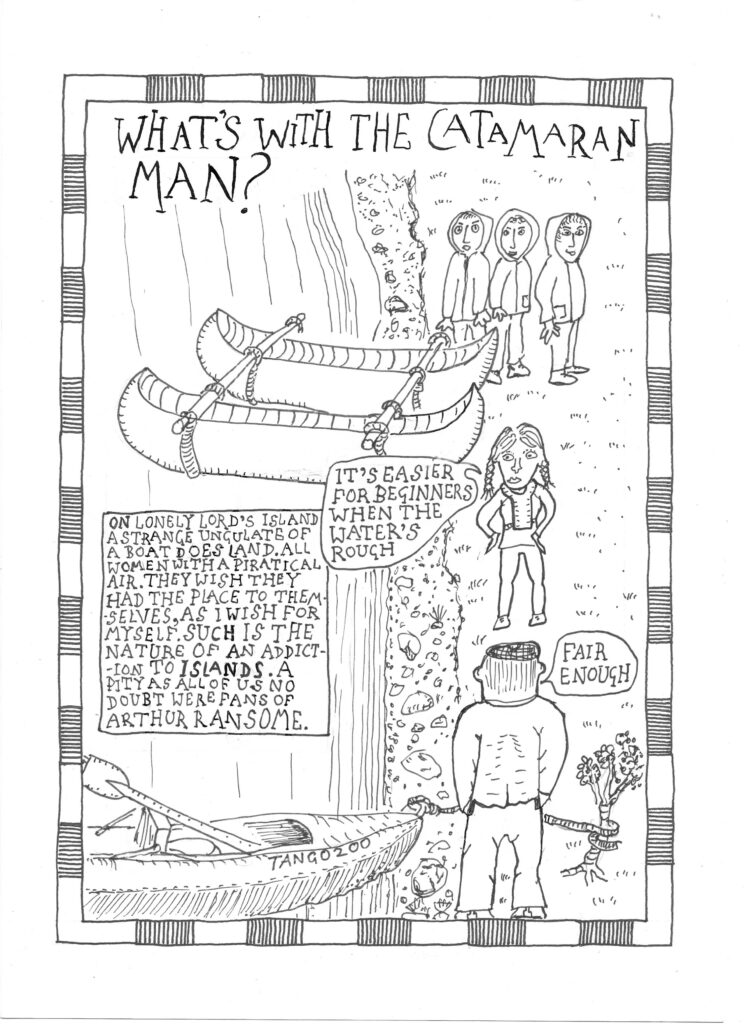
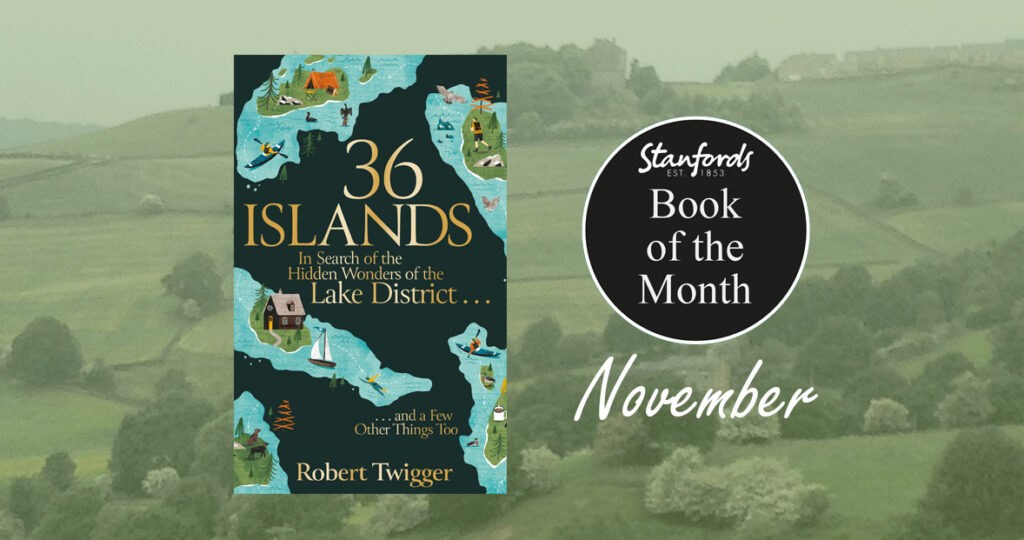
36 Islands- searching for the hidden wonders of the Lake District and a few other things too is published by Weidenfeld and Nicolson and is available now for £20.
Robert Twigger is a travel author who has won the Newdigate prize for poetry, the Somerset Maugham award and William Hill sportsbook of the year award. His 12 books have been translated into over 16 languages and cover journeys as diverse as walking the Sahara, crossing the Rocky Mountains in a birchbark canoe and hunting in Borneo for the world’s longest snake. There is more information at roberttwigger.com.
Watch Robert Twigger introduce his new book: