
By Andrew McCloy, author of Great Walks on the England Coast Path
As an island nation we have a special relationship with the sea – historically, culturally and often very personally – and nowhere on the English mainland are you any more than 70 miles or 113km from the nearest coastline. Being beside the seaside is a richly sensual experience and what better way to enjoy it than a bracing coastal walk!
Better still, the choice of where you can go is about to get a whole lot bigger. Soon you will be able to step out on a continuous path around the entire coast of England – all 2,800 miles or 4,500km of it. The England Coast Path is due to open in 2023 and when complete it will be the longest coastal trail anywhere in the world, stretching all the way from Gretna Green on the Solway Firth round to Berwick on Tweed on the shores of the North Sea.
A few super walkers will no doubt tackle it all in one go, for most mere mortals like you and me the good news is that there are lots of fantastic shorter sections that are already open and just waiting to be explored. For my new book I’ve pulled together a selection of day and weekend outings suitable for a range of ages and abilities, all of them celebrating the variety, beauty and often breath-taking drama of the English coast.
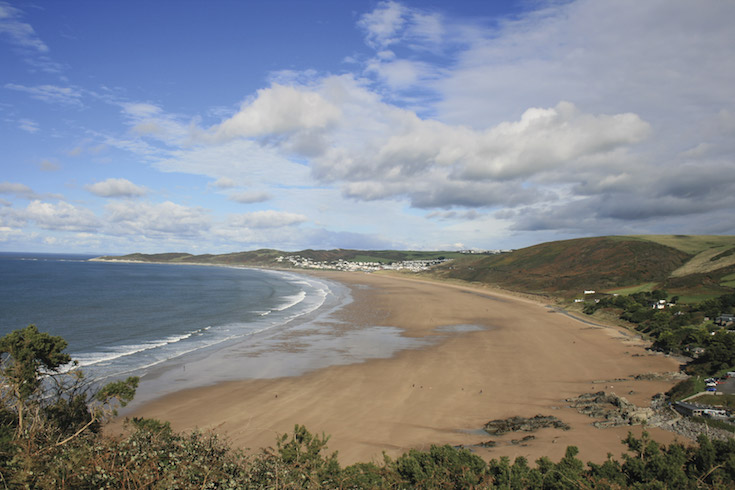
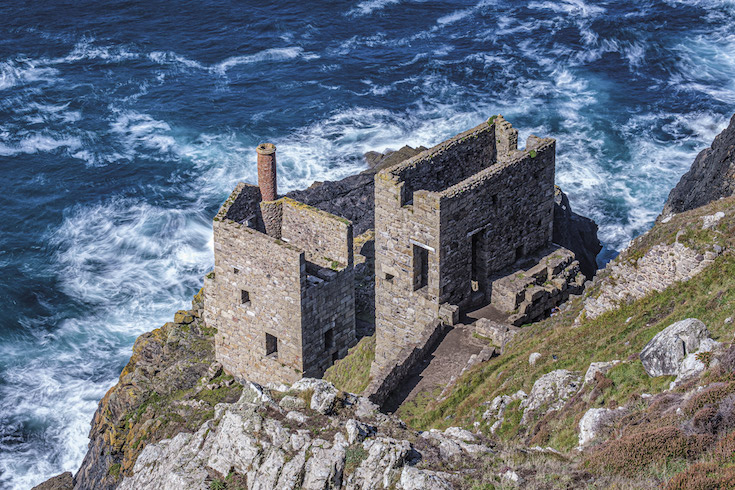
Some of my choices include old favourites based on existing routes like the South West Coast Path, including the Land’s End peninsula, Woolacombe Bay, Start Point in South Devon and the Jurassic cliffs around Lulworth in Dorset. A weekend section of the North Yorkshire coast between Scarborough and Staithes, the bird-rich marshes of north Norfolk and the rollercoaster chalk cliffs of Seven Sisters and Beachy Head on the Sussex coast are all featured (and still among my all-time favourite walks).
However, the England Coast Path will really come into its own by opening up some of the quieter and less well known locations that are every bit as interesting to explore and rewarding to walk. So with that in mind I’ve deliberately included coastal walks that sample the peaceful creeks of Essex, County Durham’s limestone cliffs, the largely overlooked coastline of Cumbria, Chichester Harbour’s leafy reaches, Spurn Head, Dungeness, Sefton’s gorgeous beaches and the shifting sands of Morecambe Bay.

There’s another reason why the England Coast Path is such an important new route. Unlike most other National Trails in England and Wales, this continuous and waymarked route is accessible from major population centres, and indeed goes right into cities like Newcastle, Liverpool, Bristol and even London. It means that a lot of people will be able and indeed encouraged to explore their local coast on foot; and in many instances this will involve using public transport. Indeed, I made a point of plotting as many walks as possible that could be walked using bus and train connections, and there are several routes in my book that are specifically designed to be station to station walks, including St Bees Head in Cumbria and the Sefton coast between Southport and Crosby.
What is also very clear is that the England Coast Path offers a huge variety of coastal walking experiences and there’s a day out beside the sea to suit everyone’s taste and ability. For the seriously energetic I profile the exhilarating clifftop switchback between Hartland Quay and Bude in north Cornwall, as well as a yomp along Exmoor’s high and plunging shoreline from Lynton to Combe Martin. There are much gentler clifftop outings around Cornwall’s Lizard peninsula and Flamborough Head in North Yorkshire, perfect for a stimulating family day out; or for a gentler day still head to the lovely wooded shores of Chichester Harbour or the low shoreline of north west Lancashire around Lancaster. For out-of-the-way choices I’ve picked Northumberland’s ‘castles coast’ between Craster and Bamburgh, a circuit of Walney Island on the largely undiscovered Cumbrian coast at Barrow, and the quiet reedy marshes at Orford in Suffolk. Or, for a really different coastal walking experience, let me guide you around the remarkable shingle foreland of Dungeness in Kent; the thin sandy spit of Spurn Head jutting out into the mouth of the Humber; or a tidal walk from The Wirral across to the little-known Hilbre Islands.

The work to create a continuous coastal path around the entire edge of mainland England started over a decade ago, with the first stretch between Weymouth Bay and Portland Harbour unveiled in time for the London Olympic sailing events; but inevitably such a mammoth task has taken time to realise. A unique feature of the new trail is that in many cases it will sit in a publicly accessible coastal margin that allows for so-called spreading room, meaning that the path can be realigned or rolled back easily in the event of, say, a significant cliff fall. Of course, there’s a whole host of ‘excepted land’ that the trail has to deviate around, including nature reserves, military ranges, private houses and the odd nuclear power station, but this is a well thought-out scheme that will ultimately deliver more access opportunities for everyone.
It’s not just about distance, of course, but for a sense of perspective the completed England Coast Path will be three times longer than the conventional Land’s End to John o’Groats route; and, for the seriously intrepid, if you add the Wales Coastal Path into the mix for a continuous walk around the entire coast of England and Wales, it’s something in the region of 3,665 miles or 5,899km.
Time to get some training in, perhaps?
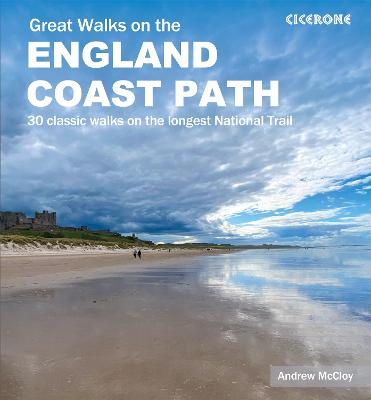
Great Walks on the England Coast Path by By Andrew McCloy is available now for £20.