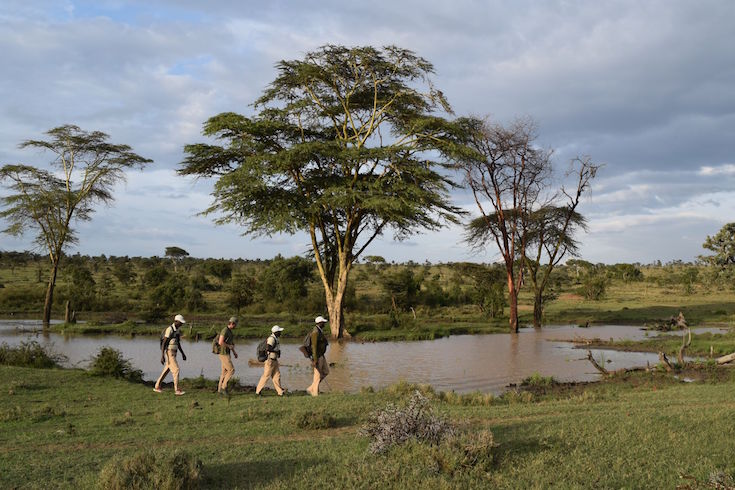
Author Denis Costello follows the tracks to Kenya’s finest walking safari destination
-By Denis Costello, co-author of Walking Safaris of South Africa
If setting out with the right attitude is the first step to a successful journey, then travelling to the right altitude is the key to walking safari heaven. Nowhere proves this better than Kenya, where most safaris are at a higher elevation than Ben Nevis, and in Kenya the perfect intersection of biodiversity and walking conditions is found in the country’s heartland on the Laikipia Plateau.
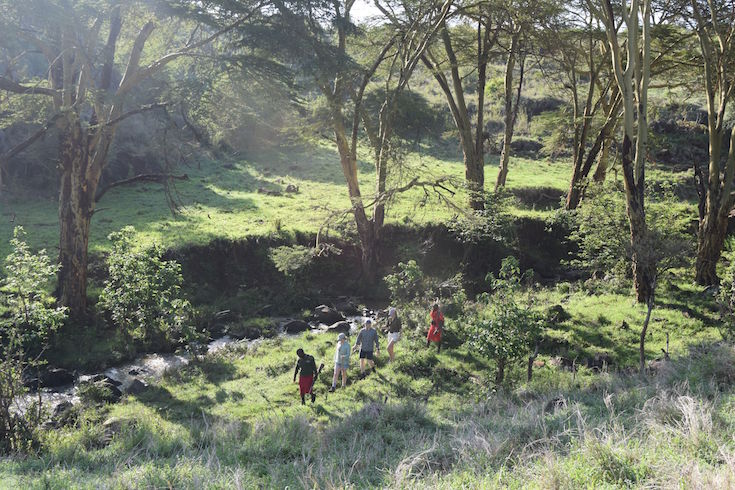
From the plateau, the Great Rift valley drops to the west and the peaks of Mount Kenya rise in the south. It has an average elevation of 2000m – not high enough to leave you breathless, but perfect temperatures for multi-day expeditions on foot. Reliable water sources, fed from the moorland slopes of Mount Kenya and the Aberdare Range, are the main factor in giving Laikipia such a wealth of wildlife. Apart from some clever barriers specifically designed to keep rhino in the safest zones, the animals are free to roam a vast 9000 km2 expanse of private and community-owned conservancies.
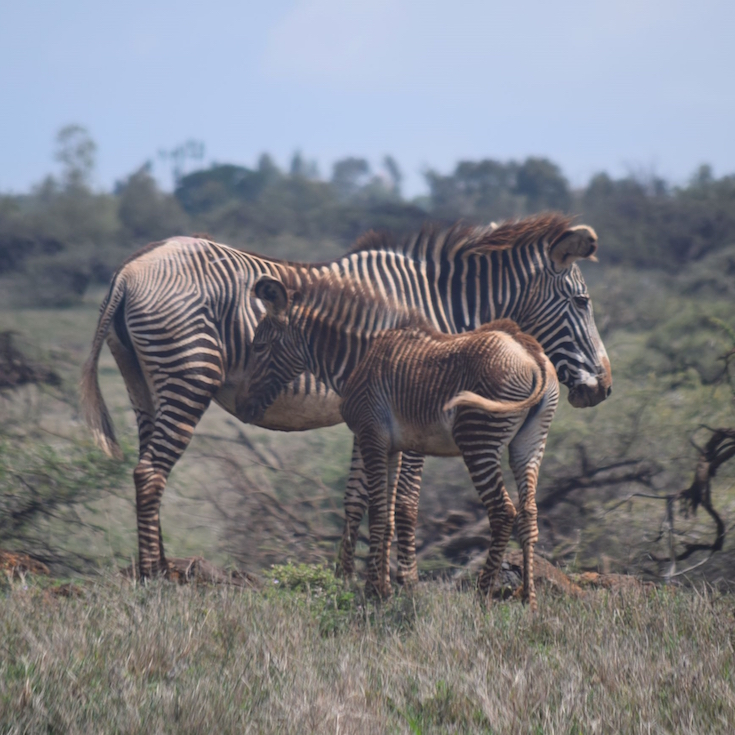
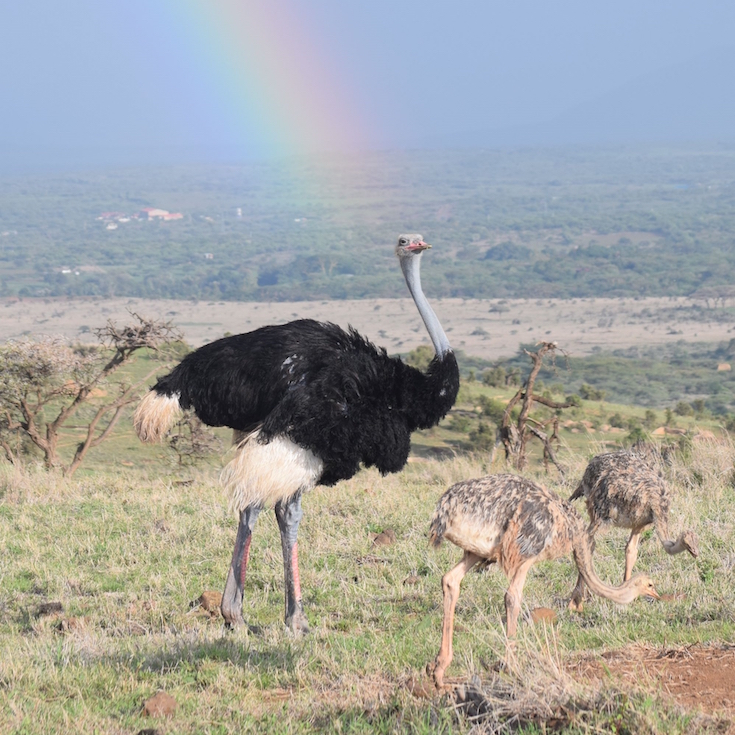
That animal life can be surprising because the area is a transitional zone between the vast grasslands found in the Mara/Serengeti ecosystem to the south and the arid lands to the north. Walkers spot local specials such as the gerenuk, Somali ostrich, reticulated giraffe, Günther’s dik-dik, Grévy’s zebra and squadrons of gorgeous vulturine guineafowl.
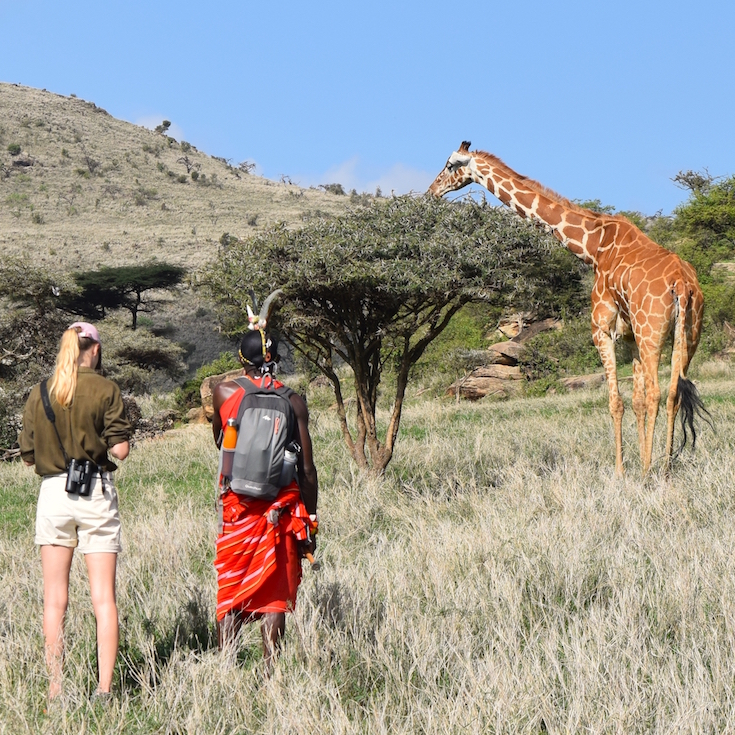
Tourism operations on the plateau are of a high standard (and priced accordingly) and most lodges offer guided walks. Walking is possible year-round although the “long rains” around April/May are best avoided. A few specialise in multi-day walks, featuring luxurious fly camps transported by camel and these are the places to focus on for a walks-centred safari; the following are the standout operators. Each has its own distinctive twist on sharing that most ancient of human activities – wandering amidst African wildlife in its natural setting.
Karisia Walking Safaris
Karisia is a real walks specialist and has the widest range of trails options in Kenya. Guests embark on mobile safaris which range from three nights to a week or more, led by Turkana and Samburu guides who know every tree and track. The fly camp and guest kit are moved separately by an impressive number of camels, allowing guests to arrive to a cool drink and warm bucket shower.
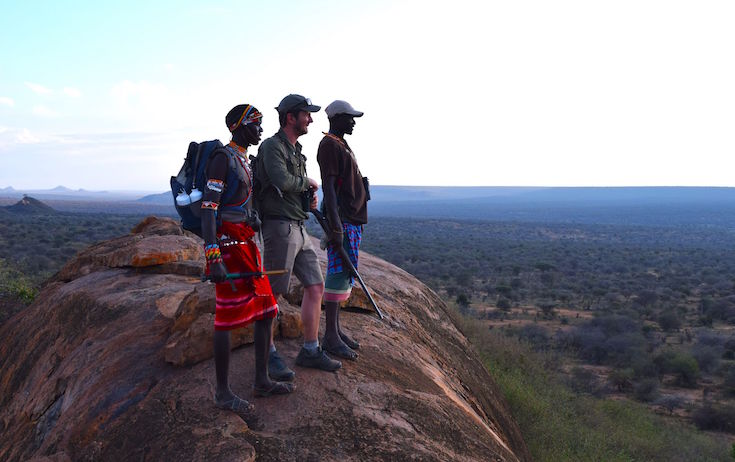
Before and after the walks, guests can stay at Tumaren camp, which has an almost middle eastern feel, with the spacious tents set such that the longer side is open to the bushveld. A similar level of comfort is provided at the mobile camps and there’s a choice of luxury levels; if you don’t need all the frills, the cutely named AirBnC (that’s airbed and camel) is the most affordable option. An attractive feature of a Karisia visit is the range of optional activities, which include visits to a school or Maasai homestead, learning traditional crafts and rock climbing.
Laikipia Wilderness
Not far from Karisia’s base camp, Laikipia Wilderness Camp is set on a breeze-catching ridge above the Ewaso Narok river with views of alternating shades of green and brown to the horizon haze.
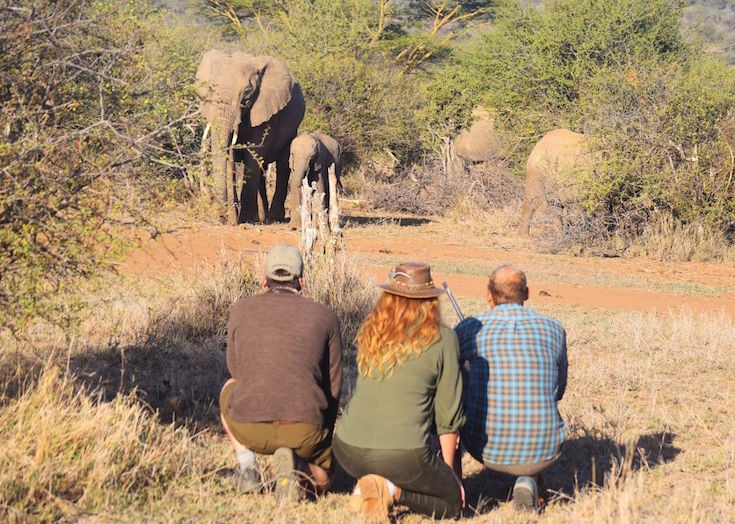
The atmosphere at camp is relaxed and informal and the walking has a unique flavour, reflecting the personality of host Steve Carey. A trail with Steve means sharing his love for Laikipia – tracking leopard and African wild dogs, getting close to a herd of elephant on foot without disturbing them, or simply admiring an ancient shepherd tree. It’s not all walk action and there’s always time to sit on a clifftop for an hour, take a cooling swim in the chocolate waters of the Ewaso Narok, or have a leisurely al fresco brunch. Steve also enjoys organising and leading adventurous walking expeditions to remote areas of northern Kenya.
El Karama
El Karama Lodge is embraced in acacia bushland on a remote section of the Ewaso Nyiro. It is a family friendly venue – there’s a swimming pool and a bush school where kids can be entertained while parents head out for a morning on foot. El Karama is also attractive to those seeking exclusivity – with no other camp on the conservancy, there’s no risk of vehicle pile-ups at wildlife sightings when on a game drive.
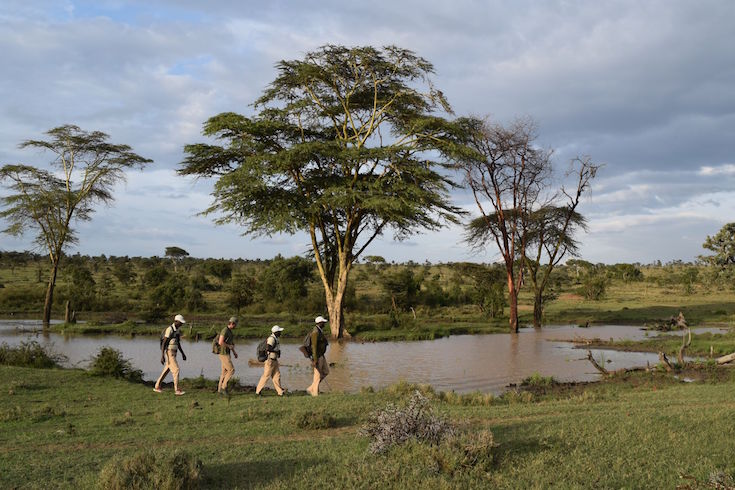
Head guide Joseph Kaluu is a Meru with three decades of experience guiding on El Karama and he and his team of guides are expert in showing why going on foot is such a rewarding activity. The walking terrain has good variety, a mix of rolling hills and acacia scrub plains with plenty of water sources – ideal for “sit and wait” style wildlife viewing.
New in 2022, El Karama Wild is a luxury mobile pop-up camp established during the dry season. This increases the walking options as it can be used either as a base or as an overnight walk destination from the lodge.
Lewa Wilderness
At the eastern extremity of the plateau, Lewa Wilderness is in Lewa Wildlife Conservancy, a renowned conservation area known for its thriving population of both black and white rhino. Lewa’s hilltop camp of thatched cottages is centred on the home of the Craig family, who over several generations have overseen the successful shift from farming to conservation tourism.
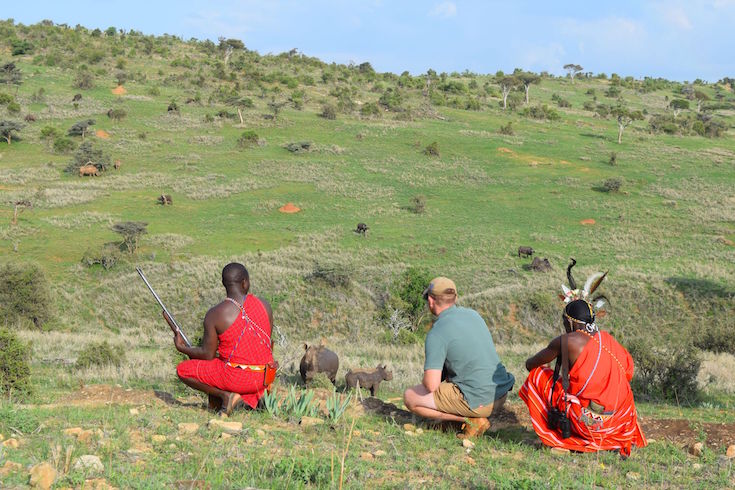
Walking here is distinguished by its splendid variety of landscapes, from the woodlands of Ngare Ndare river valley, which can be accessed directly from the camp, to more distant ridgelines and grasslands. On clear days, the distinctive shape of Mount Kenya punctuates the southern horizon. The open terrain is ideal for spotting wildlife from afar, and the steep slopes make it feasible to approach safely on foot in the care of expert Maasai guides. It is not unusual to meet those rhinos, elephant, giraffe, and buffalo all at the same time.
For a multi-day experience, Walking Wild takes guests on three-day camel-supported explorations of the full conservancy and the Maasai community conservation lands beyond.
The Author
Denis Costello is co-author of Walking Safaris of South Africa from Penguin Random House SA. Both a practical guide and lyrical evocation of the pleasures of walking in wild places, the book covers 21 South African parks and reserves with big game and guided walks. It’s in stock now for £13.50.
