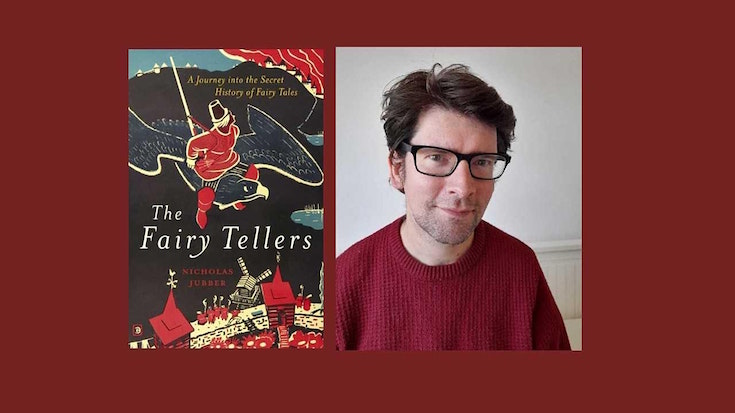
The Stanford Dolman Award winning author, Nicholas Jubber’s new book The Fairy Tellers: A Journey into the Secret History of Fairy Tales looks at the global origins of the fairy tales we all know so well.
Here, Nicholas takes us on a brief fairy tellers’ trail:
– Nicholas Jubber
Fairy tales sprout wherever there are people. It’s a thrillingly international genre, with tales originating and evolving all around the world, in places such as China (where we can find the earliest full version of the Cinderella story), Iran (that tale about the princess in a tower, dropping down her long hair for her beloved – amazingly, it first appears in a medieval Persian epic!), Italy (where Europe’s first fairy tale collection was written), Germany (‘Hansel and Gretel’ and hundreds of others). Fairy tales have travelled with breathtaking agility. Their routes are, in some cases, easy to track because they follow the same pathways as trade routes and virulent diseases. But wherever they make landfall, they take on features of the local environment. So Cinderella’s small feet reference the foot-binding common in Tang-era China, but the story reappeared in seventeenth century Italy with ravioli and ricotta-filled pastries on the menu. As a lifelong lover of fairy tales, I set out to explore some of the lives behind our most iconic fairy tales, as well as many that have been unfairly forgotten, travelling to various places where these stories were shaped and standardised. Here are a few of them:
Naples

The godfather of European fairy tales was a roaming courtier called Giambattisata Basile, who told the earliest fully-formed Western versions of ‘Rapunzel’ and ‘Cinderella’, as well as early iterations of ‘Sleeping Beauty’ and many other iconic tales. He grew up around Naples, and in his seventeenth century collection, The Tale of Tales, he celebrated the charms of ‘beautiful Naples’ where ‘the stones are manna in your stomach, the rafters are sugarcane…’ Basile’s Naples was a rambunctious place, the most populous city in Europe at the time, and it’s still a noisy metropolis. If you wander the streets, from Saint Martin’s Charterhouse down through the Spanish Quarter to Pio Monte della Misericordia, you can wormhole into Basile’s world, especially when you look at Caravaggio’s ‘Seven Acts of Mercy’, which has been hanging in the same spot since the early 1600s. The artist drank at the same tavern as Basile, the Cerriglio – where you can still dine on octopus meatballs and mussel soup. It was the storyteller’s favourite hang-out, although Caravaggio didn’t enjoy it so much: he was wounded there in a knife-fight in 1609.
Cassel
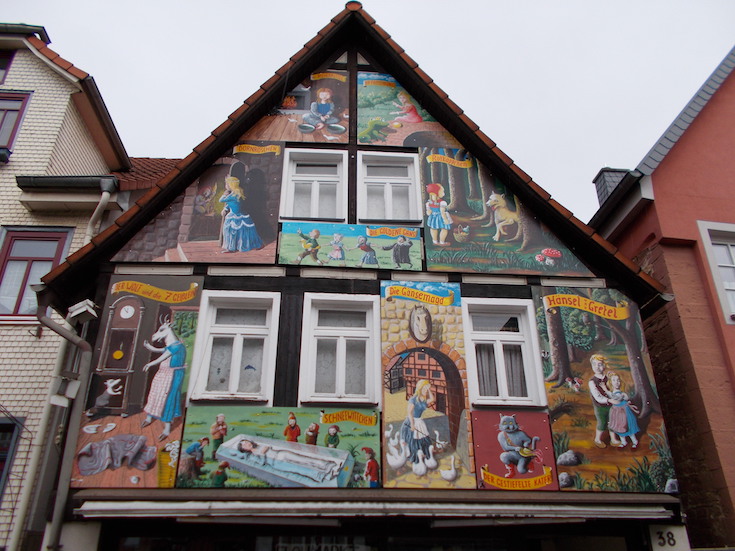
The Brothers Grimm lived in this German city, in the Hesse region, and it’s where they put together their famous collection of stories, The Children’s and Household Tales. Unfortunately, Cassel was bombed in World War II, but there’s a brilliant interactive museum near their old street – ‘Grimm World’. There you can dive inside the witch’s house of sweets, see Little Red Riding Hood’s granny turn into a wolf and ask the magic mirror who’s the fairest one of all. In the nearby village of Steinau, you’ll find the Grimms’ childhood home amongst the painted wooden gables and ornamented timberwork; paintings and artefacts from their time are stored inside, and their tales are splashed across the neighbouring houses and carved onto a fountain beside the old church.
Odense

When they had moved to Berlin, the Grimms were visited by another famous storyteller – Hans Christian Andersen. They became friends, and read their tales to each other. Andersen’s childhood home is also intact, although somewhat less impressive, in the Danish city of Odense – a small yellow-walled house under moss-clad tiles, where there’s barely enough space inside to swing a cat. It vividly illustrates his astonishing rise. Nearby, you can trawl around his old paper-cuttings, the contents of his travelling trunk and collections of his tales in the Hans Christian Andersen Museum, and if you walk the streets of Odense you’ll find characters from his tales, cast out of iron, all around you – a Steadfast Tin Soldier beside a cafe, Thumbelina emerging from flower petals near the casino, Andersen himself in giant form beside the train station. Not that all the locals relish their most famous town-fellow: several of them told me about ‘Hans Christian Andersen Sickness’, a local phenomenon driven by frustrations at the way his fame has been exploited.
Lapland
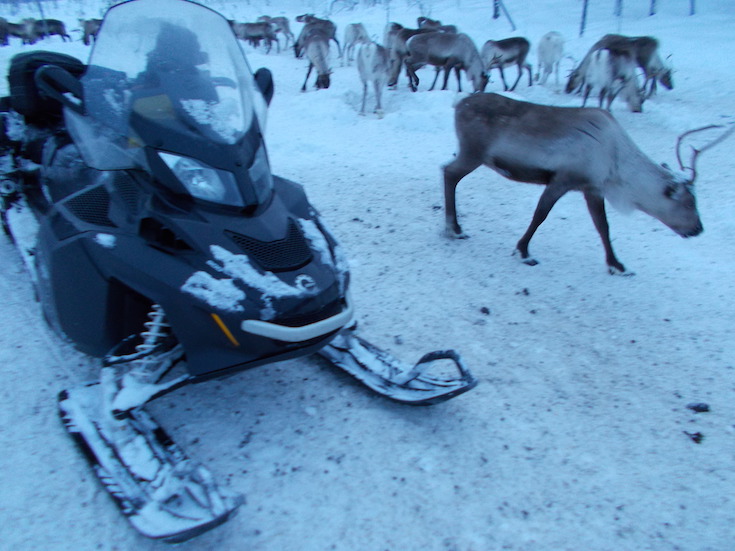
Much better to head north and immerse yourself in Andersen’s tales. Either visit the Little Mermaid statue in Copenhagen, along with everybody else, or strike north for Lapland. I made it to Lake Inari, where amongst the pine woods and candle spruce, I met reindeer herders and learned about Sami culture today – both of which feature in Andersen’s masterpiece, ‘The Snow Queen’. And at the crook of the Gulf of Bothnia, I visited the Snow Castle of Kemi, where an annual castle is built out of 20,000 cubic metres of snow, decorated by skilled snow-artists, who carve out complex bas-reliefs inside.
Kashmir

But fairy tales didn’t just flourish in Europe. Every region of the world has its own fairy tale tradition, and one of the richest is in India. A collection called the Ocean of the Stream of Stories was written in Kashmir by a courtier poet trying to soothe his queen during a civil war. The waterways of Srinagar still feel like something out of a magical tale, with painted shikaras weaving their way between the floating markets, and the cave of Amarnath, where the deities Shiva and Parvati are said to exist in eternal story-time, is an enduring site of pilgrimage for Hindus. It is Shiva and Parvati whose relish for stories frames the hundreds of tales narrated by the poet Somadeva to his queen in this beguiling story collection.
Kashmir has some of the most beautiful scenery in the world, all the more poignant given its traumatic history. In its flowery meadows, pine forests and lakes covered with lotus leaves are the landscapes for some of the most colourful stories in Hindu culture – where lovers cavort amongst the lotus leaves, hide messages in forest temples, ride on the backs of lions and burst out of flowers woozy with the fragrances of Kashmiri springtime.
[Insert cover image of The Fairy Tellers]
Signed copies of The Fairy Tellers: A Journey into the Secret History of Fairy Tales by Nicholas Jubber are available now for £20.