
Wales, and the Presence of Absence – A Memoir
by Pamela Petro
The Long Field burrows into the Welsh countryside to tell how the small country of Wales became a big part of American writer Pamela Petro’s life. Petro, author of Travels in an Old Tongue – Touring the World Speaking Welsh, writes about herself and Wales through the lens of hiraeth, a Welsh word famously hard to translate. (It can mean, literally, “long field.”) Hiraeth refers to a bone-deep longing for someone or something–a home, culture, language, a younger self–that you’ve lost or left behind or that was imaginary to begin with, hovering always in the future. It’s a name for the presence of absence.
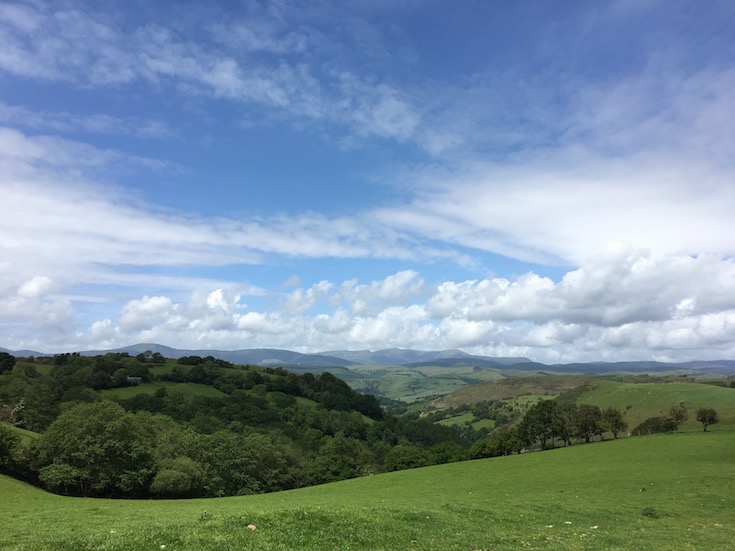
I went to Wales to study for a Master’s Degree at a university English Department. I was so ignorant I didn’t even realize that was ironic! The surprise was on me, though, for in the West Walian countryside I found the landscape I’d always seen in my mind’s eye –- a landscape of ribboning, far-sighted clarity that lent deep-time perspective to my young, human vision. I felt instantly at home there. Still ignorant of language, myth, and history, but at home.
The problem was that my actual home was in New Jersey. After I returned to the States, my family kept wondering when I’d get over my “Welsh thing,” as they called it, but I never did. That’s when I first experienced hiraeth – stripped to bare bones, hiraeth really refers to the ache you feel in the present for what you’ve left behind in the past or wish to claim or reclaim in the future. Arthur is more king of Hiraeth than Camelot. He can flourish in the Once and Future, but never the Present.
In The Long Field I look at my hiraeth and that of the Welsh nation in both traditional and radically new ways. I write about queer hiraeth—I’m a gay woman in a long-time, same-sex relationship—and the hiraeth of technology, minorities, the environment, self-determination, and politics in the age of Trump and Brexit. Along the way my view of hiraeth morphs from an awareness of loss to a creative response to absence and loss, which I think is the genius of Welsh culture – alright, I’ll go out on a limb. Maybe it’s the wellspring of all creativity.
Each of my chapters braids hiraeth I’ve known into a hiraeth story from Wales—or hiraeth endemic to our mortal experience. Here’s a taste of a few of those pairings.
Thunder and Lightning
The most terrifying story in The Mabinogion, Wales’ classic book of pre-medieval wondertales, tells of the county of Dyfed disappearing in a mist. Four friends accidentally bring this to pass by sitting on an enchanted mound, hoping for “wounds or marvels.” Thunder booms and mist falls, and when it clears, the “scape” of their landscape has vanished. People speaking a familiar language, animals, buildings, crops. Everything that made it home.
That tale, to me, is the well-spring of all our fears of losing home. In Wales it prefigures the loss of Epynt, a Welsh-speaking community on Epynt Mountain, removed during World War II by the British military for artillery practice. One woman, on the day she was forced to leave, called it “the end of the world.” In the chapter, “Thunder and Lightning,” I juxtapose Epynt’s story of forced removal with my own childhood in Verona, New Jersey – the world’s safest and most boring suburban community. A place I dreamt of leaving from the moment I first learned to dream. Ironically, I was safe and comfortable there—if not quite at home—because my European forebearers had shorn the region of the Lenape Indians’ “scape.” A tribe whose own wondertales told of ‘thunder beings” that could save people or, on a whim, exile them from their land.
The Enemy Within
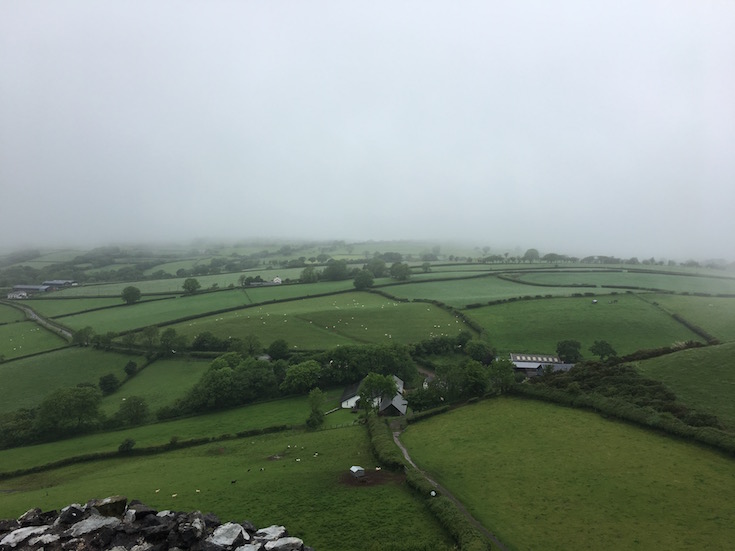
I was in grad school in Lampeter, in West Wales, during much of the Great Miners’ Strike in 1984-85. The Welsh word for coal is glo – isn’t that lovely? During the Strike Margaret Thatcher described the miners as “the enemy within.” Not as lovely.
The strike was often referred to in the press as “a slow-motion train wreck.” It’s an apt phrase. I know that because I survived a real wreck. One of Amtrack’s God-almighty crashes, in which 18 people died and hundreds were injured. I nearly died too, but the terrible cold that day—it was -10 Celsius—kept me from bleeding to death.
In a chapter called “The Enemy Within” I braid these two events together, along with the story of the Aberfan Mining Disaster and the 1941 nostalgic weeper, How Green Was My Valley. What does it mean to lose your right to feel at home and safe in the world, whether due to the violent end of your profession or the violent end of your train journey? When does the comfort of nostalgia give way to the anger of solistalgia? (The writer Trebbe Johnson says, “We are victims of solastalgia not when we leave our homes, but when our homes leave us.”)
I think about this question and then raise “my little fist,” as Dylan Thomas does in this passage in which he describes his fellow passengers on a train journey from Oxford to London.
“And then and there, as I watched them all, desire raised its little fist.
I did not want to be in England, now that they were there.
I did not want to be in England, whether they were there or not.
I wanted to be in Wales.”
Paradise
I’d love to tell you about my entire book, but that would mean hijacking Stanfords’ blog, and that would be rude. So just a brief taste of the chapter called “Paradise,” in which I braid together the hiraeth of minorities. In particular, Welsh speakers who practice a minority way of speaking and the LGBTQ+ community that practices a minority way of loving….
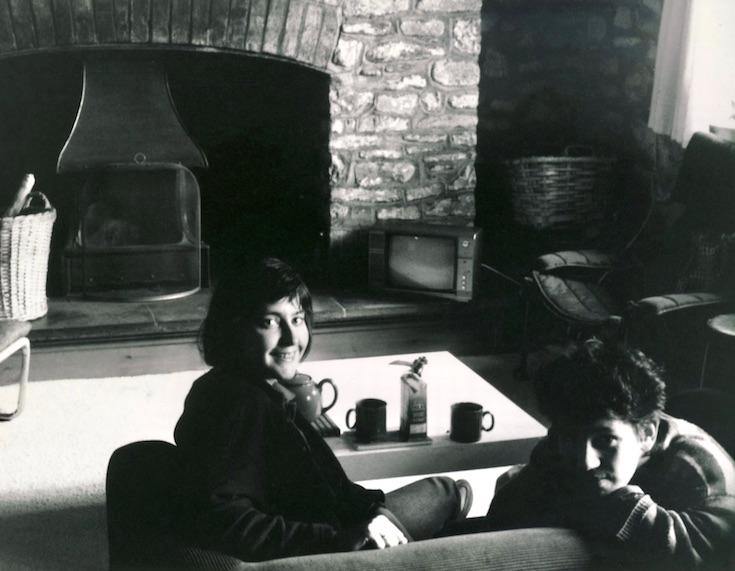
Believe it or not, The Long Field is quite a cheerful book! Absence breeds creativity—in fact, it can be an invitation to live a creative life. There are some marvelous creations on the far sides of our long fields, and I write about those, too. So think about what you feel hiraeth for, how you’ve compensated for its absence, and then read on!
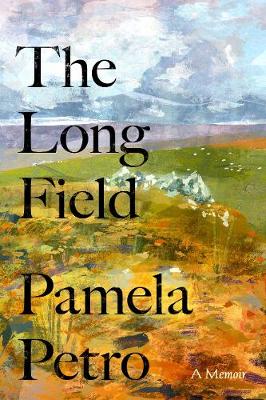
The Long Field by Pamela Petro is published by Little Toller and is available from Stanfords for £20.00