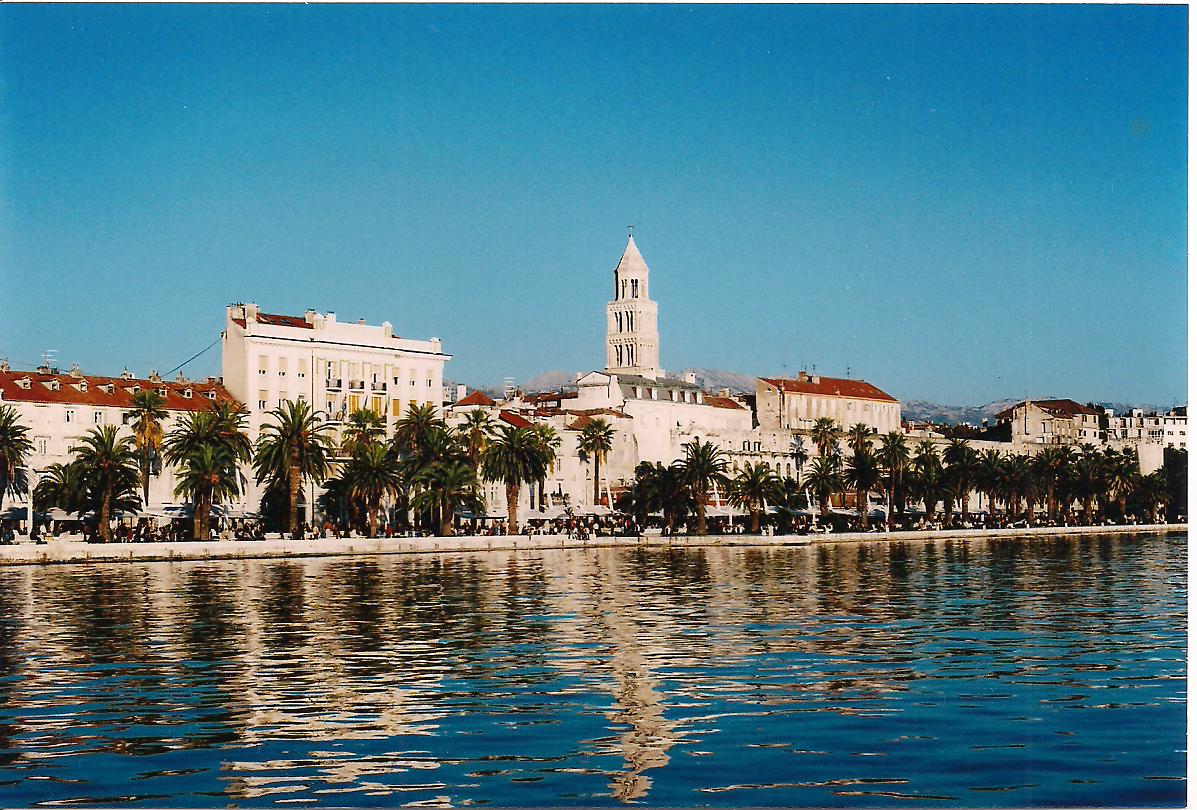
 Caroline Sandes travels to Split, an Adriatic city rich in historic architecture that’s inspired generations of architects and writers.
The journey from Dubrovnik to Split was beautiful: green and grey mountains dropping down to a silvery-blue sea; small hamlets of red- or grey-roofed houses stepping their way down towards the coast or huddled round coves; small churches, fishing boats, and all under a perfectly blue sky. The bus twisted and turned its way along the coastal road for four and a half dreamy hours until it reached the outskirts of Split – a jumble of modern flat-roofed blocks and traffic-heavy streets; little to suggest that the heart of Split is the ancient Roman Emperor Diocletian’s palace.
 The minute I got off the bus at the bus-cum-train station I was once again accosted by people offering accommodation. I negotiated a room with a man who agreed to wait while I sorted out a train ticket for a sleeper to Zagreb for the following night. The man assured me that the room he was offering me was only a 15-20 minute walk from the station, and indeed it was, in a Tito-era block, in his mother’s tiny flat. He rattled off various things I might find useful and then left again. His mother, probably in her late 60s and with no apparent English, insisted on sitting me down with a slice of her apple strudel; no hardship on my part – it was delicious.
Replenished, and as suggested by the man with the room, I set off to walk up Marjan Hill, from which a view over Split could be had, but as is my tendency I took a wrong turning somewhere and failed to find the path. In need of an espresso and in fact much more eager to visit the old town, I headed back that way instead.
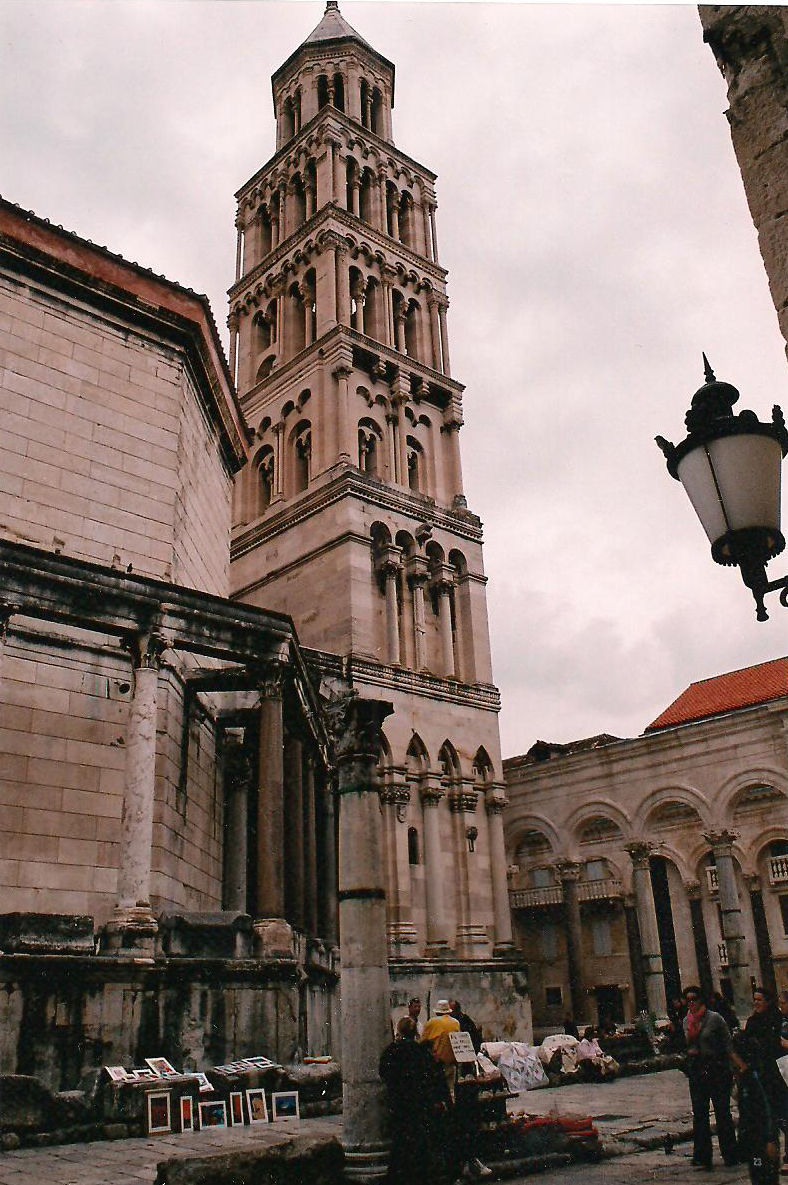
The old centre of Split is a delight and, to my mind, infinitely more interesting than Dubrovnik. Where else will you find a town centre tucked into a still discernible Roman palace? It is reminiscent of the architecture of Damascus old town and that of some Sicilian towns. It was one of the first sites inscribed in the World Heritage list in 1979. Diocletian had the palace built in about 305 AD for him to retire to. Over time, this became a town, giving it an interesting accumulation of historic architecture that’s caught the attention of famous writers and architects alike – for example Rebecca West in her famous account of her pre-first world war Balkan travels, Black Lamb and Grey Falcon, and Robert Adams who published his drawings of the Roman remains in 1767 and whose own architecture was greatly influenced by the place.
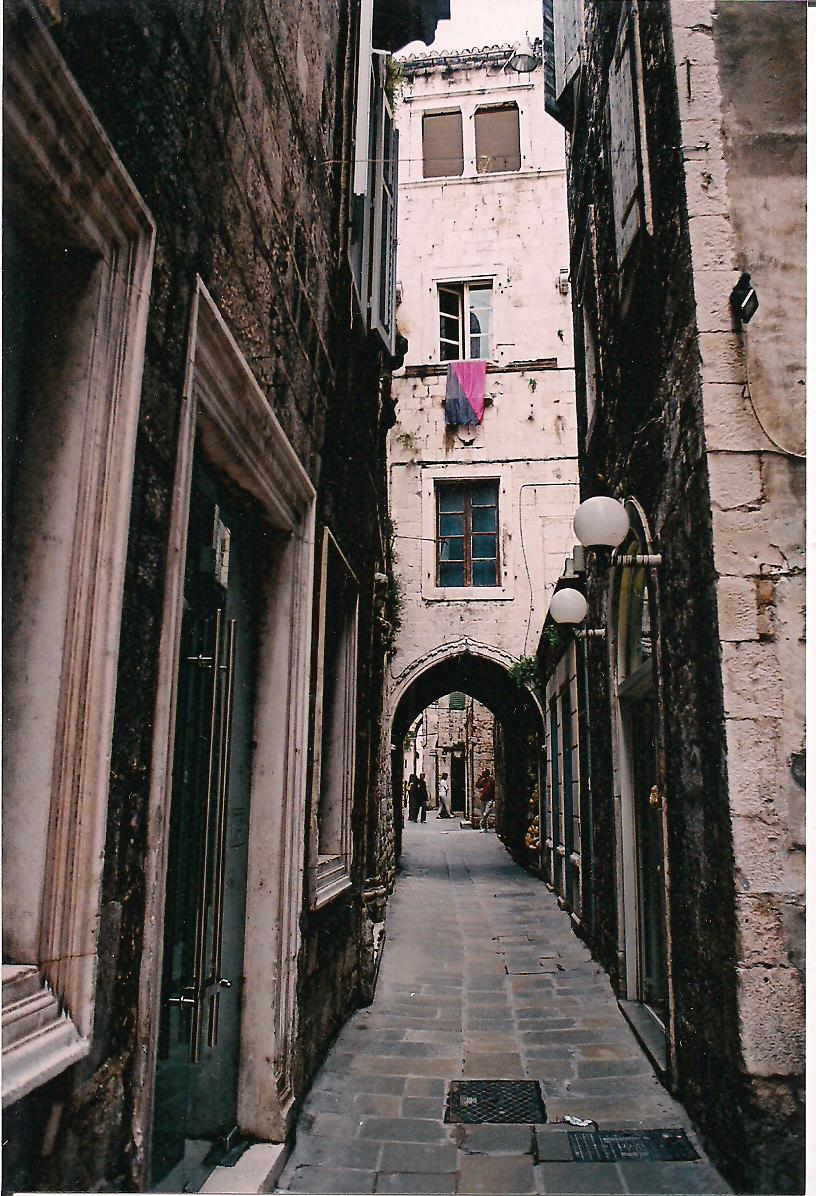
The cathedral was once Diocletian’s mausoleum, and underneath what was the palace are the huge basements that are well worth a wander around. It is possible to spend hours wandering about the alleyways and narrow streets – mostly pedestrian only – with their jumble of historic architecture. Sadly, the place is beginning to become gentrified so I would visit very soon before it’s full of trendy people inflicting that deadening and expensive sameness they tend to cause.
That evening I found the small restaurant by the port that had been recommended to me, just communal tables and benches, and had some delicious grilled fish that came with a salad and a great doorstep-thick hunk of bread.
Having abandoned my bag at the train station the next morning, I set off for some more wandering but it soon became apparent that several coach loads of tourists had been disgorged into the old town, so I took refuge in the art gallery (frustratingly the Archaeology Museum was closed). It was almost deserted even though it’s full of all sorts of interesting pieces of various periods.
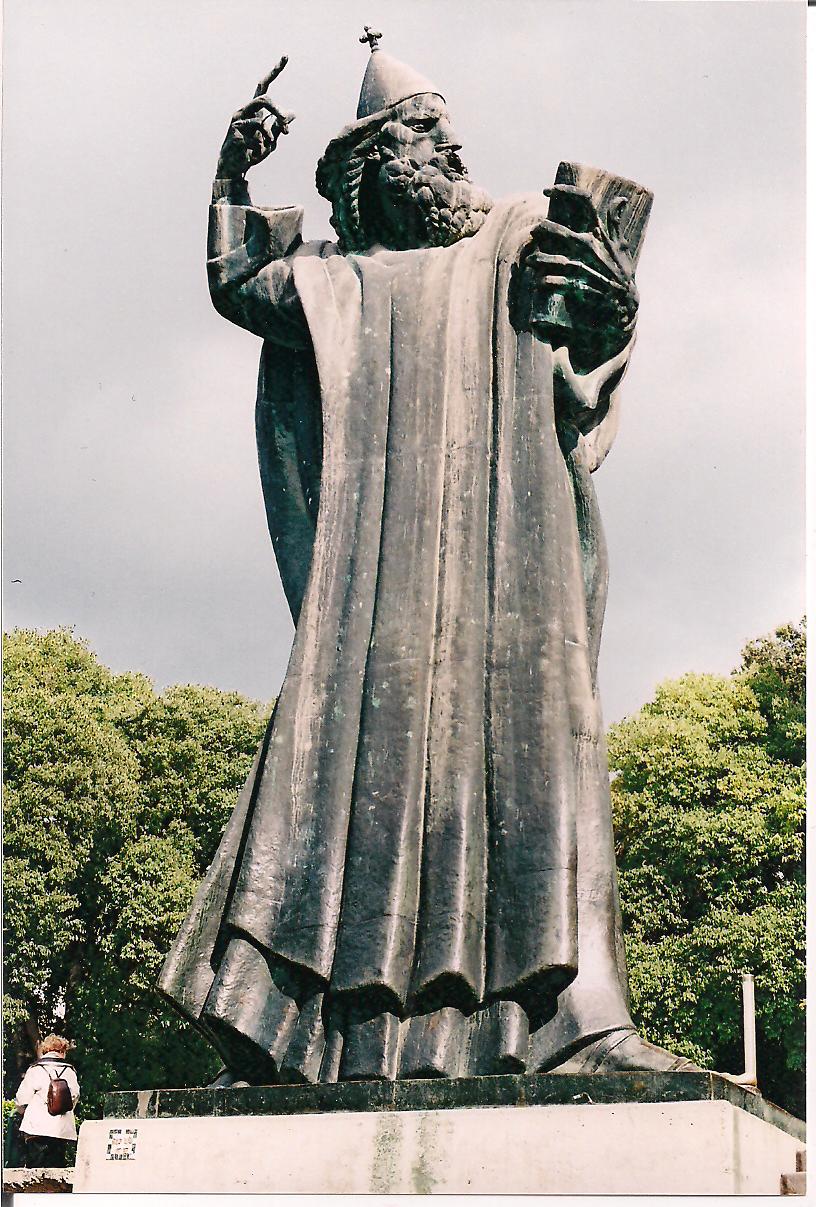
Then I went in search of Gregorius of Nin. This is a huge bronze statue of the 10th-century Slavic religious leader just outside of one the gates into the old town. He looks like an angry wizard about to cast a spell but has, somewhat incongruously, a very shiny big toe as it is considered good luck to rub it. Taking a photograph was hindered for a while by a family with two whingey little girls in pink puffa jackets, one of whom was refusing to be photographed with Gregorius as she was intent on stroking a cat that was minding its own business nearby. Naturally the cat landed the little girl a scratch causing indescribable fuss. I must admit my sympathies were with the cat.
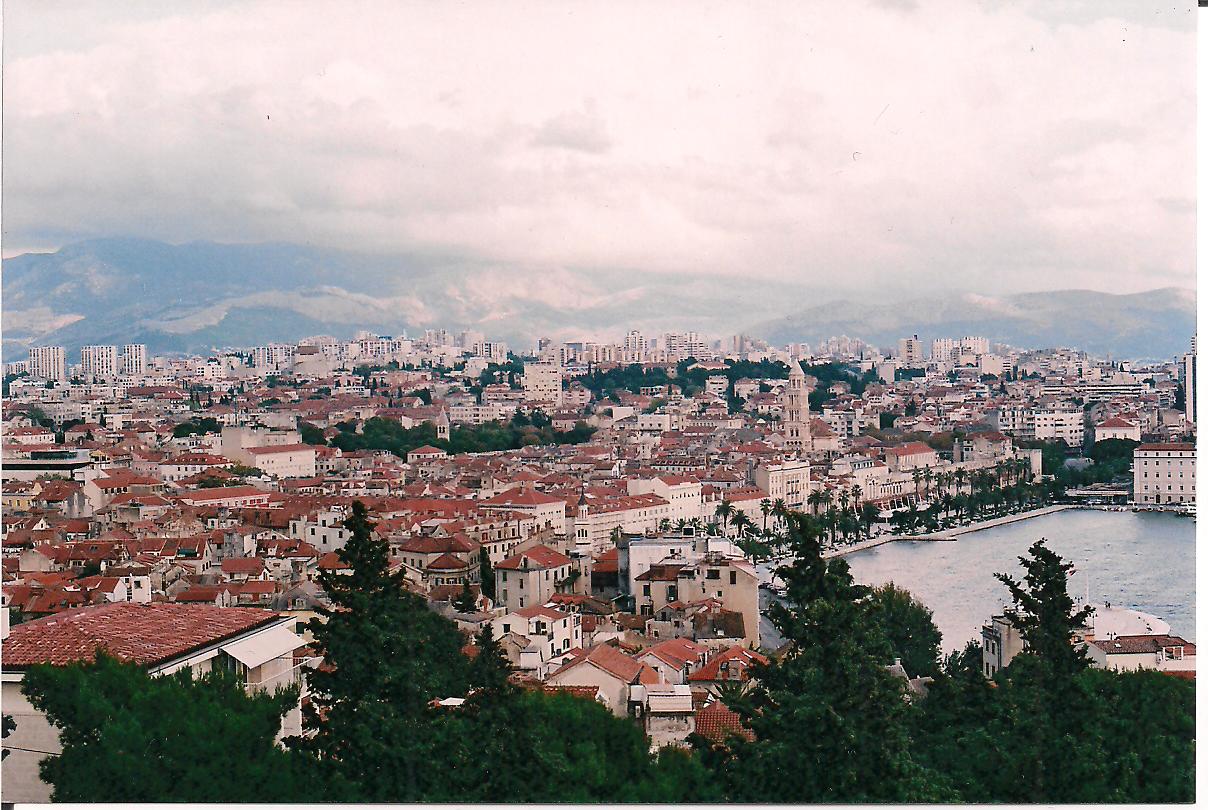
Having visited the Town Museum, housed in the lovely old medieval Papalic Palace, and the remains of a fort just to the north-east of the old town that seemed to be serving as a graveyard for redundant boats, I thought I’d make a second attempt on Marjan Hill. Approaching it from the more usual route, this time I found the steps that led up to the trail that takes one up to the top. From the trail, there is a spectacular view over Split, stretching from its palm tree-lined Adriatic waterfront, across the red-tiled roofs of the old town and the town’s more modern expansion with its flat-roofed buildings and occasional tower block to the greeny-grey hills that rise up behind into the clouds.
So that was Split – archaeology, lots of historic architecture, an old town still occupied by locals and not yet disneyfied and all sitting on the beautiful Adriatic coast – what more could you want? But then it was time to get something to eat, retrieve my bag and wait for my night train to Zagreb that was due to depart at 10pm. The train departed on time but actually getting to Zagreb was to be altogether another matter…
For my month-long Balkan trip, I used the Lonely Planet Western Balkans, the Lonely Planet Eastern European phrase book, and the Freytag & Berndt Balkans/South-East Europe map.
> See more of Split with our range of maps and travel guides.