 Shanghai-based writer and teacher Tim Neesham continues his series on modern-day China, asking what the recent presidential handover means for the country’s travel sector and its economy.
On the same day the people of the United States were giving President Obama four more years, the Chinese government was also preparing itself for major political movement.
Whether or not this is merely coincidence is up for debate, but far from the fanfare of minute by minute updates, professional opinions and the almost Eurovision-style party that accompanies America going to the polls, the Chinese changeover is by contrast understated, mysterious and clandestine. If rumours are to be believed, the new President and leader of the People’s Republic, Xi Jinping, has had his sights on Hu Jintao’s position for as long as three years.
Yet while the differences in style are as opposite as yin and yang, the questions of political policy are remarkably similar; cutting carbon emissions, boosting the economy, foreign policy – so how will the new government tackle the key issues?
Travel and tourism
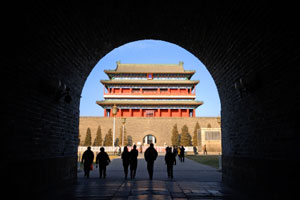
It’s perhaps unsurprising that a nation of such size and stature has to contend with a variety of domestic and international disputes. Within China itself, regular rumblings of discontent emanate from the already autonomous western regions of Xinjiang and Tibet, whereas the increasing influence the United States is having in Taiwan is also a sore and ongoing saga.
Tibet in particular has long been a headache for the Chinese government, and the pain shows no sign of subsiding as the new regime takes power. Stories of self-immolation by sympathisers campaigning for a free Tibet are sadly a fairly regular occurrence, but for the time being it is the western media that seems to pay them more heed.
The difference between Tibet and Xinjiang is that the former has long been a place of interest for travellers, with the regular opening and closing of the border between the two rarely going unnoticed in Europe and the Americas.
Similar border issues have been reported recently when travelling to Taiwan so tourists – both foreign and Chinese – planning trips to these regions are always advised to plan ahead.
 Economy
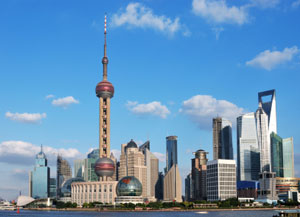
While still booming by European standards, the Chinese economy is nevertheless beginning to show signs of slowing down. For this reason, and perhaps unsurprisingly, one of the government’s newest policy implementations is to encourage more foreign financial investment in China. Extensive measures have been taken to relax stringent rules on foreign direct investments (FDIs) by cutting out much of the red tape and bureaucracy that accompany foreign companies directly investing in China through foreign currency transactions.
Additionally, restrictions on borrowing and lending between Chinese and foreign companies are being loosened. Chinese companies with foreign investment will now be allowed to lend money to their overseas parent companies, while Chinese people will also be able to carry out overseas lending using foreign currencies from within China.
Such measures represent a huge shift in policy for a nation that until now has not been known for paying too much attention to the world outside its own territories.
Foreign policy
The sense of nationalism that courses through the veins of sections of powerful Chinese is undeniable, and this is sometimes highlighted by the way the government deals with international disputes – and the widespread support its foreign policy enjoys among members of the public.
One of the latest in a long, long line of arguments with the Japanese centres on the Diaoyu Islands (Senkaku Islands in Japanese), which lie in the middle of the two and to which both lay claim.
Such is the ferocity of support for the Chinese cause within China that people actually stopped shopping at Japanese-owned stores and boycotted Japanese-brand cars, while some Japanese factories in China were forced to cease operations. One news story even reported a gang of particularly passionate protestors charging around a second-tier city smashing up Mazdas.
But while the government will undoubtedly continue to take advantage of such overwhelming displays of solidarity by its people, the mere fact that these disputes, among others with countries such as Vietnam, the Philippines and South Korea, are even taking place represents another example of the changing foreign policy by Chinese governments; one more outward looking and internationally focused.
This was further demonstrated in the autumn of 2012 by the launch of China’s first aircraft carrier, plus its continued investment in African industries such as mining and the stepping up in operations of its aerospace program.
 Environment
Anybody who has heard anything about China over the last 20 years will be aware that the country has some fairly serious pollution issues. It’s not uncommon for the air in and around a Chinese city, even Shanghai or the capital, Beijing, to be thick, grey and dusty.
Interestingly, due to its global situation as a developing country, China, like India, does not have to conform to the same rules and regulations put forth by the Kyoto Protocol as many other, more developed nations.
However, there does appear to be the dawning of a change in attitude from the Chinese government and cutting carbon emissions is now high on the agenda. A cut of 40 per cent is reportedly the target on airborne pollutants that apparently spread as far and wide as the coasts of Australia and the United States.
However, and if you’ll excuse the pun, critics say the policies are nothing more than cleverly-worded smokescreens. For example, even if the government does stick to this target, China would actually see a 60 per cent rise in emissions due simply to population growth.
Regardless of nationality or political orientation, everyone these days seems to have an opinion on China and the Chinese and many of these policies are open to extremely wide interpretation. What’s for sure though is that China is changing at a pace never before seen in global broadcast media, and there is no doubt that the international community is keeping at least one eye on the east.
Want to find out more about China? Check out the following five titles:
- Lonely Planet China – get 20% off!
- China by Yann Layma – a photographic portrait of modern China
- The Penguin History of Modern China
- China Road by Rob Gifford – a journey into the heart of modern China
- Live & Work in China – a guide to daily life in China