 “I believe that this nation should commit itself to achieving the goal, before this decade is out, of landing a man on the Moon and returning him safely to the Earth.”
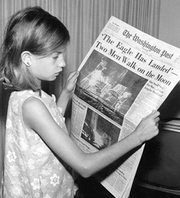
These are the words spoken by John F Kennedy on the 25th of May, 1961, on announcing his aspiration to send astronauts to the Moon before the end of the decade. Incredibly, only eight years later, Apollo 11 achieved this goal by becoming the first manned spacecraft to land on the Moon. Since 20 July 2009 marks the 40th anniversary of this extraordinary achievement, we at Stanfords decided to muster up some interesting facts about the Apollo 11 mission to the Moon…
Did you know that…
Apollo 11’s command module pilot Michael Collins was originally intended to be part of the Apollo 8 mission, but was removed after needing back surgery and replaced by Jim Lovell. After Collins was medically cleared he took what would have been Lovell’s spot on Apollo 11.
The Eagle lunar module was named after the bald eagle depicted on the Apollo 11 insignia, whilst the command module Columbia was named after the traditional feminine name used for the United States in song and poetry. However, the name Columbia may also have been chosen in reference to the columbiad cannon used to launch moonships in Jules Verne’s novel ‘From the Earth to the Moon’.
Whilst Apollo 11 famously landed with less fuel than other missions, they also encountered a premature low fuel warning. This was caused by the lunar gravity, which made the fuel slosh around and uncover the fuel sensor. On future missions extra baffles were added to the tanks.
Buzz Aldrin spoke the first words (albeit technical jargon) whilst on the moon’s surface, as he was calling out navigation data to Armstrong after landing in the Eagle.
Aldrin took a secret Communion whilst on board the Eagle. He had kept the plan quiet and did not reveal it publicly for several years as NASA was fighting a lawsuit that demanded that their astronauts refrain from religious practices whilst in space. 
The Webster Presbyterian church – of which Aldrin was a member – has in its possession the chalice used by Aldrin during his communion on the moon. The church still commemorate the Lunar Communion each year.
The moon landing was filmed using slow-scan television, which was incompatible with commercial TV. As a result, a special monitor able to receive the signal had to filmed by a conventional TV camera in order to broadcast the events to millions worldwide.
While moving in the cabin of the Eagle, Aldrin accidentally broke the circuit breaker that armed the main engine for lift off, resulting in the possibility that they may be stranded on the moon. Fortunately a felt-tip pen was sufficient to activate the switch!
Film taken of the Eagles’ lift-off from the moon shows the American flag whipping violently in the exhaust of the engine, resulting in its eventual toppling over. Subsequent Apollo missions planted the American flags at least 100 feet from the lunar module to avoid them being blown over!
The astronauts were placed in quarantine on their return for fear that they might have been exposed to undiscovered pathogens during their moon walks. The decision to do so was made in accordance with the recently passed Extra-Terrestrial Exposure Law.
If you want to learn more about the Apollo 11 Mission to the Moon, check out Buzz Aldrin’s new autobiography Magnificent Desolation, Andrew Smith’s Richard and Judy Bestseller Moondust, and the stunning photographic collection Apollo: Through the Eyes of the Astronauts. For more on the Moon itself, then take a look at the Lunar Globe and National Geographic’s The Earth’s Moon postermap. For Children, Stanfords recommends the Moon Landing pop-up book, Mission to the Moon, which contains a DVD with actual footage from the Moon landing, and the wall-mountable and illuminated Moon in My Room.
Author: Gareth Brereton