Devon and Cornwall Travel Guide

Devon, Cornwall and Southwest England-Lonely Planet Guide
Click here to buy the
Lonely Planet guide to Britain >

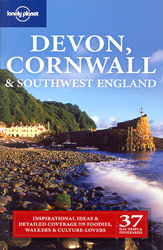
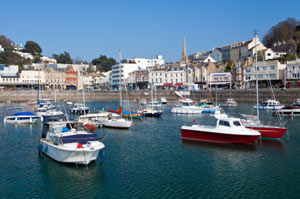
Looking for a nifty getaway? Torquay has been billed the ‘English Riviera’ thanks to its mild microclimate and exotic plants, but there’s way more to Devon’s coast than that. Think Art deco houses, fishing ports and the bigger-city attractions of Plymouth and Exeter.

What to see

Torbay has no fewer than 20 beaches – locals opt for the sand and shingle below the 240ft red-clay cliffs at Babbacombe. These can be accessed by a 1920s funicular railway.

Magnificent in warm, honey-coloured stone, Exeter’s Cathedral Church of St Peter is framed by lawns and wonky half-timbered buildings. Begun in Norman times, the cathedral has the longest unbroken stretch of Gothic vaulting in the world.

The South West Coast Path spans the whole South Devon coast. One stretch that is doable in an afternoon takes in the South Point Lighthouse, overlooking the crescent of Start Bay. Continue reading Devon and Cornwall Travel Guide

Another Side to the US's East Coast

C-130 Hercules

When one mentions the East Coast of the US most people think of big cities like Boston, NYC, Philly and Washington DC or other busy places like Atlantic City or Cape Cod. But there is also another side to this region; small quiet towns, rural roads, dunes and lighthouses. And that’s where I was heading.

My adventure really started when I entered the state of Delaware, just 25 miles south of Philadelphia. Why did I come here in the first place? Well, in the last few years I’ve been trying to visit every single state of the US and Delaware was one of the few left on my list of unvisited ones. With another box ticked I started thinking, what on earth can I see now that I’m here? Let’s be honest, Delaware doesn’t really sound like the most exciting of destinations. So I checked myself into some random motel, bought a few beers and started browsing tourist brochures and maps. It was then that I realized that I was only a few miles away from the Dover Air Force base and its Air Mobility Command Museum. And that was where I headed for the following morning.

Boy, I really hit the jackpot as this is one of the best museums I have ever visited. It has a large collection of fully restored cargo and tanker aircraft, among them such beauties as the C-130 Hercules, C-141 Starlifter, KC-135E Stratotanker and even the B-17 Flying Fortress. What is the best thing is the fact that you can actually get inside some of the planes, for example the Hercules and Starlifter are both open to visitors. In the Hercules you can even get inside the cockpit! Wow! I had bucket-loads of fun out there and would recommend this place to anyone even remotely interested in aviation. And all this for free. Can you imagine? One word of warning, a visit here will make you feel and behave like you are small boy (or girl) again.

Chesapeake Bay Bridge-Tunnel

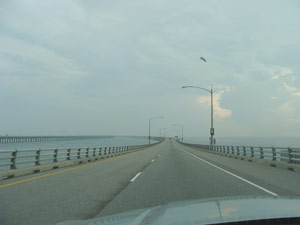
From Dover I drove south through the 270 km long Delmarva peninsula. Its name comes from the first letters of Delaware, Maryland and Virginia which all occupy parts of it. As I was getting further south across the flat landscape it was getting more and more rural. At the tip of the peninsula is located one of the greatest engineering marvels in the US, the Chesapeake Bay Bridge-Tunnel, a 37km long system of low bridges, tunnels, artificial islands and causeways. It is fun to drive, especially around sunset when the views are breathtaking. In some moments you can feel as if you are driving on the sea itself.

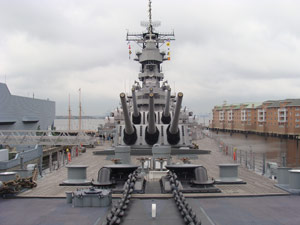
Across the bridge I entered the region of Hampton Roads, also called Tidewater, which includes a dozen or so cities, the biggest of them being Norfolk and Virginia Beach. It is a real suburban mess with potholed narrow highways choked full of traffic. Not fun at all. Still, the beaches are nice and there are some attractions. One of them, which I can definitely recommend, is the maritime-oriented science centre and museum, Nauticus. It is full of modern hands-on exhibits but the best part of it is the Iowa-class USS Wisconsin, one of the biggest battleships ever built. She served in WWII, the Korean War and the Gulf War and she is a real photogenic beauty. You can explore its deck through a self-guided tour but also ask questions of one of the volunteers on board as they are retired navy themselves and can share their stories.

Iowa-class USS Wisconsin

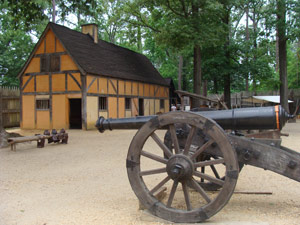
From Norfolk I headed 50 miles north to Jamestown. To get there I had to battle crazy busy suburban traffic, but it was well worth it. Jamestown is, in a way, a birthplace of America as we know it. Established in 1607, by the Virginia Company of London, it was the first permanent English settlement in North America. Nowadays there are actually two sites worth visiting there. First of them is Historic Jamestowne which is managed by the National Park Service and covers the location of the original Fort James. Here you can see archaeological remains of the original fort as well as a 17th century church tower and the site of the 17th century town. Thousands of artefacts found during the excavations are displayed in the museum on site, called Archearium. The second major attraction here is Jamestown Settlement which is actually a reconstruction of the original settlement. Located a few miles from the original site, it is a living history museum where costumed actors play roles of settlers and Indians. So you can join the town meeting or watch settlers cooking, firing muskets, blacksmithing, woodworking etc. Outside the fort you can also board replicas of the three ships which brought the colonists. What is really striking is how small the vessels are. It is hard to imagine how people survived the long transatlantic journey on these tiny wooden boats. Each boat is manned so you can ask “the captain” questions. Apparently, these boats are also fully functional and still do sail occasionally. I had a lot of fun in Jamestown as Americans are really good at organizing places like this. It is no coincidence that Hollywood and so much of the other entertainment industries are in the US; they just know how to have fun. And make money out of it.

Historic Jamestowne

From the Chesapeake region I continued further south into North Carolina. I got lost trying to avoid toll roads but I eventually made it to the Outer Banks, also known as OBX (don’t they love abbreviations out there?). The Outer Banks are a 320 km long chain of narrow barrier islands which cover most of the North Carolina coastline. It is a major tourist area but I was lucky enough to be there before the main season so it all felt positively windswept and wild. It was actually literally windswept as it was a windy, even stormy, day during my visit there. But I’m not complaining at all. In fact that’s precisely the way I like it. The beaches were empty (save for a few brave kite-surfers and fishermen), the waves were amazing and the air was crisp and salty.

After entering the Banks at the town of Kitty Hawk, towards their northern end, I headed south towards Cape Hatteras. While looking for accommodation, I accidentally ended up in the small town of Manteo, located on Roanoke Island, where the famous Lost Colony was located. Established in 1585 the colony of 108 disappeared before more settlers arrived in 1590. It is still a mystery as to what happened to them. There are a few theories but no conclusive evidence. Nowadays Manteo is a nice and quiet town of about 1000 souls.

Further south the Outer Banks get wilder and wilder, with only one road, the NC Hwy 12, to choose from. Low sand dunes border the highway in many places and on windy days sand is blown onto the road. It looks quite spectacular but it is a constant danger as well as a headache for the highway maintenance crews who have to clear it, sometimes daily. Long stretches of this part of the Banks are protected by Cape Hatteras National Seashore and Pea Island National Wildlife Refuge which means that beaches are wild and all the development is contained in a few relatively small communities. One of them is lovely Buxton, a small unincorporated place dominated by the Cape Hatteras Lighthouse, which at a height of 64m is the tallest lighthouse in America. Due to erosion it was relocated 870m inland in 1999 but views from the top are still spectacular.

Smallest bookshops in the world

Further south is another unincorporated community, Hatteras, where I found probably one of the smallest bookshops in the world. It resembles a cross between a garage, a beach shack and a garden shed but the staff was very friendly and they have a good selection of local titles. Great shop.

Even further south the road eventually ends and to continue the journey one has to take the ferry. I was tempted to board it and visit the remote Ocracoke Island but by then time was becoming an issue, so I had to turn back north and then head back into the mainland.

I think the Mid-coast of America is much more interesting than many people think. Because it was the first area to be settled by Europeans there are plenty of sites associated with the early colonial history. But it is also a relatively wild and sparsely populated region, especially compared to the megalopolis further north. If you add the military heritage and hardware on display it definitely makes a quirky and fascinating holiday destination.

Browse our collection of maps, guides and travel literature:
> USA travel guides
> USA road maps and atlases
> Travel literature inspired by the USA

Author: Gregor Swiderek

Blogger of the Month: Jayne Gorman from 40before30.com

Meet Jayne

How did you first get involved with travel blogging?

I’ve started describing myself as the ‘accidental blogger’ because when I started out I honestly had no idea what I was doing, I didn’t even know what a blogger was. I was working in international events and visiting some obscure and fascinating places like Xiamen in China. A friend suggested I chronicle my travels in a blog instead of emailing friends and family separately, so I logged onto blogger and started writing.  Mainly for my mum!

Where did the concept for 40 before 30 come from?

After I started my blog I found other bloggers began to read it and leave helpful comments. I begun reading their blogs and learning a little bit more about how it works. I wanted my blog to have a name that people could remember but also wanted to set myself a challenge around which to frame the articles. I worked out that I had already blogged about 20 countries and decided to attempt to cover another 40 before my 30th birthday. The name 40 before 30 stuck.

What advice do you have for people that want to start their own travel blog?

After trying several I would recommend WordPress as a blogging platform, its easy to use, flexible and reliable. If you start on WordPress it saves a lot of hassle transferring to it at a later date – I would know! When it comes to content I would say always remember to be yourself. Write as if you are talking to a friend, the more personal the blog the better. That’s the style I enjoy reading anyway.

How do you drive readers to your blog?

Twitter is a major source of traffic and new followers for my blog but most traffic comes from Google. A good grasp of basic SEO (search engine optimisation) principals will stand you in good stead.

What are the 3 most important things you take on a trip?

A notebook and pen – I never travel without a Moleskine; it looks intelligent and never runs out of batteries!

My iPhone – for all the tweeting, four squaring and intagramming needs

And a good book – or two. I’m not a fan of e-readers, I prefer a book you can hold, smell (love the smell of fresh pages) and treasure forever.

What is the strangest thing you have ever eaten on your travels?

I refrained from eating guinea pig in Peru – it wasn’t the most appetising looking thing, lying on it’s back, sizzling on the grill with legs in the air. But I tried both kangaroo and camel on the barbie in Australia and found them surprisingly tasty.

What’s your favourite place you have visited on your travels?

Without a doubt – India. It’s an intense experience but the food, people and clash of cultures are mesmerising and I can’t wait to go back.

How do you decide where to visit next?

I love to visit new destinations and tick them off my challenge but I also love revisiting old favourites too. For my summer holiday I’m going back to the Greek Islands, which is where we holidayed every year with my parents when we were children. I’m taking my boyfriend who has never been so it will be like seeing it for the first time again through his eyes.

What is the best thing about being a travel blogger?

Combining my twin passions of travel and writing and getting to meet many people who feel the same.

Are there any negative aspects of the job?

The worst part is probably missing out on major events in your friends and family’s lives because you are not in the country. I make conscious efforts to get around to seeing everyone whenever I am at home – and to put the iPhone away for the duration of the visit!

Read more about Jayne’s travels at 40before30.com.

Top 5 UK Travel Trips

Torquay

With the summer weather finally upon us, it’s the perfect time to getaway in the UK. Our top 5 UK Summer destinations for 2012 are; Cornwall, Devon, Yorkshire, the Cotswolds and Bristol.

Cornwall

Experience the beauty of Cornwall with it’s rugged coastline, quaint harbour villages and stunning beaches and sandy coves just waiting to be explored. Famous for its surfing and home some of the best beaches in the UK, Cornwall is the perfect place to escape to for a relaxing weekend. Continue reading Top 5 UK Travel Trips

Britain’s Grand Gourmet Tour

Great Britain-Lonely Planet Guide
Click here to buy the
Lonely Planet guide to Britain >

Want to go straight to the source of Britain’s tastiest produce? Matthew Fort takes you on a tour of 20 of the best specialty foods of Britain.

1. Mozzarella in Hampshire

Traditionally, mozzarellais made with the milk of the water buffalo in the Campania region of Southern Italy. But there’s no need to go that far – instead, try the 2,500 acres of biodynamic farmland at Laverstoke Park Farm in deepest Hampshire, where you will find the biggest herd of water buffalo in the UK – and Laverstoke’s acclaimed mozzarella.

2. Tea in Cornwall

It may seem odd for a country that drinks so much of the stuff, but there’s actually only one tea estate in Britain, and that’s Tregothnan Estate in Truro, Cornwall. It’s in the warm, wet county of Cornwall, where the climate is not that dissimilar from the classic tea-growing areas of Sri Lanka and India. There are over 30 Assam and Chinese varieties, and tea production follows the time-honoured system of hand plucking the bushes.

3. Sparkling wine in Bodmin

There was a time when British wine was scoffed at. No longer. British wine, and in particular British sparkling wine, regularly picks up awards in international competitions. And no British sparkling wine sparkles more than that of the Camel Valley vineyard. It won the Trophy and a Gold Medal in the International Wine Challenge for Camel Valley Bacchus in 2009.

4. Berries in Gloucestershire

There’s nothing quite like picking your own fruit on a warm summer’s day and there’s plenty to pick at the Wotton Farm Shop on the Severn escarpment in south Gloucestershire. They grow raspberries, strawberries, redcurrants, gooseberries, blueberries and tayberrie. It’s run by the Grimes family, and is a member of the Big G group of Gloucestershire Farm Shops, a collective of growers and artisan producers.

5. Apple juice in Brookthorpe

Berkley Pippin, Transparent Codlin: there’s a kind of poetry about the names of apples you’ll find growing in the orchards of Dave Kaspar and Helen Brent-Smith, the two-person workforce behind Day’s Cottage. You can buy cider, perry and bottles of apple juice, each graded by sweetness and frequently with the names of the particular apples making the juice at this cheerfully ramshackle cottage.

6. Chicken in Chepstow

Madgett’s Farm has been there, in the rolling, wooded landscape where England meets Wales, for a very, very long time – it’s even mentioned in the Doomsday Book – and it has a reputation for the quality of their chickens, ducks, geese and turkeys. The birds have proper texture and a deep rich flavour, as you can judge yourself by visiting the farm, buying one and taking it home to cook and eat.

7. Honey in Monmouthshire

There’s a season for honey. It lasts, according to Les and Jill Chirnside of the Llanover Skirrid Honey Farm near Abergavenny, from about March until the end of October, or even into November. During this period, it’s all go for beekeepers, removing the honey from the combs and getting it into jars. Les and Jill are happy to talk honey with anybody – just call first to make sure they’re not out tending to their bees.

8. Caerphilly cheese in Ceredigion

Trethowan’s Dairy is a family business, making Gorwydd Caerphilly (pronounced Gor-with), with its stone-coloured rind, its inside the colour of primroses and its fresh, creamy flavour with a distinct lemony tang at the end of it. The same Gorwydd Caerphilly that has won a hatful of awards, including 2001 Best Welsh Cheese (World Cheese Awards). The dairy also runs a cheese school in collaboration with food writer Fiona Beckett, to teach the finer points of artisan cheese appreciation.

9. Bread in Montogomery

Speed and heat are the great enemies of the goodness in flour, and nothing grinds slower or cooler than a water-driven mill. It’s this go-slow approach to milling that has made Matt Scott’s Bacheldre flours the choice of a slew of first-division chefs and bakers, as well as the Ludlow Food Centre in Shropshire, where Anna, the master baker, uses them for her cakes and breads.

10. Beef in Denbighshire

There are 12,500 acres of the Rhug Estate,the core of which is a 2,500-acre organic farm. Here, Lord Newborough has built up a herd of glorious Aberdeen Angus cattle. These are reared on a coastal farm near Caernafon and then moved to the lusher inland pastures of Rhug, where they can mature.

11. Pies in Cumbria

There are pigs galore at Sillfield Farm, in a handsome part of the Lake District. They’re special pigs, too – Gloucester Old Spot, saddleback, Middle White, Tamworth and wild boar – all old breeds with particular, delicious qualities. In the end, they all go into a range of porky products made on the farm, under the watchful eye of Peter Gott, a true food hero, who can count Prince Charles and Jamie Oliver among his admirers.

12. Kippers in the Isle of Man

Moore’s Traditional Curers have been splitting, gutting, salting and smoking herrings on the Isle of Man in time-honoured fashion since 1884. Manx kippers tend to be smaller than those of the east coast, and the flavour is delicate and mellow, with a touch more smoke than salt. Moore’s are proud to show off the production process in kippering season, which runs from May through to September.

13. Fudge in Penrith

It’s called The Toffee Shop, but it’s actually more famous for its fudge, which has been made to the same recipe for over 100 years. There’s not much on display in the windows, or even in the shop itself, just slabs of fantastic fudge wrapped in opaque greaseproof paper and heaps of toffee. And then there’s the comforting aroma of warm molten sugar and butter…

14. Soft cheese in Dumfries

The Loch Arthur Community is set among the green, rolling hills of Dumfrieshire and the farm is run to strict biodynamic principles. Among Loch Arthur’s cheeses are Crannog, a soft cheese, and Criffel, a semi-soft rind-washed cheese, both of which have won multiple awards. Visit not only to try them yourself but to see the farm, large garden, creamery, bakery, woodwork studio, weaving workshop and thriving farm shop.

15. Salmon in Sutherland

You’ll find Kinloch Lodge, where Hugh Montgomery practises his craft, on the northernmost edge of Scotland, off one of the narrowest, windiest roads you’ll ever drive along. Hugh passionately labours over his sides of salmon (wild salmon caught locally or farmed from Loch Duart) with exacting attention to detail. He also smokes trout, venison, mackerel, duck and pheasants and does a range of sausages and haggis.

16. Sausages in Nottinghamshire

So you want to learn about making sausages? Or how to cure a ham or prepare any charcuterie? Then make the trip to Wellbeck, a kind of forgotten fairyland, where you’ll find the School for Artisan Food, housed in a block of renovated 19th-century stables. There’s a working bakery and a dairy, as well as the butchery section, and a micro-brewery is about to open. Do a one- or two-day course – or you can also just look round for free.

17. Beer in Burton upon Trent

Burton upon Trent has been the capital city of British brewing ever since the unique properties of the water there were discovered to be ideal for the brewing of ales. Here you can tour The National Brewery Centre to see how beer is made or attend one of the regular tasting events, and then order a pint of your choice in The Brewery Tap bar.

18. Spirits in Suffolk

Adnams have been brewing their award-winning beers at Southwold since 1872, and the same care is now being brought to bear on their gins and vodkas, all of which are made, as far as possible, with locally grown raw materials. There are tours of the distillery for the over-18s and the £10 admission entitles you to a discount on bottles sold in the Adnams shop nearby.

19. Shellfish in Kent

Whitstable may be more famous for its oysters than its whelks, but there are still enough lovers of this chunky marine snail to keep the Wests at work in pretty tar-black clapperboard buildings at one end of picturesque Whitstable Harbour. Here they unload the whelks from the whelk pots, grade them, and then boil them for 20 minutes. After that, they are plucked out of their shells and are ready to eat.

20. Wild food in Sussex

Nick Weston was the survival expert on Channel 4’s Shipwrecked series, but now he shows other people how it’s done, not just the which-berry-can-I-eat-without- poisoning-myself part, but the full range of shooting, fishing, preparing and cooking as well. Between April and October, he conducts one-day and two-day courses that cover whatever food is free, wild and in season, how to find it, deal with it and how best to serve it up.

This article was originally published on lonelyplanet.com

britain_lonely_planet_guides

Philadelphia Travel Guide

Philadelphia. The last big city of the east coast which I had yet to visit. In previous years I managed to visit the likes of Boston and New York to the north as well as Baltimore and Washington DC to the south, but somehow Philadelphia had always eluded me. That changed in May when I finally managed to get there. It is shame I waited so long as Philadelphia is a really interesting place: a great mix of history and a modern vibrant culture.

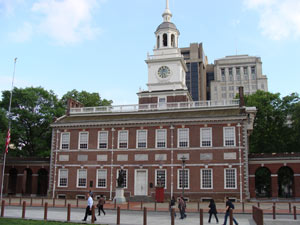
Independence Hall

I started my visit from the touristic heart of the city, the Independence National Historical Park, which preserves several sites associated with the American Revolution. The most important of them is of course Independence Hall where both the Declaration of Independence and the the United States Constitution were debated and adopted. The red brick building, which was once the colonial legislature for the Province of Pennsylvania, was completed in 1753 in the Georgian style and is nowadays a UNESCO World Heritage Site. You can visit it for free but you still have to get a ticket and go through the airport-style security checks. Tickets are timed and go fast so if you really want to get inside, make the Independence Visitor Center your first port of call in Philadelphia. Continue reading Philadelphia Travel Guide

Indian Summer: Travel Books that Transport You

India

Travelling in India is an assault on the senses. First time visitors can find themselves overwhelmed; by the vibrant colours, the smell of poverty, a claustrophobic feeling amongst the teeming crowds. And yet many of us are enticed to revisit; charmed by the people, attracted to the intensity.I revisit my sensory journey to India through the eyes of fictional characters and enthralling tales that are based there. You can escape the grey and dreary UK weather and enjoy an Indian summer through this sample of captivating books set in God’s Own Country. Continue reading Indian Summer: Travel Books that Transport You

Where to Visit in Israel

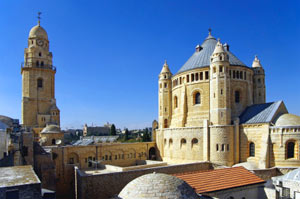
Jerusulem

Israel is a small country that is characterised by variety. Its landscape, people, cultures, religions and history are a big mixture, making for some hugely interesting and rewarding travelling. Despite its small size, there is a lot to see and do in Israel – from its beautiful old cities to its nature and impressive landscape. Continue reading Where to Visit in Israel

Looking at London – with Your Ears

Stanfords Audio Tours

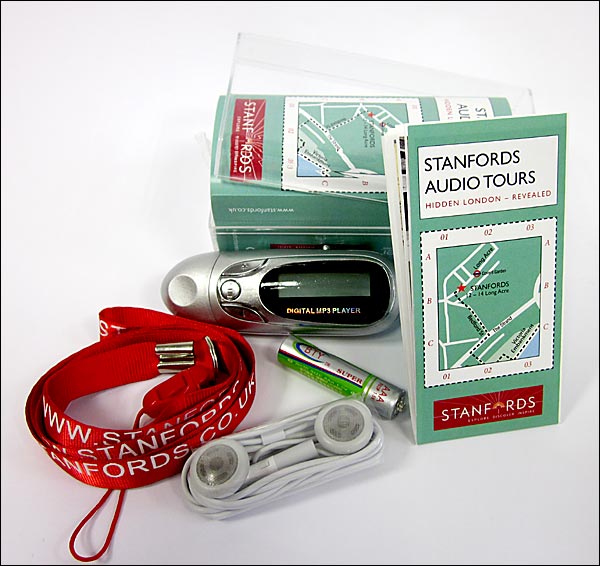
There are many ways to explore London, and most of them involve looking at specialist books and maps or following guides with a crowd of people. But now Stanfords are introducing a different way to discover the delights of the capital, with Stanfords Self-Guided Audio Tours.  These are like the audio guides we use in museums and galleries, but out on the street. It’s time to look up – not down!

These informative and amusing Audio Tours come in a ready-to-go package containing your own mp3 player preloaded with an audio tour specially designed with Stanfords customers in mind. Headphones, a lanyard, a battery and a unique map of the route complete the kit, and it’s yours to keep. All you have to do is press play and start walking – and listening.

The commentary is intelligent and engaging. The music and ambient sound effects are enhancing. Continue reading Looking at London – with Your Ears

Pittsburgh and Fallingwater

Pittsburgh steep and wooded hiilsPittsburgh is one of the cities I have wanted to visit for years. Why? Difficult to explain, but I guess it has a lot to do with me being a map geek. I often study maps of cities or, I would rather say, virtually travel on them. Pittsburgh’s layout looked interesting to me from the first glance at the map of Pennsylvania. Its compact downtown is located on a triangular patch of land at the confluence of Allegheny and Monongahela rivers, where they form the Ohio River, while its neighbourhoods and suburbs spread out over many steep and wooded hills. Also, as a person who has a mild obsession with bridges, I couldn’t miss the fact that Pittsburgh features over 440 of them. So, when I was planning my latest US adventure, I made sure the Steel City was on my itinerary. Continue reading Pittsburgh and Fallingwater