Award nomination for Stanfords’ café

Stanfords’ in-store café is in the running to win the prestigious London Lifestyle Award 2010. Sacred Café, which can be found at the Floral Street entrance of our London store, has been announced as a finalist in the Coffee Shop of the Year category.

The London Lifestyle Awards aim to honour those whose work has made an outstanding contribution to London and to promote excellence and diversity for throughout the city.

Sacred Café is owned and run by New Zealanders Tubbs Wanigasekera and Matthew Clark, and they have been operating for over five years in London. Clark says, “This is a huge thrill for us and immensely gratifying to be recognised against other excellent cafes in London”.

The cafe has a reputation for high-quality coffee, friendly staff and stylish and comfortable interiors, and is a particular favourite with Antipodeans living in and visiting London. Sacred is also becoming known for their quality teas that come from Wanigasekera’s family-run plantations in Ceylon (Sri Lanka).

Walk Of The Month: Portesham and Hardy's Monument, Dorset

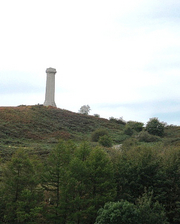
A blackbird was singing on the garden wall of Portesham House, where stone lions couchant guarded the porch. Thomas Masterman Hardy, who lived here in the Dorset downs as a young boy in 1778, was destined for fame as a much-loved sailor and man of action. Horatio Nelson’s close friend and trusted Flag Captain died loaded with honours in September 1839. In that month his namesake, the future novelist and poet Thomas Hardy, became the tiniest of twinkles in his mother’s eye at Higher Bockhampton, a few miles over the hills to the east. It’s not the great writer who is commemorated by the tall stone Hardy’s Monument on the downs, but the fighting admiral from little Portesham village.

Near the path to Hardy’s Monument crouches the Hell Stone, a Neolithic tomb resembling a heavily armoured giant crab, whose nine massive stone legs support a huge capstone of flint-studded conglomerate. The Devil, playing a game of quoits, hurled the Hell Stone here from the Isle of Portland 10 miles away, so local stories say.

Up in a cold wind by the monument, Jane and I savoured that fabulous tale along with an equally fabulous burger of local beef, cooked and served with a relish of friendly banter by the pony-tailed man in the Hobo Catering van. Hobo the Canadian Inuit dog (who has kindly lent her name to the admirable fast-food business run by her master) followed every mouthful with the soulful gaze of true cupboard love.

Christopher Somerville at Hobo's, Dorset Truth to tell, Hardy’s Monument looks more like a factory chimney than a memorial to a national hero. But the views over Dorset are sensational. Even more stunning is the prospect from the steep ridge above Waddon House, where we paused on the way back to Portesham. Downs and farmlands, the shingle bar of Chesil Beach, St Catherine’s Chapel on its knoll of strip lynchets, the Devil’s quoits pitch of Portland lying like the Gibraltar of Wessex on a bay of molten silver – if any view could entice an adventurous lad to sea, it would be this.

Route map

See the route map for this walk.

~Due to licensing restrictions in place on Ordnance Survey mapping the mapping extract must be removed prior to printing, or all printing must be limited to 10 paper copies or less and used for personal use only.~

Route profile

Portesham - walk of the month route profile


Use this GPX file: [FILE:175] for importing the route into digital mapping products, such as Memory Map and Anquet or drop it straight onto your GPS unit. Check the instructions for your particular model to see how this is done.

Start & finish

King’s Arms, Portesham, Dorset DT3 4ET (OS ref SY 603857).

Getting there

Train (www.thetrainline.com; www.railcard.co.uk) to Upwey (6 miles); bus service 61 from Dorchester (www.surelinebuses.co.uk); road – Portesham signed off A35 Dorchester-Bridport at Winterbourne Abbas.


Walk

7½ miles, moderate grade, OS Explorer OL15

From King’s Arms, cross street; up Church Lane; right up Back Street; left opposite Manor Close (602860). Follow ‘Portesham Withy Beds, White Hill, Abbotsbury Round Walk/ARW’ signs/waymark arrows. Pass withy beds; through gate at end of trees (592860). Sharp right up steep bank; follow fence (fingerpost, ARW) for 1/3 mile. Right over stile (592865) by ‘South Dorset Ridgeway, Hardy’s Monument/HM’ marker stone. Follow ‘Inland Coast Path/ICP’ for 2/3 mile to road (601869). Left (great care!) for 30yd; right (HM fingerpost) down fence for two fields. Detour right (605869; ‘Hell Stone only’) over stone stile to Hell Stone (605867); return to path; follow ICP through wood to Hardy’s Monument (613876). Cross road; follow ICP to recross road (616877; ‘ICP, Jubilee Trail/JT’). In 1/3 mile (620874), right off ICP, following JT for 1¼ miles past Bench farm ruins (624864) to road (630857). Right; in 100yd, right (’Portesham’); in 200yd, right over stile (yellow arrow/YA). Diagonally right to ridge top; follow fence (stiles, YAs) for 1 mile. Through gate by Portesham Farm (612861); left down drive; right along lane into Portesham.

Lunch: Hobo’s Catering van at Hardy’s Monument (presence likely, not guaranteed); King’s Arms, Portesham (tel: 01305 871342; www.kingsarmsportesham.com; B&B available)

More info: Dorchester TIC (tel: 01305 267992) www.westdorset.com; www.ramblers.org.uk.

See books by Christopher Somerville.

Online map and more walks: www.christophersomerville.co.uk. Author: Christopher Somerville

Stanfords first to stock exclusive handmade globes!

Exclusive globe-makers Bellerby & Co have chosen Stanfords to be the first shop to stock their handmade globes.

Bellerby & Co established two years ago, and their first edition globes The Britannia and The Perano are now available. Each globe is hand-coloured, the timber used for the table tops is oak up to 200 years old, while the brass is cast in Bellerby’s foundry.

The company’s owner, Peter Bellerby says, “We established with the aim of making beautiful globes affordable… Entirely handmade, they represent quality and beauty that is unrivalled.”

The Britannia map reflects contemporary country borders and boundaries and is lettered in a custom 18th-century font designed by James Mosley, a distinguished typographer who ran St Bride’s printing library in London for most of the last half of the 19th century. Continue reading Stanfords first to stock exclusive handmade globes!

Walk of the Month: Fingle Bridge and Castle Drogo, Devon

I hadn’t made a mistake after 30 years – the ridge-top village of Drewsteignton, perched on the northern edge of Dartmoor, was still totally charming. There were the pretty cottages and the Drewe Arms as I recalled them, bowed low under thatch on the diminutive village square, all presided over by the tall tower of Holy Trinity church. When I was last here the pub had been run as a front-room business by Mabel Mudge, 83 years old and spry as a lamb. ‘Oh, you remember Mabel!’ smiled the man I got chatting to on the path over to the River Teign. ‘Yes, she retired when she got to 99. 75 years she ran that place, and it never changed a bit.’

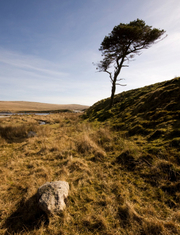
There was a wonderful view from the neighbouring ridge back to Drewsteignton huddled on its hilltop, and a sight of moor ponies grazing the gorse with streaming manes and tails. The bridle path ran at the rim of the Teign’s steep wooded gorge, then slanted down through oak and silver birch to where the river ran flashing with sunlight under the three ancient arches of Fingle Bridge. I lingered, watching children skimming stones between the cutwaters, before following the Fisherman’s Path on its rocky, rooty, twisting way, close above the river.

A gang of four tiny tots hooted and squeaked as they fished for bubbles with sticks, and high overhead a buzzard went circling over the walls of Castle Drogo. At the bridge below the castle I struck up a side path, climbing past the L-shaped thatched house of Coombe, snug among fruit trees in its peach of a dell.

Fingle Bridge, Dartmoor, Devon. Photo: Christopher SomervilleIf there was ever a fairytale castle… Castle Drogo looks down from a spur of rock, 300 feet to the Teign in the wooded gorge below. Edwardian tea tycoon Julius Drew excavated himself a Norman ancestry, decided to build himself a proper old castle, and got Sir Edwin Luyens to make his dream come true in stark granite. No Mad King Ludwig touches here – all is plain, strong and massive, a triumph of restraint. Marked ways lead from the gorge paths to the castle by way of beautiful gardens of roses and spring flowers. No wonder Drogo is called ‘the last great castle in England’.

When I got back to Drewsteignton and into the Drewe Arms, I saw it had changed – more than a bit. But it’s still a cosy place to raise a glass under the beams in celebration of Mabel Mudge and all that’s great about the West Country village pub.

Route map

See the route map for this walk.

Start & finish

Drewe Arms, Drewsteignton, Devon EX6 6QN (OS ref SX 736908)

Getting there
Bus: Dartline 173 (Exeter-Chagford), Country Bus 279 (Totnes-Okehampton; Sundays, public hols).
Road: From A30 east of Okehampton, A382 through Whiddon Down. In ½ a mile, Drewsteignton signed to left.

Walk

6 miles, moderate, OS Explorer OL28
From Drewsteignton Square, left; round right bend; 20 yards past old school, left (‘2 Moors Way’/MW) down lane. Ahead in bottom of valley (‘Castle Drogo/CD’) up steps. Follow fence up fields and over ridge. Through kissing gate; in 15 yards, left (732900); follow ‘Fingle Bridge’ fingerposts for 3/4 of a mile down to road (743901). Right to Fingle Bridge; don’t cross; right along river (‘Fisherman’s Path, CD’) for 1½ miles to bridge below Castle Drogo (721895). Right uphill (CD). In 1/3 of a mile, right (720900; ‘Hunter’s Path’); follow MW back to Drewsteignton.

Some steep steps; some rocky ledges in gorge with handrail (watch kids/dogs!)

Lunch: Drewe Arms, Drewsteignton (01647 281224; www.thedrewearms.co.uk); Fingle Bridge Inn (01647 281287; www.finglebridgeinn.com)

Castle Drogo (NT): 01647 434118;www.nationaltrust.org.uk/castledrogo

More info: Okehampton Tourist Information Centre, tel: 01837 53020; www.visitdevon.co.uk;www.ramblers.org.uk.

Browse books by Christopher Somerville.

See Christopher’s website:www.christophersomerville.co.uk

Author: Christopher Somerville

Walk Of The Month: Scorriton and Huntingdon Warren, Dartmoor

Our June Walk of the Month finds writer and journalist Christopher Somerville bombing across Dartmoor…

Whatever the Tradesman’s Arms put in their beef jalfrezi on curry night, it revved me right up for a brilliant walk the following day. The hamlet of Scorriton, sitting tight under the eastern rim of Dartmoor, almost lost its pub a few years back, and the shock of that threat galvanised the Tradesman’s Arms into a whole sparky new life. The food’s good, the beer’s excellent, and the social life that revolves around the little inn, from poetry nights to quizzes and singsongs to story-telling, is just amazing. If only all rural communities could respond like tiny Scorriton to the gradual sapping of their resources!

I strode up the stony lane to Chalk Ford like a man on a mission. Misty weather was forecast for later in the day, and though I had my trusty Satmap GPS device in my pack, I didn’t particularly want to find myself in a Dartmoor pea-souper. Continue reading Walk Of The Month: Scorriton and Huntingdon Warren, Dartmoor

Author sets up camp at Stanfords

Author and eco-traveller Dixe Wills cycled to Stanfords in London on Friday lunchtime and set up camp in our store.

Dixe Wills with two fans in London Stanfords He was signing copies of his new book – Tiny Campsites – where he reviews 75 of the best tiny campsites (all an acre or under in size) in Britain, and each of which is guaranteed to give a unique holiday experience.

Guardian travel writer and fervent camper Dixe Wills has travelled through England, Scotland and Wales in search of stunning little places to pitch: on farms, cliff-tops and islands; in woodlands, quarries, orchards and back gardens; and beside pubs, lochs, rivers and museums. Continue reading Author sets up camp at Stanfords

Walk Of the Month: Purton and Sharpness, Gloucestershire

There’s definitely something strange about the river country along the Severn Estuary. Whether it’s the influence of the mile-wide tideway, the big overarching skies, or the highly idiosyncratic dwellings and their occupants down the twisty lanes that end abruptly at the river, to walk here is to step away from the everyday into some parallel, Severn-centred universe.

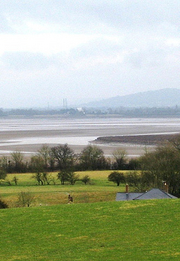
Setting out from Brookend, a few miles north of Bristol on the ‘English bank’, Jane and I found ourselves straight away in a tangle of wide old green lanes. You feel that the landscape must be flat, so close to such a big river, so it comes as a shock to top a rise of ground and find a 20-mile view unrolling. To the east the long South Cotswold ridge, May Hill and the heavy tree cover of the Forest of Dean swelling in the west, and between them the Severn hurrying seaward in a muscular double bend of low-tide tan and silver – we halted to gaze our fill before hurrying down the slope into Purton.

In the early 19th century a 16-mile-long canal was dug from Gloucester down to Sharpness on the lower Severn, cutting out some of the dangerous river bends. Purton, right beside the canal, became a busy little place. Nowadays it’s a sleepy waterside hamlet once more, full of charm and possessed of a true classic of a never-changing pub. No food, no late opening and no nonsense at the Berkeley Arms under the admirable guidance of Mrs Wendy Lord – just a huge fire, stone floors, comfortable old settles, and beer so good it sits up and begs to be drunk. Resistance is useless.

Just down the river path we found an extraordinary elephant’s graveyard of redundant boats – dozens of concrete barges and wooden Severn colliers, rammed into the mud during the late years of the 20th century to stabilise the tide-burrowed bank between river and canal. Lovingly labelled by the ‘Friends of Purton’, they cluster the margins of Severn in death as in life – Orby, Abbey, Huntley and Harriett, their timbers shivered, their sides split, tillers and hawseholes still bravely held aloft, a poignant gathering.

Beached barge - 'Harriet' - at Purton, Gloucestershire. Photo: Christopher Somerville  On down the canal, and through the abutments of a mighty railway bridge that once spanned the Severn. On the night of 25 October 1960, in a thick autumn fog and pitch darkness, two tankers – one loaded with oil, the other with petrol – collided with the bridge piers and exploded, sheeting the river in flame and killing five of the eight crewmen. The damaged bridge was eventually demolished, but the remnants of the tankers are still seen on the riverbed at low tide, and plenty of people around the river port of Sharpness retain vivid memories of that awful night.

Sharpness itself is a rare survival, a working port handling cement, fertiliser and scrap metal far up the tidal Severn. We stopped to watch the cranes swinging bags of fertiliser out of the hold of Shetland Trader, then crossed the canal and made for the field path to Brookend with a sharp appetite apiece. ‘Try the antelope and ginger sauce,’ suggested cheery Dan in the Lammastide Inn. I thought he was pulling my leg, till I looked at the menu board. You’re not in Kansas any more, Toto.

Route map

Walk of the month - May - annotated route map - Purton and Sharpness, Gloucestershire. Due to licensing restrictions in place on Ordnance Survey mapping the mapping extract must be removed prior to printing, or all printing must be limited to 10 paper copies or less and used for personal use only

Due to licensing restrictions in place on Ordnance Survey mapping the mapping extract must be removed prior to printing, or all printing must be limited to 10 paper copies or less and used for personal use only.

Chris’s map annotations:
1 – Lammastide Inn (START)
2 – Lip Lane
3 – Gloucester & Sharpness Canal
4 – Swing Bridge
5 – Berkeley Arms PH
6 – Boat ‘graveyard’
7 – Severn Railway Bridge Abutments
8 – Dockers’ Club
9 – Docks
10 – Swing Bridge
11 – Village Hall


Route profile

Purton and Sharpness, Gloucestershire walk route profile

Use this GPX file: [FILE:137] for importing the route into digital mapping products, such as Memory Map and Anquet or drop it straight onto your GPS unit. Check the instructions for your particular model to see how this is done.

Use this KML file: [FILE:138] to see the route in Google Maps (under My maps) and Google Earth.

Start & finish

Lammastide PH, Brookend, Sharpness GL13 9SF (OS ref SO 684021).

Getting there

Train to Cam & Dursley (7 miles); several buses to Sharpness.

Road: M5 (Jct 14); A38 (‘Gloucester’); B4066 (‘Sharpness’); right to Brookend. Park at Lammastide PH (please ask permission, and give the pub your custom!)

Walk

6½ miles, easy grade, OS Explorer OL14
From pub, right past phone box; left on bend (‘bridleway’). In 100 yards at gate, keep left on green lane. At T-jct, right (686023 – blue arrow). In 300 yards, opposite gate, left (689022 – ‘footpath’ stone) across fields (gates, yellow arrows/YAs) for 1 mile to Purton. Reach road left of church. (682042). Ahead across canal; left to next bridge (691044); right past Berkeley Arms PH. Riverside path joins canal towpath (687044). NB To see beached boats, detour right here.

Towpath into Sharpness; cross canal (670030). Up steps (‘Severn Way’); ahead past bungalows; right past Dockers’ Club (671029) to road. Left across more seaward of 2 swing bridges (673029). Ahead to road (677026); right (‘Sharpness’). Left beside Village Hall (674021 – fingerpost); cross stile; left to cross stile in hedge (678021); up hedge, through gate at top; YAs to Brookend.

Lunch: Lammastide Inn (friendly and handy), tel: 01453 811337.

Drink: Berkeley Arms (open Wed-Sun,7-10pm; Sat-Sun 12-2pm).

More info:Stroud Tourist Information Centre, tel: 01453 760960.

See books by Christopher Somerville.

More walks: www.christophersomerville.co.uk.

A version of this article first appeared in The Times, 13/03/2010.

Author: Christopher Somerville

Nepal and China finally agree on Everest height

China and Nepal have resolved a long-running dispute over the height of Mount Everest.
They have now agreed that the world’s highest mountain – which straddles the border between the two countries – should be officially recognised as being 8,848m tall.

The Chinese previously argued it should be measured by its rock height, while Nepal said it should be measured by its snow height – four metres higher. During talks in Nepal’s capital Kathmandu, China accepted that claim. Nepal also recognises China’s claim that the rock height of Everest is 8,844m.

The mountain’s exact height has been disputed ever since the first measurement was made in 1856. The widely accepted height of 8,848m was first recorded by an Indian survey in 1955, which measured the mountain’s snow cap, rather than the rock beneath it.

But geologists say that both the estimates could be wrong as they say the mountain is becoming higher as India is gradually pushed beneath China and Nepal due to shifting continental plates.

In 1999 an American team recorded a height of 8,850m with GPS technology – a figure that is now used by the US National Geographic Society – although it has not been officially accepted by Nepal.

Browse our collection of maps, guides and travel literature:
> Nepal travel guides
> Nepal road maps and atlases
> Travel literature inspired by Nepal

Walk of the month: Blagdon Lake, Somerset

Ranulph FiennesOur second Walk of the Month from writer and journalist Christopher Somerville, who lives and loves the Bristol area…

A male blackbird, yellow bill a-tremble, was making tentative inquiries of a drab brown female on a bough in the New Inn’s garden as I started down the hill towards Blagdon Lake. The celandines were still curled tight and green along the high-banked lane, but there was a breath of warmth in the low sun, more than Somerset had felt for the past three months.

For well over a century Blagdon Lake water has been piped to Bristol’s taps, ten miles over the hills to the north. Crossing the broad dam of the lake, I heard the subdued roar of the flood-engorged weir where snowmelt and swollen streams were sending their waters surging down the spillway. I followed the fishermen’s path through the trees along the north bank of the lake, then struck out across fields thick with the winter’s mud to reach the lane by Bellevue Farm – well named for its prospect of water and hills.

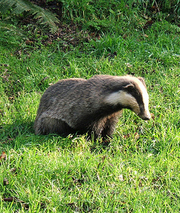
A little way up the lane I was pulled up short by the sight of a large badger squatting on its haunches in a cottage garden. It shouldn’t have been out of its sett this early in the year, and it certainly should have fled at sight of me, instead of fixing me with a sleepy stare. It was I who walked away, leaving the badger master of the place.

Blagdon Lake SomersetThe southward views grew better and better as the lane rose, until at the top of Awkward Hill I looked down over fields patchworked with green grass and red ploughland, out across the whole expanse of Blagdon Lake to the steep wall of the Mendip Hills beyond in early afternoon shadow.

The late winter light, already beginning to diminish, lay softly on the lake with a blurred sheen more like watered silk than the hard mirrored effect of a summer day’s sunshine.

Down by the lake once more, I squelched towards Blagdon over boggy meadows where wild geese went lumbering into the air at my approach, trumpeting reprovingly. It was almost time for them to be off to their mating and brood-rearing, 2,000 miles north of these green Somerset fields.

Back at the New Inn, sitting on the terrace with a cheddar ploughman’s and a kingly view over the lake, I heard the love-struck blackbird – or possibly another like him – still singing for spring.

Route map

Blagdon Annotated Map
Due to licensing restrictions in place on Ordnance Survey mapping the mapping extract must be removed prior to printing, or all printing must be limited to 10 paper copies or less and used for personal use only.

Chris’s map annotations:

1 – A368
2 – New Inn
3 – Park Lane
4 – Dam
5 – Awkward Hill
6 – Industrial Chimney
7 – Holt Farm

Route profile

Blagdon Route Profile
Use this GPX file: Bladgon Lake Walk (8 KB) for importing the route into digital mapping products, such as Memory Map and Anquet or drop it straight onto your GPS unit. Check the instructions for your particular model to see how this is done.
Use this KML file: Bladgon Lake Walk (46 KB) to see the route in Google Maps (under My maps) and Google Earth.

Start & finish

New Inn, Blagdon BS40 7SB (OS ref ST 505589)

Getting there

Road: M5 Jct 21; A 371, A368; left in Blagdon opposite Live & Let Live PH to New Inn.

Walk

5 miles, easy grade, OS Explorers 141, 154

From New Inn, walk down Park Lane, along the reservoir dam wall. On the far side, go right (504603) beside reservoir for half a mile, then forward (511608) to Bellevue Farm at West Town (517604). Left for 10 yards to road, right for three quarters of a mile; 300 yards past the top of Awkward Hill (nameplate), right over stile (527600), following path over stiles, down across fields to road (529593). Left for 250 yards; just before industrial chimney, right (531591 – footpath sign) into damp fields. Follow the footpath close to the reservoir for 1 miles; 500 yards past Holt Farm, bear left (510591) on an uphill path back to Blagdon.

Lunch: New Inn (tel: 01761 462 475), superb lake views from garden; NB no children indoors.

More info: Wells Tourist Information,tel: 01749 672 552; www.visitsomerset.co.uk.

See books by Christopher Somerville.
See his website: www.christophersomerville.co.uk.

Author: Christopher Somerville

Volcanic eruption in Iceland

A long-dormant volcano has erupted in Iceland. The volcano, near Eyjafjallajoekull glacier in the south of the country has been dormant for 200 years, and its eruption has ripped a 1km-long fissure in a field of ice.

With lava soaring hundred metres high, Icelandic airspace has been closed, flights diverted and roads closed. A state of emergency is in force in southern Iceland and about 500 people were moved from the area. Continue reading Volcanic eruption in Iceland