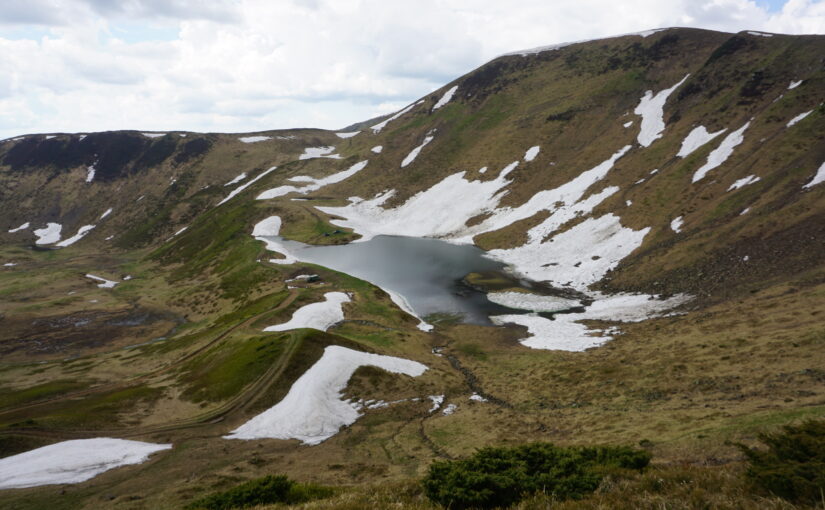
In this guest blog post, Nick Thorpe, the author of our Book of the Month, Walking Europe’s Last Wilderness, reflects on his journey through the Carpathian Mountains and how it reshaped his understanding of wilderness and rewilding.
-by Nick Thorpe
‘You can drive out nature with a pitchfork…’ sang Tom Waits, ‘but it always comes roaring back…’ I thought of that line as I discussed the title for my new book with my editors at Yale University Press. Walking the Carpathians for my book changed my understanding of both wilderness and ‘re-wilding’. My book is a meditation on both, and on our relationship as locals and visitors to what is still wild in the landscape, and inside ourselves. I realised that what is ‘wild’ is contracting and expanding all the time, even in a world overwhelmed by spurts of news about machine-learning posing as intelligence. While we in the mountains are sometimes tempted to anthropomorphise animals and plants, we in the cities have already fallen into the trap of anthropomorphising machines. Bear intelligence dwarfs artificial intelligence. Whatever our differences or divisions, we’re all in this together.
One problem I faced is that few people seem to have heard the Carpathian word, or know where the mountains are. A thousand miles of mountain ranges, massif after massif, with a broad variety of rock forms, wild animals and plants, arching through 7 countries, from the Danube to the Danube, at the geographical heart of Europe. 12 of my 24 chapters take place in Transylvania. We thought of calling the book: ‘On foot to Transylvania’, because at least people have heard of Transylvania. But that would have turned the magnificent Little Carpathians, White Carpathians, Fatra, Low Tatra, High Tatras, western Beskyd, central Beskyd, Pieniny and eastern Beskyd ranges which precede the Carpathians in Transylvania, into a mere prelude. The highest mountain of the whole Carpathian range is Gerlachovský štít in Slovakia, at 2,654 metres – worth rather more than a clearing of the throat on the way to my main speech. Didn’t the Devil himself catch his foot on Kriváń, Gerlachovský štít’s neighbour, when he was flying through a troubled sky on his way to deposit another blanketful of souls in Hell, according to the Lipto legend? Those people still live happily in the Lipto lands at the foot of the Tatras. They used to say more babies are born out of wedlock there than elsewhere. What a beautiful word: wedlock. From the Anglo-Saxon wed meaning ‘pledge’ and lac meaning ‘action.’
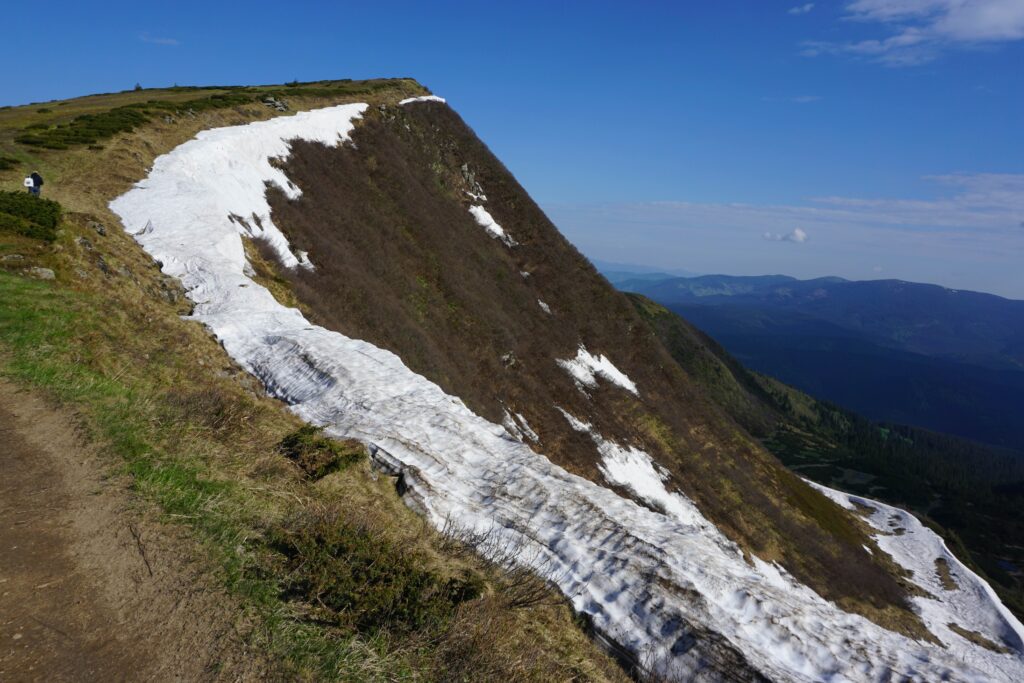
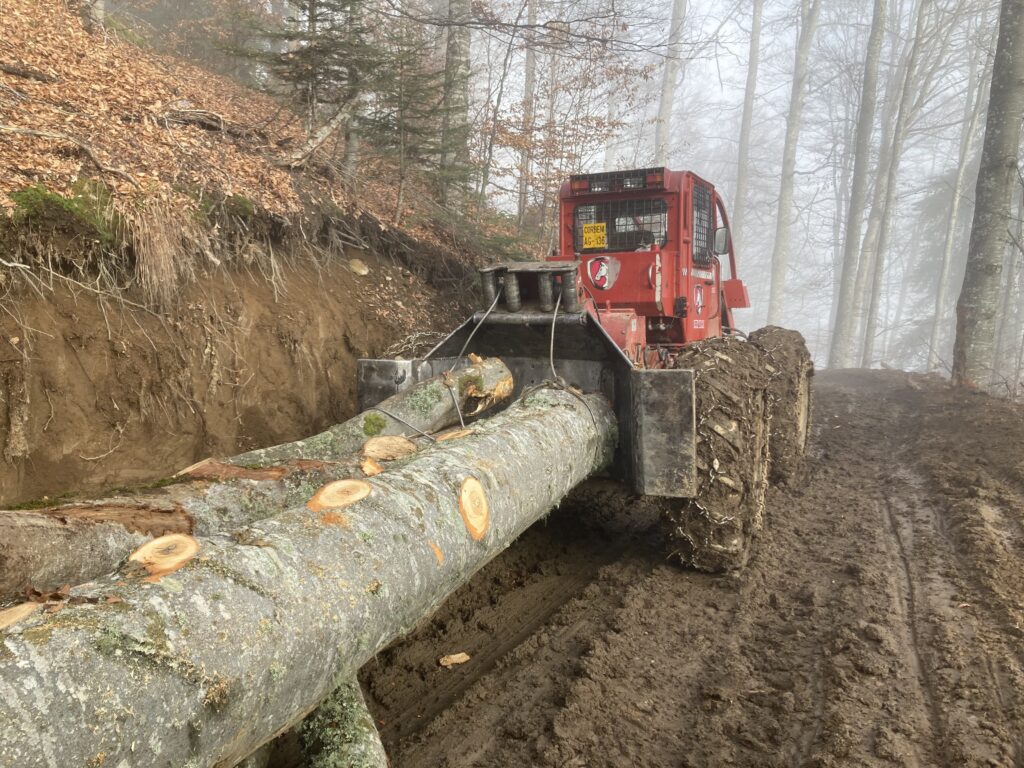
One of the features of the Carpathians is the rugged continuity of the wild spaces there. And one of the big questions is how much space bears and lynx and wolves and capercaillie need. How much quiet to hunt, and breed. Foresters penetrate deeper and deeper into the mountains in search of trees to harvest. The technology at their disposal means they can cut trees on steep slopes which remained untouched until now. Zoom into the Law Tatra range on Google Maps, and you will find the zig-zag lines of foresters’ roads, on the bare slopes. First the roads are cut, then the machinery moves in. The trunks are dragged out. The clear-cut is completed. I have met barge captains on the Danube who describe their job of the past decades as one of stripping the Carpathians, taking the trunks down to the Romanian port of Constanta, for shipping overseas, to become toilet paper in Canada, or Japan. Three Austrian companies control most of the logging in Romania. Ion Barbu, a senior Romanian forester, laments this state of affairs, but excuses their presence: at least they brought investment. And the forests need harvesting. They are a renewable resource. Forestry in much of the Carpathians, reply the environmentalists, is a race to strip the mountains of as many old growth and virgin forests as they can before we stop them. They know we will win, and they will lose, so the question is, how many more 200-year-old beech trees will they cut before we do win?
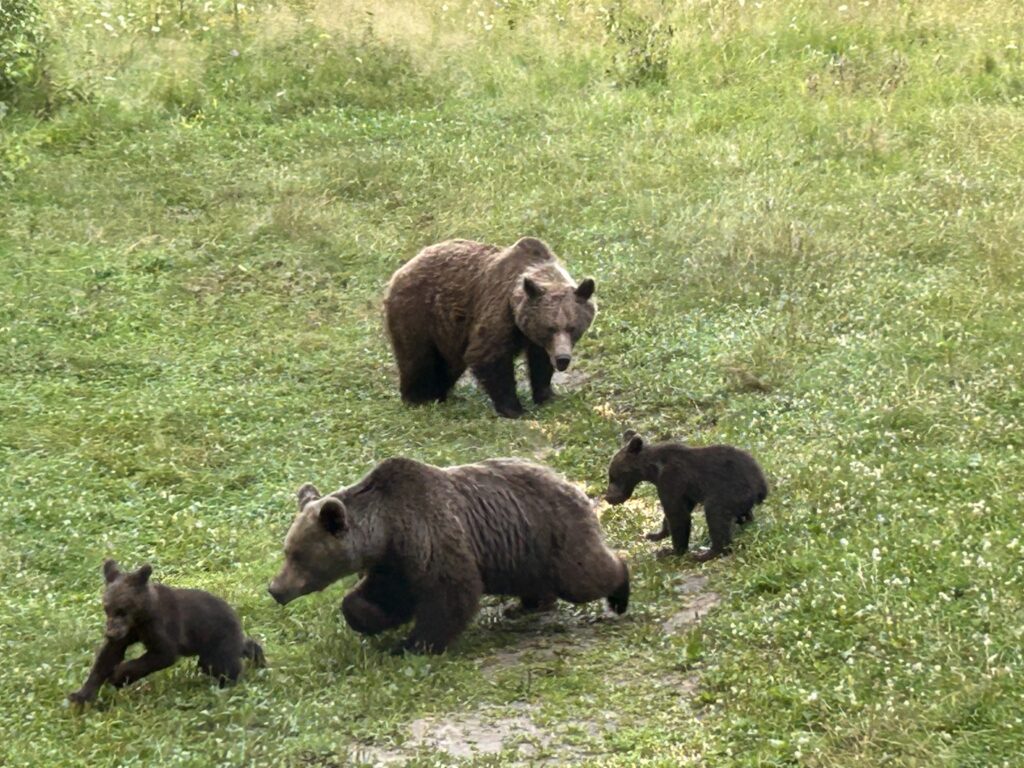
New motorways plough across Transylvania, and towns and cities spread, disrupting migration routes for bears and wolves, increasing the danger of inbreeding among wild animal populations in the last pockets of wilderness. But at the same time, massive rural depopulation in Romania means that the orchards on the edge of villages, and the high mountain pastures where shepherds once kept their sheep, are being abandoned by the villagers. And the abandoned land is being reclaimed by the wild animals, including bears. A bear which finds an apple tree loaded with fruit in September, will happily sit under it and eat 50 kilos of apples in a single night. When I climbed the Țarcu mountains in the southwest Carpathians with ranger Matei Miculescu in Chapter 22, we found plenty of evidence in bear scat of apple cores and pips. Climbing through the Tichá valley in the High Tatras with Erik Baláž and his merry band of scientists in Chapter 5, most of the bear scats on our path contained traces of grass, berries, and pinenuts. We found evidence of agricultural corn in only one.
The technology is also being skilfully applied by the defenders, as well as the eroders of wilderness. 80,000 people in Romania, at the last count, had downloaded the Forest Inspector App, which allows citizens to track truckloads of timber in real time. Satellite maps help Greenpeace, Agent Green, and other NGOs identify hitherto unknown patches of virgin forest, and send people into the field to investigate. Erik Baláž has developed an App to explain the glories of the untouched Belá river to respectful tourists. Used wisely, the technology helps provide the tools for a civilised debate between villagers and environmentalists.
‘Bears and other wild animals,’ Julius Strauss, a bear guide in British Columbia, told me, ‘behave towards the humans they encounter much as they would towards their own species.’ How different from the way we behave towards them!
Walking Europe’s Last Wilderness is available now for £20.
Find Nick on Substack
On X: @NickFT
And on Instagram: @thorpe.nick