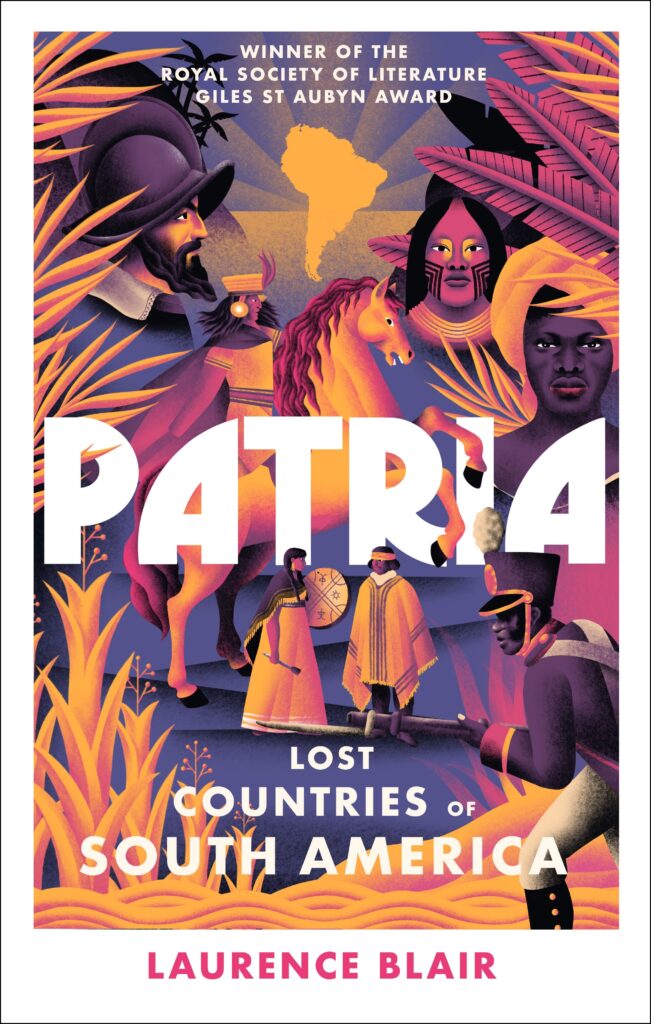
Writer and journalist Laurence Blair shares the inside story behind Patria: Lost Countries of South America, a dazzling history of the continent available now.
-by Laurence Blair
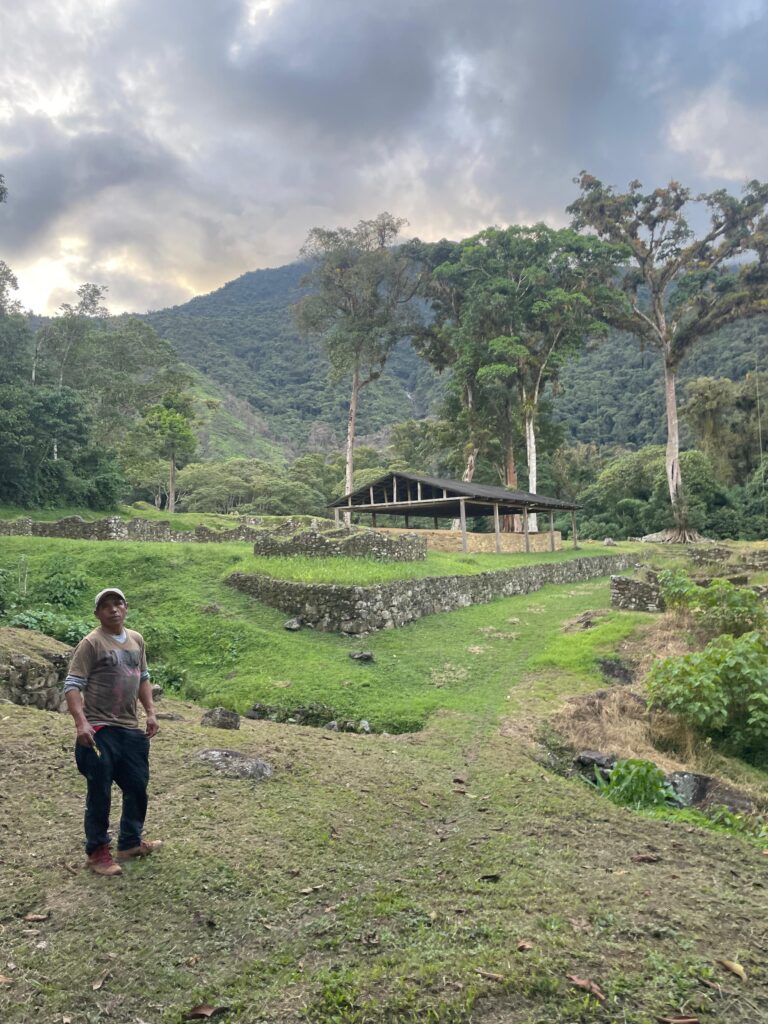
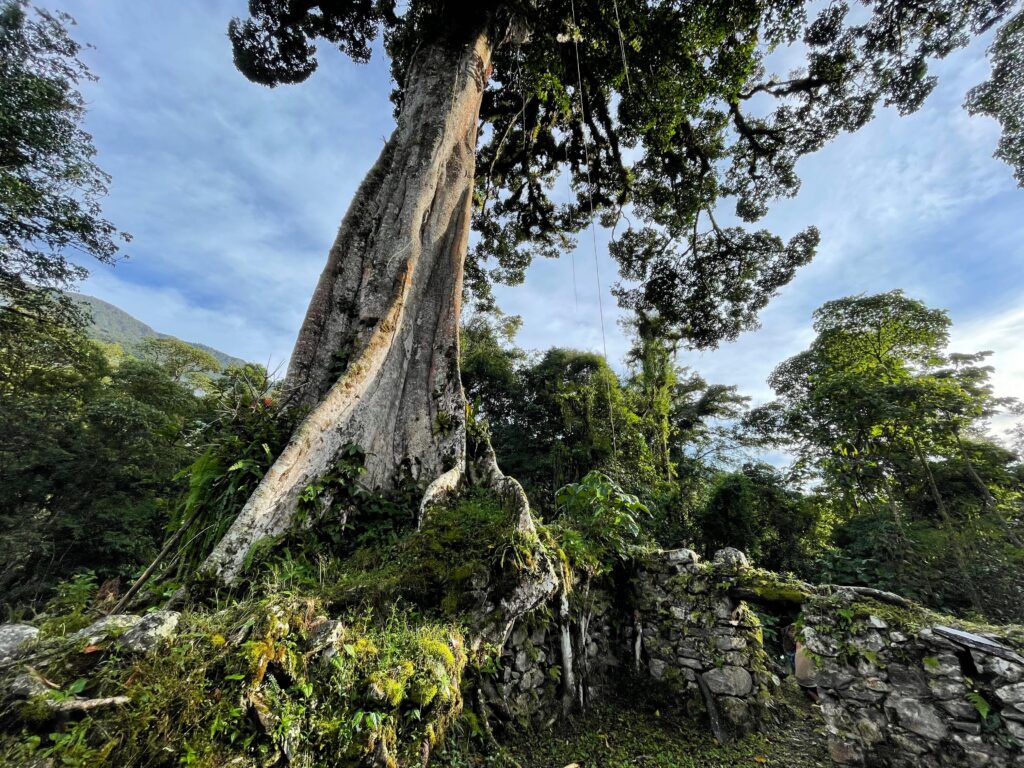
In eastern Peru, where the Andes crumple into the Amazon, lies Espíritu Pampa: a labyrinth of jungle-shrouded chambers, temples and tombs. Though rarely visited today, this was the capital of The Vilcabamba: a fragment of the Inca Empire where four emperors held out for a generation after the Spanish landed in Peru. “Imagine,” says Jorge Cobos, whose family helped explorers identify the ruins just decades ago. “There are lots of buildings left to discover in the forest. And beyond, in the mountains: who knows?”
The Vilcabamba is just one of the vanished kingdoms, nations and territories featured in my non-fiction debut PATRIA: Lost Countries of South America, which hit bookshelves across the UK last week. In my decade covering the continent as a foreign correspondent – rafting down Amazonian rivers with Colombian rebels, helicoptering into marijuana plantations with Paraguayan special forces, and following Venezuelan refugees into the lawless Darien jungle – I’ve witnessed South America’s fragile natural beauty and searing inequality up close. Stretching from the edge of Antarctica to the shores of the Caribbean, it’s a cultural, culinary, and economic powerhouse that feeds, fuels and cools the planet.
Yet this vast landmass remains an enigma to many, its 450 million inhabitants often overlooked. The words of explorer Richard Francis Burton about the Paraguayan War – the nineteenth-century conflict that remains the bloodiest in hemispheric history, almost wiping the Germany-sized sub-tropical nation off the map – could still easily apply to the continent as a whole. Buton found “blankness of face” when he arrived home with tales from the frontline in Paraguay, “and a general confession of utter ignorance.”
My mission with Patria is to help change that. I wanted to tell a fresh, exciting narrative that puts South America at the heart of world history. And I wanted to push past tropes casting the continent as an eternal victim, where the conquistadors’ “guns, germs and steel” wiped out all resistance – or where they strode into a “wilderness” devoid of civilisation. Instead, I set out to tell South America’s story from the ground-up, from the perspective of those who resisted, adapted, and – very often – rose up in revolution against the invaders. The prime actors in the saga, I decided, would be the native and Afrodescendant nations who stood firm for centuries, and whose powerful legacy can still be felt to this day.
I delved into archives, museums and private collections on both sides of the Atlantic. I drew on groundbreaking archaeological findings that are turning the story of South America’s origins inside-out. I brushed up on pioneering scholarship by Latin American and Indigenous historians and anthropologists. But this story couldn’t be told from the comfort of an air-conditioned library. I packed my tent, poncho, reporter’s notebook and recorder – and borrowed a hammock, machete and mosquito net – and hit the road, hoping to hear how these vanished realms shaped our world from their present-day descendants and inheritors.
I hitched a ride with a fisherman to the Chincha Islands. This forlorn archipelago off the Peruvian coast endowed a pre-Columbian kingdom with wealth and power to rival the Incas. It also fuelled a Victorian-era commodity boom that fed the soldiers and settlers of the British Empire. Both depended on an unlikely miracle substance: bird droppings. I journeyed down the Amazon to meet with archaeologists uncovering sprawling ancient city-states that moulded the world’s largest rainforest. And I made a pilgrimage to Serra de Barriga, the hilltop capital of Palmares: a guerrilla nation of Africans that fled slavery in the sugar plantations of Brazil, founded a high-tech forest kingdom that defeated dozens of Dutch and Portuguese invasions, and planted a seed of rebellion that echoed down the centuries.
In Argentina, I set out on the trail of a warlike desert confederation who held the Spanish at bay for generations, before going down fighting with an Andalusian con man who claimed to be the last Inca. Yet the Diaguita, I found, have not vanished as entirely as the history books claim. Remaining in comparative oblivion are the thousands of Black and African soldiers – some press-ganged, many of them fired-up freedom fighters – who marched across the Andes in 1817 to overthrow the Spanish and liberate the continent, seeking to forge a United States of South America. “Four great republics of the New World,” an officer told the last handful of survivors, “owe you gratitude and remembrance.”
I trekked in their footsteps across the mountains to Chile, where shadowy insurgents are waging a violent campaign in the name of the Mapuche, the country’s largest pre-existing people. Some dream of restoring an independent Wallmapu: their name for the mounted Patagonian power that ruled until the late 1800s, brokering alliances with Imperial Spain, rescuing shipwrecked Royal Navy sailors, and electing a penniless French penpusher their king. I explored how the scars left by the Paraguayan War, and the siren song of a lost pre-conflict fatherland, have propped up one-party rule for nearly 75 years. And I dropped in on Bolivia’s landlocked navy, patrolling Lake Titicaca and drilling with an ocean simulator in the hope that – 140 years since their only coastline was annexed, leaving their country a dismembered husk – they might soon return to the sea.
The lost country with the most powerful afterlife is perhaps the united South American superpower dreamed up by Simon Bolívar, the Venezuelan liberator. This hopeful, chimerical vision, often referred to as the patria grande, was taken up at the turn of the millennium by the radical army colonel Hugo Chávez. A quarter-century on, the flow of desperate people northwards unleashed by chavista repression, economic meltdown and Washington’s sanctions – eight million Venezuelans have fled their homeland – has fuelled the sense of crisis at the US border, tipping the scales in Donald Trump’s favour this November.
There can be little doubt: penetrating beyond the clichés, and understanding the backstory of this distant land, is fundamental to fully grasping our interconnected, fragile planet. Forty years ago, Colombia’s greatest writer issued such an invitation to the world. From its inception, South America has often seemed stranger than fiction, Gabriel García Márquez agreed. But those who share in the dream “of a more just and humane patria grande could help us better” – he suggested – “if they changed their way of seeing us.”