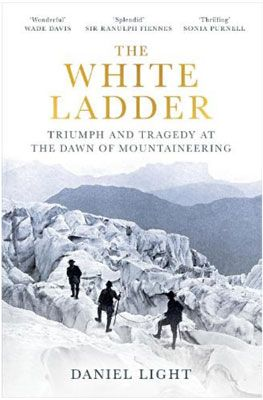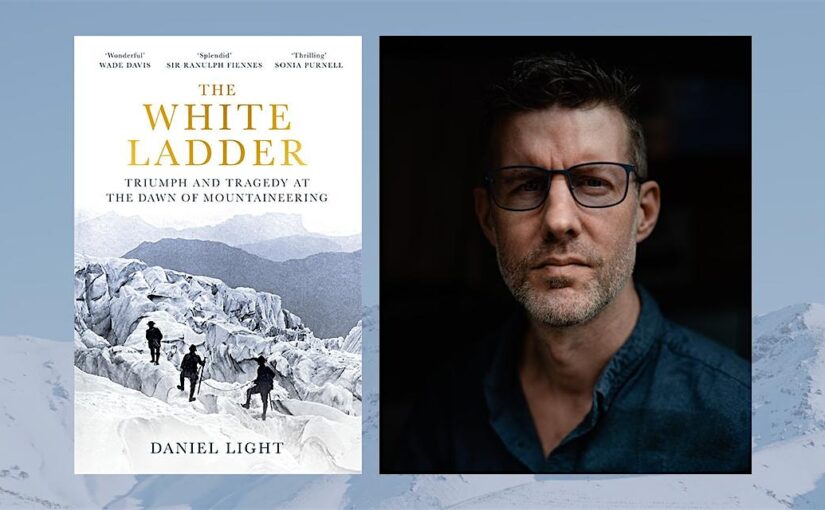
In his book The White Ladder: Triumph and Tragedy at the Dawn of Mountaineering, Daniel Light uncovers the true story of the thrill-seekers, map-makers, soldiers, occultists, artists and porters who paved the way for modern mountaineering. Ahead of his event here at Stanfords, Covent Garden on Thursday 21st November, Daniel gives us a snippet of mountaineering history as he looks at some attempts at the Himalayan region.
-by Daniel Light
The American climber and explorer Fanny Bullock Workman arrived in Darjeeling in the dying days of the nineteenth century intent on leading an expedition into the heart of the Sikkim Himalaya. There, she and her husband Hunter hoped to reach record-breaking heights on some of the highest mountains on Earth.
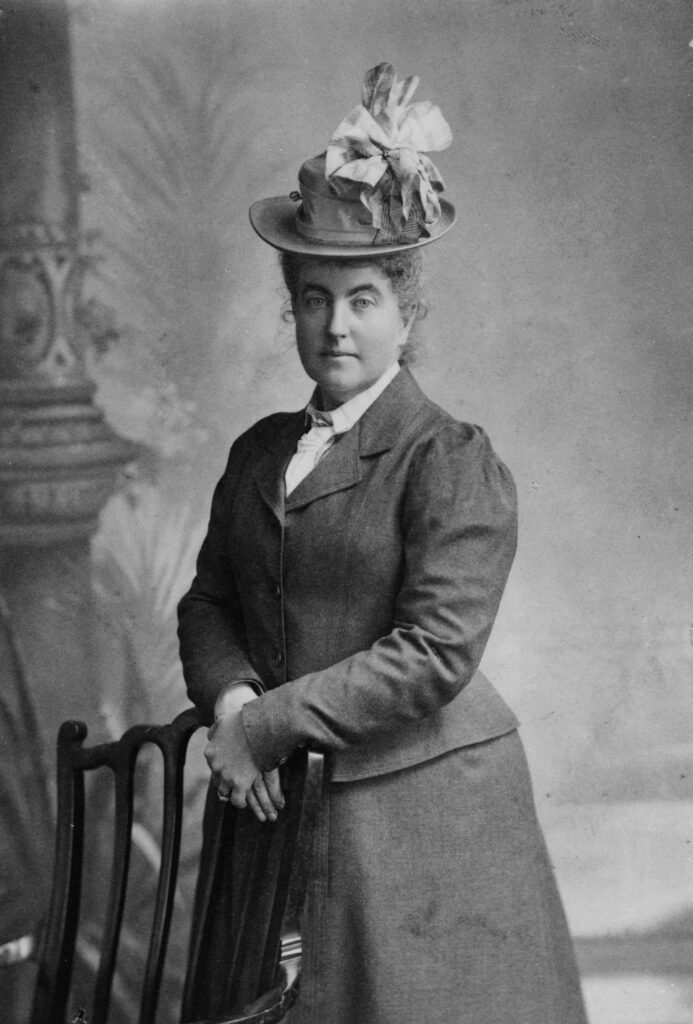
In the face of assurances from a local political officer that the route was ‘almost impassable to a woman’, Fanny pressed on. Accompanied by sixty local guides and porters, she and Hunter started north in October 1898 at the head of one of the largest Himalayan mountaineering expeditions yet.
Four days later, just twenty miles out, they turned back. Their retreat owed nothing to the dangers Fanny had been warned about, to the density of the rhododendron forests or the slipperiness of the paths. They had encountered no tigers or wild elephants. The problem was the porters. Lacking confidence in the enterprise – not least because they were being led by a woman – those who did not abandon the expedition simply refused to march.
Fanny did not let the experience deter her. Over the decade to come she returned to the mountains time and again. For all the problems she faced – many of her own making – she would earn a reputation as one of the pre-eminent Himalayan explorers of her day.
Arriving at the Windamere Hotel, 125 years on, my wife Emma and I have a keen sense of history; this is just one of the pioneering expeditions our itinerary intersects. Waking up on our first morning in Darjeeling, we hurry up Observatory Hill where, in 1883, a young Englishman named William Woodman Graham took his first look at the mountains fifty miles to the north.
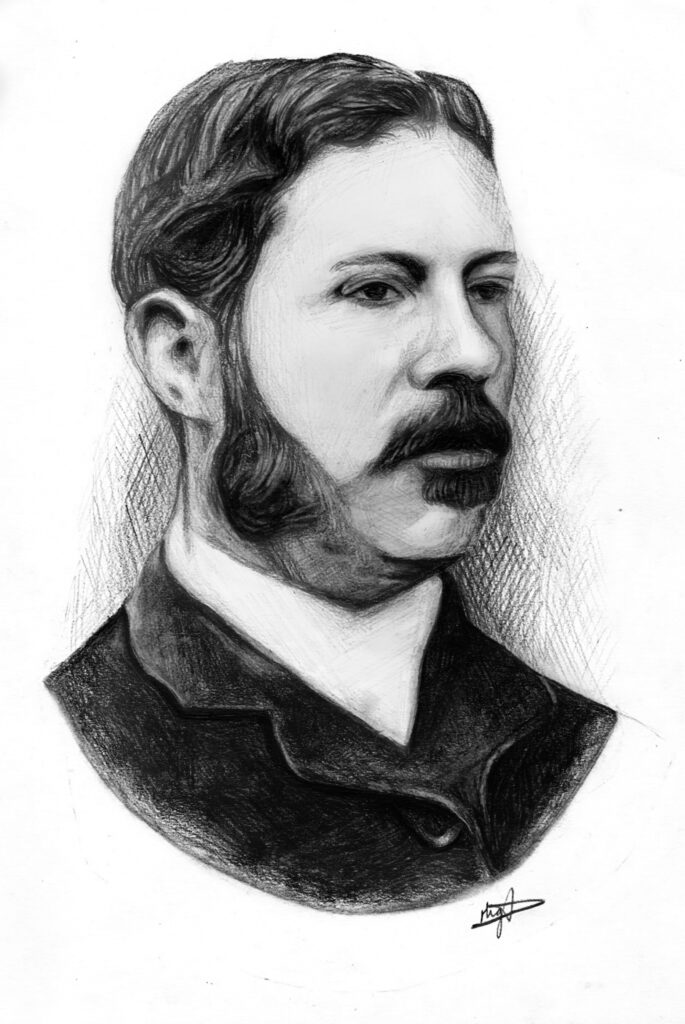
Some at the Royal Geographical Society poured scorn on Graham when, the following year, he described going to the Himalaya purely for sport. They were more dismissive still when he claimed to have reached a record altitude of 24,000 feet on Mount Kabru. Some argued that he must have misidentified the mountain, or miscalculated his position. Taken today, the weight of evidence is in Graham’s favour.
Certainly, the sport of Himalayan mountaineering was here to stay and Darjeeling, two weeks’ march from the mountains, was to become one of its foremost centres. In 1905, yet another pioneering expedition would assemble there, a party of five Europeans hoping to tread the summit of the world’s third-highest mountain, Kangchenjunga.
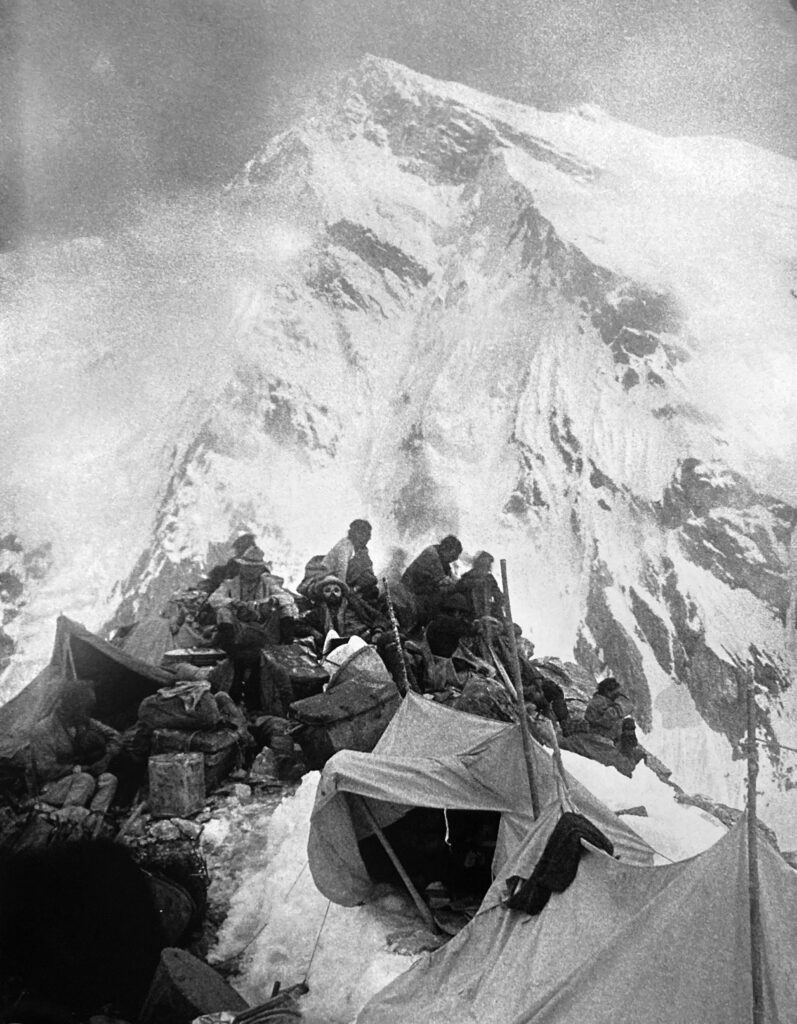
Among the five was a man better known for his experiments in the dark arts than for his prowess as a mountaineer – the notorious occultist, Aleister Crowley. Then just twenty-nine years old, Crowley was a talented alpinist with an uncanny talent for reading mountains, but he was he was a diabolical leader and what unfolded in the weeks to come put an end to his controversial climbing career.
Our own journey into the mountains began by Land Rover, following roads Crowley could have only dreamed of. Then, when we took to our feet, it was along well-trodden paths, never too far from the next homely teahouse or bungalow on the Singalila Ridge.
Out of Yuksom, the last village before the mountains, the going got harder. We weaved our way through steep valleys frothing with jungle, until, gaining height, the bamboos and creepers were replaced by walnuts and beeches, then by fir trees and pines. And still, what for us presented a stiff test of endurance was, for our porters and guides, no more than a weekly commute.
After three long days we reached Dzongri, a camping ground at around 13,000 feet. Here, in October 1907, two Norwegians named Carl Rubenson and Ingvald Monrad-Aas had abandoned their first attempt to climb in the Himalaya. Thwarted by adverse winter conditions, they considered their expedition ‘an absolute failure’.
The two did not give up, returning the following summer. This would be the first European expedition to include Sherpas among the porters and guides, and it delivered results to match, as Rubenson and Monrad-Aas went tantalisingly close to the summit of a mountain nobody, but nobody, would have backed them to reach.
For Emma and I, making it to Dzongri feels like a major achievement. But, waking to a carpet of fresh snow, there is one more set of footsteps to follow in. In 1930 the English mountaineer Frank Smythe came the same way, one of an international team en route to Kangchenjunga.
Smythe wrote about his experiences in The Kangchenjunga Adventure. It finds a restless schoolboy whose only pleasure is Geography lessons, dreaming of ‘great mountain ranges lifting far above the world’, then follows him into adulthood, as he travels to the Himalaya in pursuit of ‘that “something” which is called the “Spirit of Adventure”.’
Action, adventure, comedy, tragedy, mystery, romance – like all great mountain literature, The Kangchenjunga Adventure has it all. More than that, it stands testament to the power of a book: to educate and inspire; to carry the promise of new experiences; to show us the way.
Today, when so much of the world is mapped and explored, Smythe reminds us that travel is a journey inward. That the greatest adventures are voyages of self-discovery.