
Our Book of the Month for December is Found in Translation: The Unexpected Origins of Place Names by Duncan Madden. This book unravels the tangled threads of history and etymology to uncover the strange, intriguing and enlightening stories that have shaped the names of countries and places around the world.
In this extract we look at the etymology behind ‘Argentina’:
Argentina
For etymological convenience, we’ll make our way into Argentina not over the land border to Uruguay’s west but instead by crossing the natural, aquatic border to its south. A wide, shimmering stretch of water known as Río de la Plata that cuts deep into the South American landmass, this vast estuary is actually an entrance that leads us all the way to the origins of Argentina’s name.
Translated from Spanish, Río de la Plata means ‘river of silver’. While we know that the ubiquitous Christopher Columbus had used silver in his naming of other stretches of water to describe how he observed the sun illuminating its surface (such as Puerto Plata – ‘Silver Port’ – on the Dominican Republic’s north coast), the Río de la Plata’s name is born from an entirely different reason – or rather, legend. The legend of the Sierra de la Plata, the mythical ‘mountain of silver’ located somewhere in the South American interior.
This legend spread like wildfire through the ranks of early European explorers and settlers coming to the region in search of fame and fortune. In 1516, renowned navigator and explorer Juan Díaz de Solís led an expedition to the New World in search of a sea passage connecting the Atlantic and Pacific oceans. Reaching the estuary we now know as Río de la Plata (and in doing so becoming the first European to set foot on Uruguayan soil), he sailed inland hoping to find fabled passage to the Pacific, but in the end found only his and most of his crew’s demise at the hands of a particularly irate group of indigenous Guaraní people (or perhaps the Charrúa people – accounts conflict and witnesses were, unfortunately, mostly eaten).
There was a handful of survivors, though. Portuguese conquistador Aleixo Garcia rode his luck to survive not only the Guaraní but also a subsequent shipwreck on the Brazilian coast while sailing home. It seems though that Garcia didn’t just escape with his life but also with numerous accounts of a great ‘White King’ who resided over a land incomparably rich in silver and splendour somewhere to the west at the foot of the Sierra de la Plata – or what we today call Bolivia. Unable to resist the lure of such riches, Garcia spent eight years living among the Guaraní, charting the Peabiru – their intricate network of trails that covered the region – and all the while preparing the men and supplies he would need to make his assault on the White King.
Garcia was in many ways successful in his quest. Travelling inward with a small band of Europeans and a couple of thousand hired Guaraní as a make-do army, he reached Potosi, breached the outer reaches of the mighty Inca Empire, looted an impressive amount of silver swag and hightailed it out of there before the Incan armies could catch him. Unfortunately for Garcia, his luck ran out on his journey home when his supposed allies, the Payaguá, ambushed and killed him and his European cohorts somewhere along the Paraguay River. The few Guaraní who escaped took with them what silver they could carry and survived to show off their bounty, tell their tale of derring-do and sew the legend of the Sierra de la Plata and how to reach it through the mouth of the giant estuary, the Río de la Plata.
So here we have it, a land rich in silver that’s actually Bolivia, a mountain made of silver that may or may not exist, and a river named as the gateway to that silver, ready to lead those brave enough to follow it to their fortune or doom. But how exactly does this all relate to the origins of Argentina?
At first glance it seems self-explanatory – Argentina, or Terra Argentina as it was called before the Terra was lost to the whimsies of time, means, literally, ‘silvery land’. But here’s the catch – while Argentina in English comes from the Spanish language, the name itself actually comes from the Italian argentina (feminine), meaning ‘made of silver’ or ‘silver coloured’, which in turn comes from the Latin argentum. ‘Silver’ in Spanish is, as we know, plata.
So why suddenly are we talking about Italian rather than Spanish or Portuguese, if the main protagonists of this story all hail from there? The answer comes from the Venetian and Genoese navigators of these early expeditions – men like Giovanni Caboto (aka John Cabot) and his son, Sebastian – who trod these waters in exploration often on behalf of the English and Spanish crowns and referred to the plata in their native Italian argentina rather than Spanish. Indeed, the first documented use of the name Argentina comes from a Venetian map drawn in 1536; and in his 1554 world map, excellently-named Portuguese cartographer Lopo Homem adopts the Italian root and calls the area Terra argētea – ‘Land of silver’.
The name caught on and in 1602 Spanish poet Martín del Barco Centenera published his definitive poem ‘Argentina y conquista del Río de la Plata, con otros acaecimientos de los reinos del Perú, Tucumán y estado del Brasil’ (thankfully usually shortened to a simpler ‘La Argentina’) describing the Spanish activities in the region over the last quarter century and cementing the name forever, at least in common parlance. Not for the Spanish Empire though who understandably stuck to their linguistic guns and formally named the country the Viceroyalty of the Río de la Plata and, after it gained independence, the United Provinces of the Río de la Plata.
It wasn’t until the 1826 constitution that the ‘Argentine Republic’ or ‘Argentine Confederation’ started appearing in legal texts, and it wasn’t until the 1853 constitution that it was finally formalized as the Argentine Republic, the name forever entangled with the legend of the White King and his land of silver, which is in fact in Bolivia.
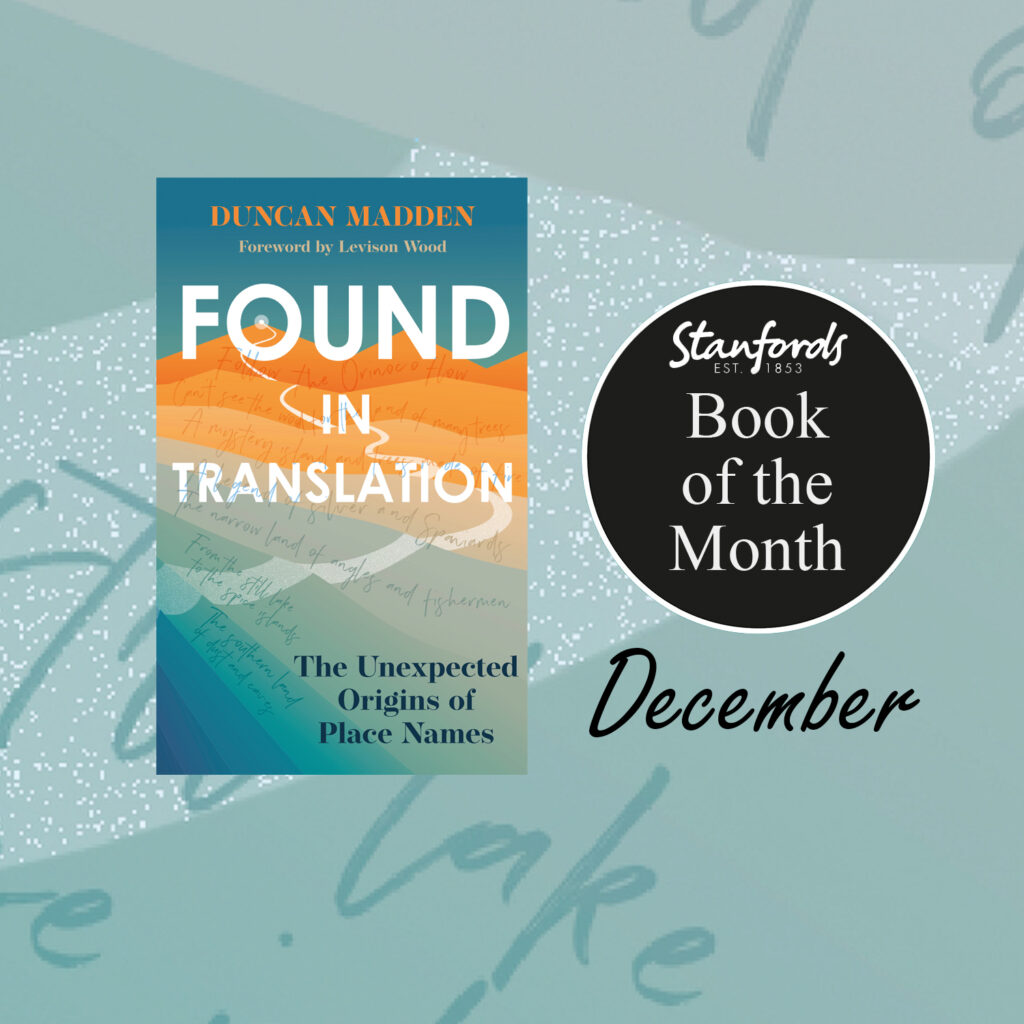
Found in Translation: The Unexpected Origins of Place Names by Duncan Madden is available now for £14.99.