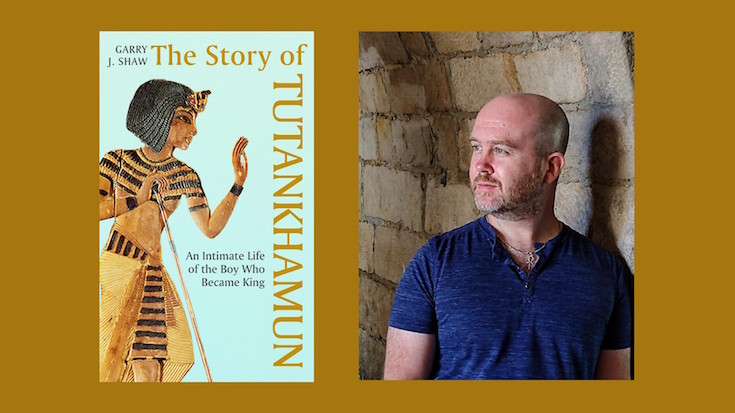
By Garry Shaw, author of The Story of Tutankhamun: An Intimate Life of the Boy Who Became King.
It has been one hundred years since Howard Carter discovered the tomb of Tutankhamun in the Valley of the Kings. Famous today mainly because of his treasures, the boy king is often dismissed as an unimportant pharaoh, but this is far from correct. He lived through a turbulent time in Egyptian history, and helped to steer his country back to normality. Here’s five fascinating facts about Tutankhamun that give us an insight into his life and times.
1. Tutankhamun’s Unusual Upbringing
When Tutankhamun grew up, the Egypt he experienced was radically different from other periods in the country’s history. He was born around 1329 BC, a time when his father, King Akhenaten, had turned his back on Egypt’s traditional deities in favour of an obscure god called the Aten. As part of the king’s reforms, temples to traditional gods were closed and their divine statues were destroyed. Akhenaten also built a new royal city in the desert, today known as Amarna. It was a physical symbol of his new vision for the kingdom. The city had two huge temples dedicated to the Aten, where hundreds of offering tables stood in the open air for the god to touch with its rays. This, too, was unusual because Egypt’s priests normally offered to the gods in dark, exclusive sanctuaries at the rear of the temples. Akhenaten also initiated a new art style, which showed the royal family with flabby bellies and spindly limbs, sometimes in scenes of family life. From around age four, when a scribe’s education normally began, the young Tutankhamun might have been taught about the new Aten-centric religion by Akhenaten himself – the king is described as a teacher to his court and even wrote hymns to the Aten.
2. A Plague at Amarna?
Many of Tutankhamun’s close family members died in rapid succession, all before he turned ten years old. These included his grandmother and three of his half-sisters. What killed them? Letters sent to Akhenaten from other kings mention a plague at their courts – the king of Cyprus in particular says that he lost relatives to the illness. Meanwhile, recent archaeological work at Amarna has found evidence of bubonic plague at the Workmen’s Village, where the men who cut and decorated the elite tombs, including that of the king, lived with their families. It’s possible, then, that Egypt’s royal family was decimated by the same plague affecting people across the Eastern Mediterranean World. When Akhenaten died after seventeen years on the throne, the famous Queen Nefertiti ruled as King Neferneferuaten for three years, followed by the young Tutankhamun. Fragments of a robe, discovered in the boy king’s tomb, might be the clothing he wore during his coronation.
3. The Restoration of Tradition
After his coronation, Tutankhamun became the symbol of Egypt’s return to tradition. As he was only around ten years old, he was no doubt influenced in his decisions by powerful courtiers. A text, sent across the country to be carved into stone stelae, describes Egypt’s terrible state before the young king came to power. The temples were in ruin and overgrown with weeds, it said. The gods didn’t answer when called, and Egypt’s armies failed when sent abroad. But Tutankhamun fixed all of this. Order had returned because of him. Of course, none of this had happened yet – it was more a magical statement of intent – but over the years, the temples were indeed repaired and craftsmen replaced the divine statues destroyed under Akhenaten. These newly carved statues even bore Tutankhamun’s own idealized portrait – it must have been quite a dramatic shift for a young boy who had never known the traditional ways, brought up to dismiss the old gods.
4. Tutankhamun’s Duties as Pharaoh
As the intermediary between humans and the gods, the pharaoh had an important role to play in ensuring Egypt’s success. In particular, he was required to preside over key festivals and government business. Tutankhamun was not exempt from these duties, despite being very young at his accession. During royal audiences, he held a child-size crook and flail – symbols of kingship – and was given a larger set when older. He also owned a small fake leopard skin, which sported a gilded wooden head and fake claws. He wore this as a child when performing certain rituals, but it was later replaced by a larger, true leopard skin. At the appointment of an official named Huy to high office, Tutankhamun watched events from his throne, wearing a crown and holding his crook, but played no active role in the proceedings. It’s possible that although his presence was required, he was too young to be fully involved.
5. Recycled Treasures
A selection of Tutankhamun’s tomb treasures were adapted for him from items once owned by King Neferneferuaten – Queen Nefertiti. As she doesn’t appear to have had a proper burial, her funerary treasures must have been kept in storage for the ten years of Tutankhamun’s reign, making them easily accessible when he unexpectedly died young. It’s even possible that Tutankhamun’s famous gold death mask originally belonged to Neferneferuaten, as its face has been replaced with Tutankhamun’s and a name in one of the inscriptions has been changed. Tutankhamun’s sarcophagus, still present in his tomb, was also originally made for someone else.
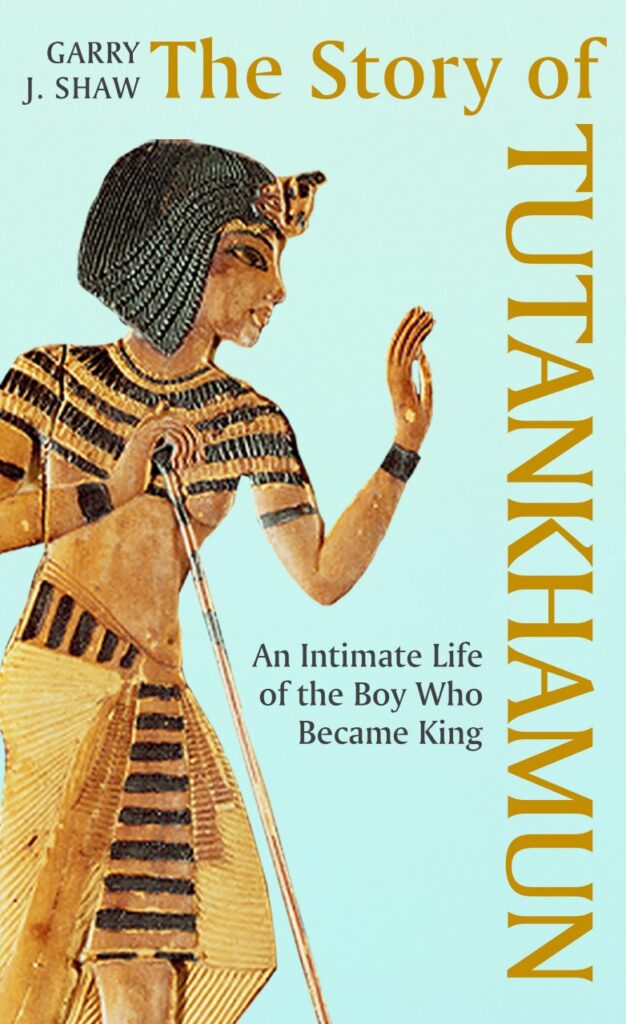
Garry Shaw is the author of The Story of Tutankhamun: An Intimate Life of the Boy Who Became King, published by Yale University Press on 11 October.
Join us at Stanfords London on Wednesday 12th October 18:30 and hear Garry talk about this remarkable biography. Tickets available here.