
-by Shafik Meghji
In 1867, so the story goes, Mariano Melgarejo, the 15th president of Bolivia, asked the British ambassador to pay respects to his latest mistress. When the request was haughtily declined, Melgarejo, whose time in office was marked by brutality and political miscalculation, took great offence. The ambassador was swiftly apprehended, stripped naked, tied to an ass – facing the rear, naturally – and paraded around the main square of La Paz, before being kicked out of the country.
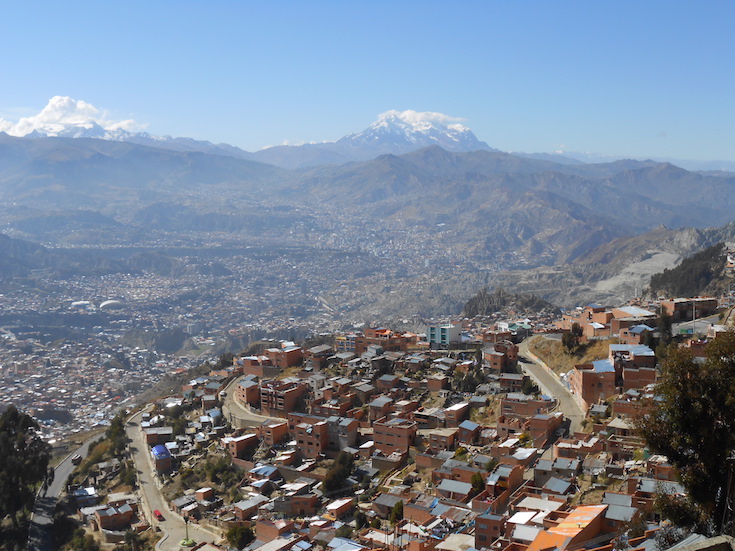
When news of the incident reached Queen Victoria, she angrily ordered the Royal Navy to bombard the Bolivian city. After being politely told that La Paz was located high in the Andes, 400 km from the Pacific coast, she called for a map of South America. When one was produced, Queen Victoria took it and crossed out the country’s name. Bolivia, she declared, does not exist.
This apocryphal story is known as the ‘black legend’. It appears to have been first recounted in a book published in Chile, which has always had a fraught relationship with Bolivia, in the 1870s. There are several versions of this tall tale: in one the British ambassador is punished for refusing to talk to Melgarajo’s donkey; in another for declining a glass of chicha, a lightly alcoholic maize beer whose fermentation process traditionally involves human saliva. The date of the incident, identity of the protagonists, and nature of the dispute change from telling to telling.
But although the ‘black legend’ may not be true, it sometimes seems as if Bolivia really was crossed off the map. Despite being twice the size of France, sharing borders with Brazil, Argentina, Chile, Peru and Paraguay, and lying right in the heart of South America, Bolivia tends to be overshadowed by its neighbours. It rarely makes more than a fleeting appearance in the international media, and the coverage it does receive typically focuses on political scandals and environmental disasters.
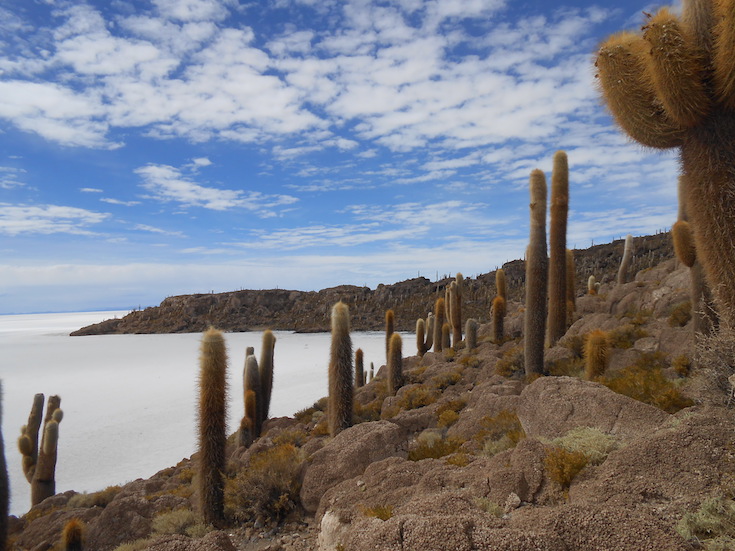
Tourist numbers have more than doubled over the last decade. Before the Covid-19 pandemic around 1.2 million foreigners were visiting every year, including 100,000 from English-speaking countries. Bolivia is now a firm fixture on the ‘Gringo Trail’, the backpacking circuit around South America, but most travellers stick to a handful of destinations – the shimmering Uyuni salt flats, majestic Lake Titicaca, the beautifully preserved city of Sucre.
Few venture much beyond the Andean region or have anything more than a passing knowledge of Bolivian history, which is perhaps not their fault given that, beyond academic titles, English-language books about the country are few and far between. Travel writers tend to hurry through Bolivia en route to somewhere else, and there has not been a major travelogue dedicated solely to the country in many years.
Yet this is only a recent phenomenon. Between the 16th and early 20th centuries, an array of conquistadors, colonialists, adventurers, missionaries, treasure hunters, revolutionaries, explorers, entrepreneurs, diplomats, soldiers, scientists, and bandits flocked to Bolivia from across the globe. They produced books, reports, letters, and diaries containing stories that once read are impossible to get out of your head. For as improbable as it may seem to many beyond its borders, Bolivia helped to shape the modern world.
I heard about the ‘black legend’ on my first visit to South America in 2004. At that point Bolivia wasn’t really on my radar: the plan was to head to Rio de Janeiro for carnaval, before flying to Peru and hiking the Inca Trail to Machu Picchu. But one hedonistic month in Brazil rolled into another and my funds ran perilously low. Flights to Peru were prohibitively expensive and I realised with some trepidation that the only option was an arduous 4,100-km journey across the continent on wheezing buses and trundling trains. At the time, Bolivia felt like an obstacle to me, a huge chunk of the map dividing central Brazil from southern Peru, and I resolved to travel through it as quickly as possible.
But after crossing the border at the steamy town of Puerto Quijarro, my perspective swiftly began to change. A train, the Ferrobús, carried me west through the lakes, swamps, forests and seasonally flooded plains of the Pantanal, the world’s largest tropical wetlands, home to anacondas, caimans, jaguars and hundreds of species of birds. A short way into the journey, a wiry man in his sixties leaned over to introduce himself. Services on this route, he told me, were once known as ‘Death Trains’, thanks to their transportation of yellow fever victims in the 1950s, several fatal derailments, and the alarming tendency of some inebriated passengers to clamber onto the carriage roofs before toppling off the sides. ‘But that’s all in the past,’ he said with a smile.
Fifteen hours later, after a broken night’s sleep, we pulled into the stiflingly hot city of Santa Cruz de la Sierra. On my first morning in Bolivia, I encountered in quick succession straight-backed, dungaree-wearing Mennonites chatting in Low German, Japanese-Bolivian farmers shopping for tractor parts, campesinos carrying bundles that looked heavy enough to crush them, and tough youths in blacked-out 4x4s. In the main plaza I sat on a bench and watched a cacophonous band of protesters bang pots and pans outside the 19th-century cathedral, while a shaggy-haired sloth hung from the branches of a towering tree. Santa Cruz felt like nowhere else I had visited: I was hooked.
Over the following weeks I veered off course, travelling to the Andes and the Amazon via the world’s highest city, most dangerous road, and largest salt flat. I met so-called ‘witches’ in bowler hats and miners who toiled in near-medieval conditions and offered libations to statues of devilish figures. Locals told me about revolutionary movements, utopian societies built in the wilderness, ancient sites hidden away in the jungle, clocks that ran backwards, and pink river dolphins.
They also spoke about Bolivia’s interactions with its neighbours and the wider world – fragments of history largely forgotten beyond the country’s borders. I learned that Bolivia was once home to one of the richest cities on Earth, helped to kick-start the process of globalisation, irrevocably changed the fortunes of Europe and Asia, and played host to everyone from Che Guevara to Butch Cassidy, rubber barons to drug traffickers.
Time ran out and I reluctantly headed on to Peru. But Bolivia took hold of my imagination and has never quite let go.

Crossed Off the Map: Travels in Bolivia by Shafik Meghji is available at Stanfords for £14.95
Join us on Tuesday 17th May 18:30 as we welcome Shafik to Stanfords to talk about his new book. More information and tickets available here.