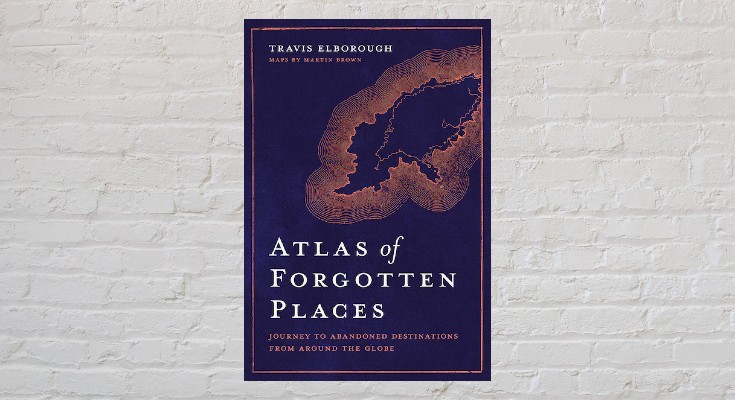
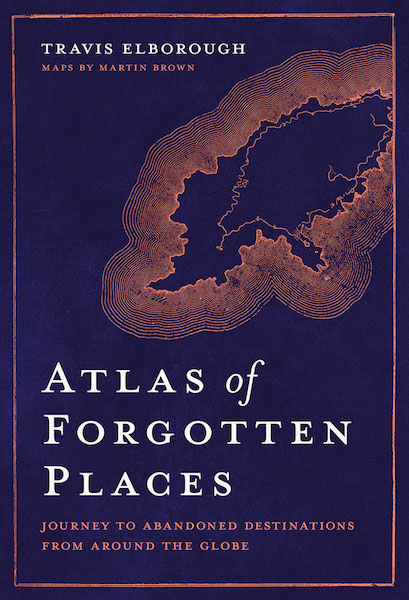
Travis Elborough, winner of the 2020 Edward Stanford Travel Writing Awards Illustrated Book of the Year, is back with another book in the Unexpected Atlas series.
Atlas of Forgotten Places takes us to the places that time forgot. Abandoned, mysterious, sleeping monuments around the world have been relegated to the margins of history, pushed off the map and out of sight.
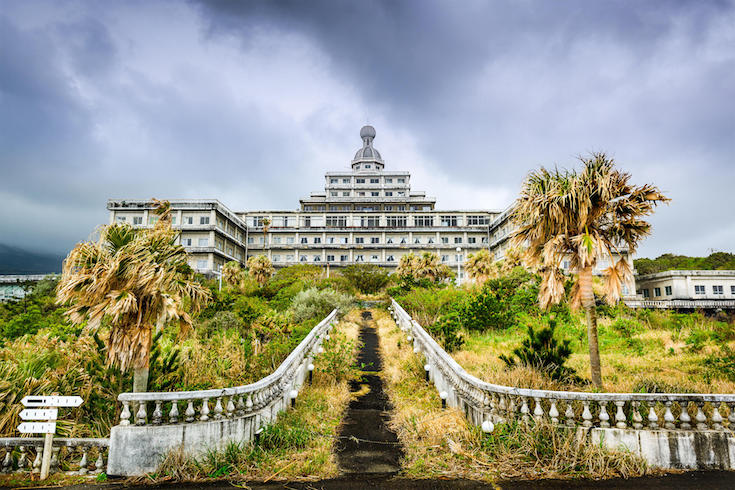
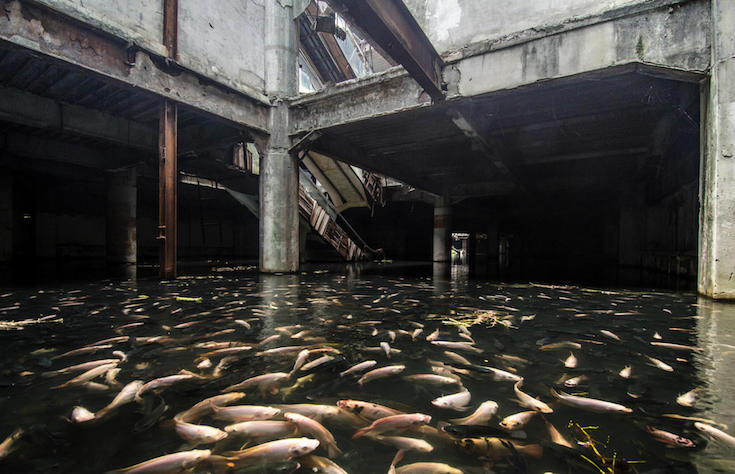
From ancient ruins and crumbling castles to more recent relics – an art deco New York subway station, a Soviet ghost town in the Arctic Circle, a flooded Thai mall teeming with aquatic life.
Original maps and stunning colour photography accompany Travis Elborough’s moving historic and geographic accounts of each site. The featured locations are a stark reminder of what was, and the accounts in this investigative book help to bring their stories back to life, telling us what happened, when and why, and to whom.
Here Travis Elborough introduces Atlas of Forgotten Places:
-by Travis Elborough
Sean Pavone/Alamy Stock Photo
To forget is to lose the power of recall. This ‘un-getting’, literally and etymologically, is a failure to remember things past, be they events, places or people. It can, of course, take the form of inadvertent neglect since forgetting is an essential, vital even, human fallibility. We talk about something ‘slipping our minds’, for instance, when missing appointments or returning home empty-handed when specifically asked to buy bread or milk. Similarly, ‘misplaced’ is a word used to convey a more temporary absence than ‘lost’. It holds within it, the idea of imminent, or at least potential, rediscovery. Likewise in the adage attributed to Paul Valéry – that a poem is never finished, merely abandoned – abandonment surely holds the possibility of some kind of retrieval or reclamation. To be finished is to be dead and done with no coming back. Abandonment, meanwhile, can more readily be undone with a little attention. The discarded, picked up again and the deserted, re-populated, say. Or so we perhaps like to think.
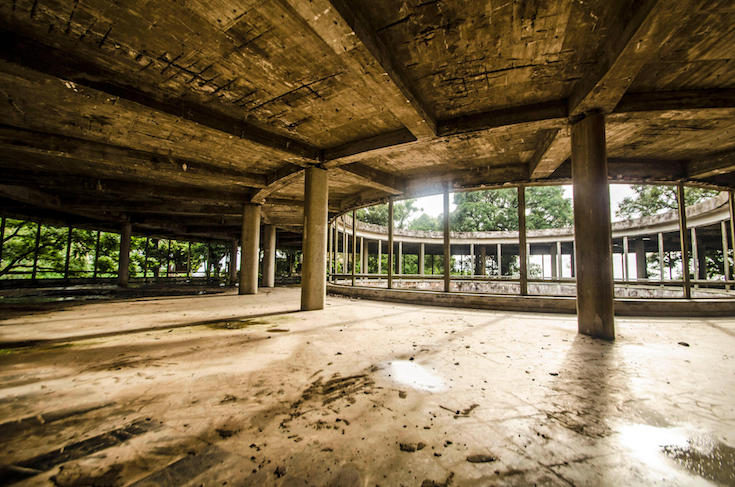
This circular restaurant once provided magnificent views across the city and out to the ocean.
Tommy Trenchard/Alamy Stock Photo
The emptying of towns and city centres during the Covid-19 pandemic provided us with a graphic illustration, should it be needed, of how quickly hubs of life can go deathly quiet. How whole modes of contemporary being and urban economic activity might become suddenly obsolete overnight. History – and indeed my latest book, Atlas of Forgotten Places – is full of places eventually rendered surplus to requirement by the most subtle shifts in patronage, trade, politics, health care, social custom and climate. Not all of them are worth mourning. Some we might wish never to remember or care to visit and others are too awful to forget. But the mapping of the relinquished (and in a few instances the repurposed) in the light of such recent events has never seemed more urgent or relevant. Their stories (hopefully) can teach us important lessons about impermanence, consumption, booms and busts, industrialization and the environment, the hubris of mankind and the unreliability of memory and memorialization. A future direction of travel is, after all, what we customarily study maps for.
Media Drum World/Alamy Stock Photo
The seeds of Atlas of Forgotten Places, a gazetteer of the forsaken, sidelined, uninhabited and uninhabitable, though, might be said to have been sown by both the epidemic and the story of Poveglia, related in an earlier book, Atlas of Improbable Places. Poveglia is a small island 8km (5 miles) off Venice whose chief inhabitants these days are its ghosts, metaphorically speaking (though there are plenty who claim it is one of the most haunted locations on earth). It has, arguably, every right to that title given the grimmer uses that its 18 acres (7 hectares) have been put to over the years. Following the advent of the Black Death in the 1340s and again with the spread of the Bubonic Plague in the 1600s, it was here that the diseased and the dying from the island Republic itself were unceremoniously dumped and buried, often while still alive, in mass graves. For centuries, those wishing to enter Venice were required to stay on Poveglia for forty days before they were allowed in. This period, equal to the spell Jesus spent fasting and being tempted by the Devil in the Judean desert, was referred to numerically in the Italian as ‘quarantine’. The word duly became universally applied to the practice of isolating those suspected of carrying infectious diseases. A practice that until 2020, most of us living in affluent countries probably considered more generally reserved for travelling animals or consigned to the era before mass immunizations and antibiotics.
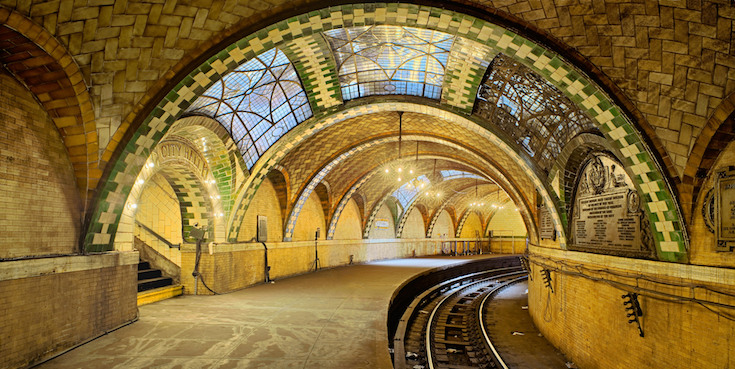
Michael Freeman/Alamy Stock Photo
The test of time is more usually endurance. But in testing times what’s lost can loom larger still. The ability to travel freely was among the casualties of this epidemic. Yet a scan of certain cityscapes brings us face to face with desolate buildings that could admonish our forgetfulness about how the ability to journey without falling sick was hard won and of the brutality of treatments meted out to those once deemed ill or undesirable.
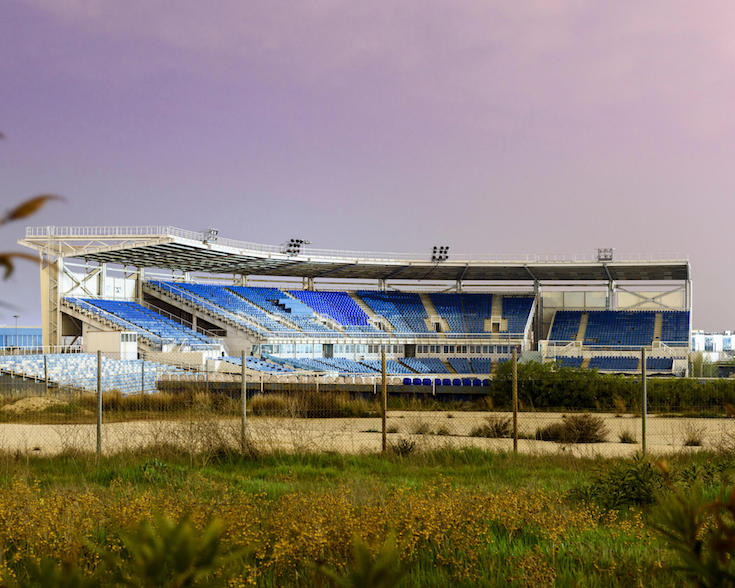
Alastair Philip Wiper-VIEW/Alamy Stock Photo
Here then is a compendium of the misplaced and the neglected. Ruins, ancient and modern, beautiful, ugly and appalling, and in varying states of appreciation and restoration, or lack of thereof. The ungotten and the forgotten no one remembers. Abandonment is not a cause to give up all hope but the opposite, if anything, encouraging us all to think longer and harder about the world to come and what might be worth salvaging from the wreckage.
Atlas of Forgotten Places by Travis Elborough is available for £20.00