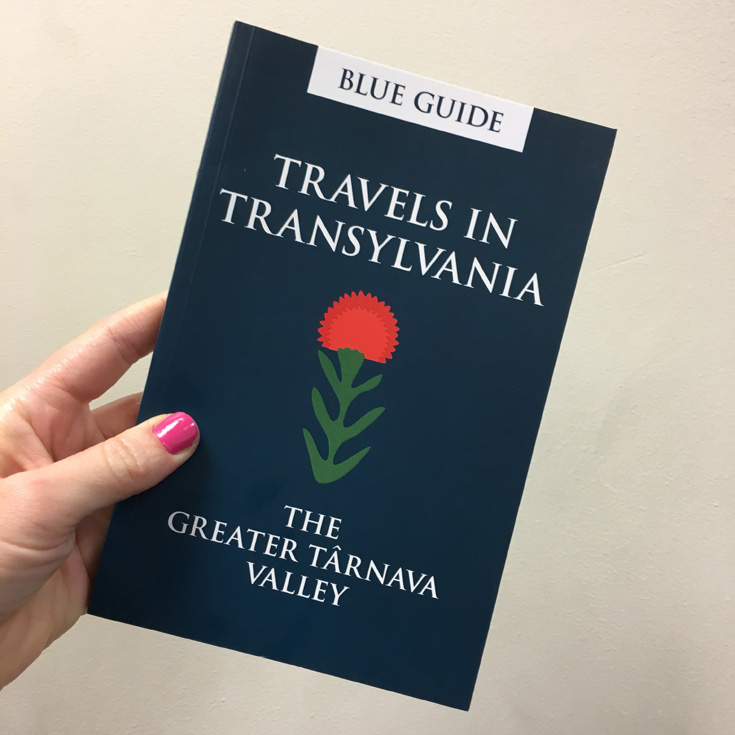
We asked Lucy Abel Smith, the founder and organiser of the Transylvanian Book Festival and the author of Blue Guide Travels in Transylvania: The Greater Târnava Valley to tell us a bit about this region.
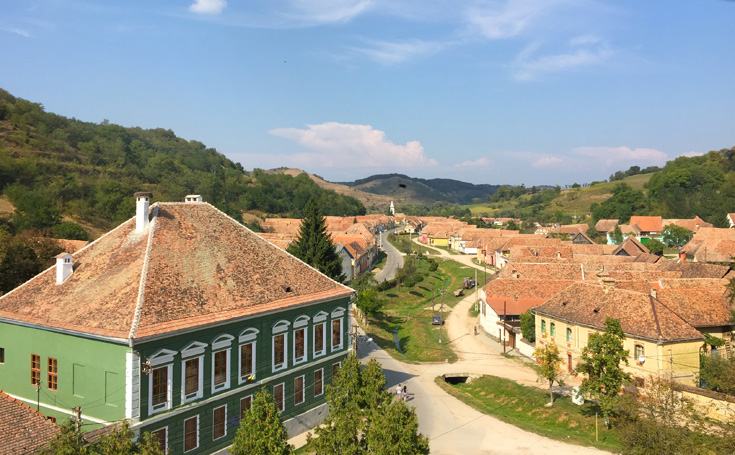
It sounds corny to talk about stepping back in time: but in my Transylvanian village (Richiș), in the heart of old Saxon Transylvania, that is exactly what you do. The village lines a stream and the main road, only some of which is tarmacked. Gentle hills of sandstone rise on either side. Sheep roam the pastures, held communally in the village since the Saxons were invited 850 years ago by the kings of Hungary to farm and defend Transylvania, on this edge of Europe, perilously close to the frontier with the Ottoman Empire. Lack of chemicals on the land has ensured a wealth of wild flowers in the meadows, an abundance and variety lost in many parts of Europe.
I doubt much has changed physically in the village since the early 19th century (indeed there is a late medieval well in my courtyard). The Saxon houses are built of the same materials as the valley floor: clay and lime. The courtyards, as mine, are surrounded by a summer kitchen, barn, animal byres and the wall of the neighbouring, identical house. The Saxons themselves, though, have all gone. Efficient farming within their tightly-knit communities was the key to their success. Under Communism, land was collectivised and the resultant huge farms were inefficient and unloved. The Saxons were deprived of the symbol of their historic independence. After a rugged 850 years they left for a Germany from whence they did not come. With them went their language and their traditional Sunday costumes.
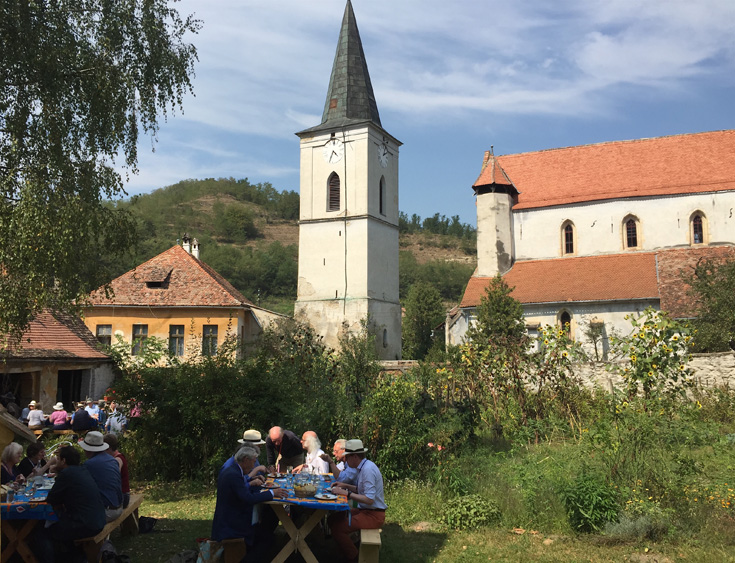
Up until the last war Richiș was famous for its wine. It was the wealth generator of the valley, as is reflected in the large village houses. This Blue Guide traces the course of the valley and its river, the Târnava Mare, from its source in the mountain foothills to its confluence with the Târnava Mică. The river flows through demography as much as geography. In the east, where the river springs, the language you hear is Hungarian. This is the home of the Székely people. From there it moves into the old Saxon territory (until the end of the last century, German would have been on everyone’s lips) and on through Mediaș with its old synagogue, Brateiu with its large Roma community, and Blaj, the cradle of the Romanian nation. The guide is as much about people as places, so in it, I interview Herr Schaas, one of the few Saxons left in Richiș (a village which he knows by its German name of Reichesdorf).
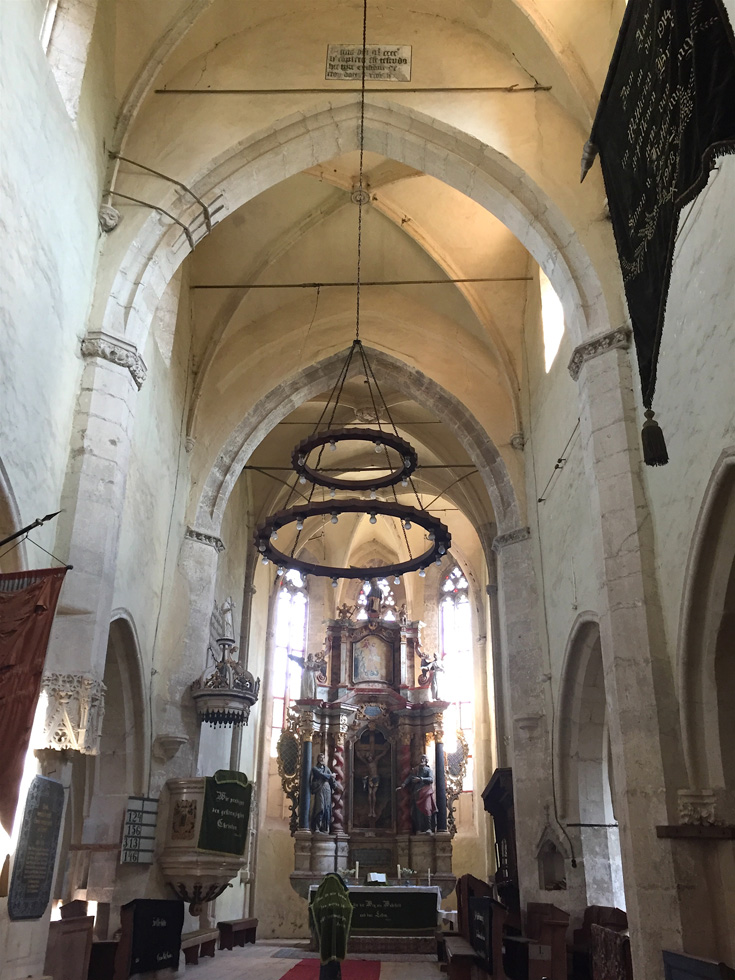
The Saxons were a church-based society and the great fortified Lutheran churches of this area are the glory of the villages, even though the congregations are no more. Each church was constructed with a view to defence. Each is a small citadel within a walled enclosure, into which the people could retreat in times of danger. The churches themselves have tall towers that double as lookout posts and an upper storey equipped with slits for firing missiles. The walls are studded with towers, one of which being the ‘bacon tower’, in which food was stored.
The Sunday bells no longer ring out to call the faithful, but the bell-tower of Richiș can be climbed, and the views over the village are glorious. The village is thriving today in other ways. There are three shops and a Village Hall (open for village celebrations and used for the Transylvanian Book Festival). B&Bs abound (the former Priest House is run by the welcoming Tony Timmerman, originally from Holland, and the house near the church, beautifully restored by the Mihai Eminescu Trust, is open for business). And the sheep, cattle and horses still find their way home at the end of the day, just as they always have. There is perhaps no other place in Europe today where you can experience life quite like this.