 International Women’s Day was first practiced in the early 1900s and is still widely observed today. According to InternationalWomensDay.com, “Women’s equality has made positive gains but the world is still unequal. International Women’s Day celebrates the social, political and economic achievements of women while focusing world attention on areas requiring further action.” There are groups like Womankind Worldwide who strive to make the lives of women better all over the world. They work particularly with women in Africa, Asia and Latin America.
This year any supporters interested in helping to make a difference on International Women’s Day (March 8) are encouraged to hold a Womankind Worldwide Book Group. All you have to do is pick a date in the fortnight around International Women’s Day, invite your friends and ask them to make a donation to Womankind Worldwide. All donations received will go to support Womankind Worldwide’s work with helping women to live free from violence, have a say in the decisions that affect them and have control over their own livelihoods. They have compiled a list of books that show what it is like to be a woman elsewhere in the world. Every book group host will have the chance of winning a selection of the books. Send them your details and you will be given all you need to have a successful event. Reading a book about women’s lives, getting together with friends and raising money for women’s rights is the perfect way to celebrate.
The books suggested by Womankind Worldwide are as follows:
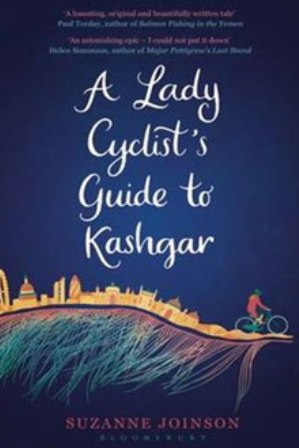
“A Lady Cyclist’s Guide to Kashgar” by Suzanne Joinson Suzanne Joinson’s haunting, debut novel A Lady Cyclist’s Guide to Kashgar is a wonderful story of three main characters: 1920s middle class English Evangeline, who went to live in Kashgar, present-day Tayeb who has fled Yemenand arrives in London; and Frieda who lives in London. As unlikely as it may sound their stories are entwined. The mystery behind the characters is unravelled by a woman’s abandoned flat and its content. This is the premise for what is a tale about our past and the effect it has on our sense of belonging. A Lady Cyclist’s Guide to Kashgar is a touching story full of twists that will captivate you from the very first pages.
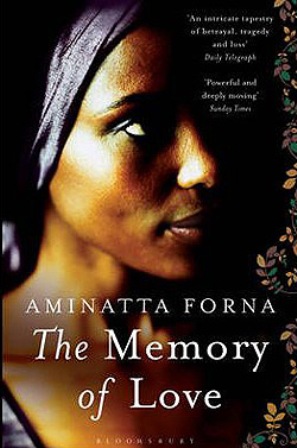
“The Memory of Love” by Aminatta Forna Freetown, Sierra Leone: a devastating civil war has left an entire populace with terrible secrets to keep. In the capital’s hospital Kai, a gifted young surgeon is plagued by demons that are beginning to threaten his livelihood. Elsewhere in the hospital lies Elias Cole, a university professor who recalls the love that obsessed him and drove him to acts that are far from heroic. As past and present intersect, Kai and Elias are drawn unwittingly closer by Adrian, a British psychiatrist with good intentions, and into the path of one woman at the centre of their stories. The Memory of Love is a heartbreaking story of ordinary people in extraordinary circumstances.
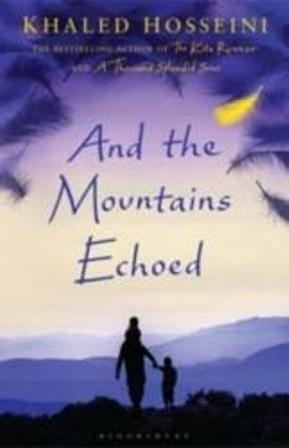
“And the Mountains Echoed” by Khaled Hosseini So, then. You want a story and I will tell you one…Afghanistan, 1952. Abdullah and his sister Pari live with their father and stepmother in the small village of Shadbagh. Their father, Saboor, is constantly in search of work and they struggle together through poverty and brutal winters. To Abdullah, Pari – as beautiful and sweet-natured as the fairy for which she was named – is everything. More like a parent than a brother, Abdullah will do anything for her, even trading his only pair of shoes for a feather for her treasured collection. Each night they sleep together in their cot, their heads touching, their limbs tangled. One day the siblings journey across the desert to Kabul with their father. Pari and Abdullah have no sense of the fate that awaits them there, for the event which unfolds will tear their lives apart; sometimes a finger must be cut to save the hand. Crossing generations and continents, moving from Kabul, to Paris, to San Francisco, to the Greek island of Tinos, with profound wisdom, depth, insight and compassion, Khaled Hosseini writes about the bonds that define us and shape our lives, the ways in which we help our loved ones in need, how the choices we make resonate through history and how we are often surprised by the people closest to us.
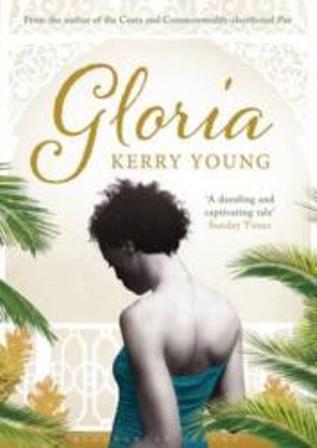
“Gloria” by Kerry Young Jamaica, 1938. Gloria Campbell is sixteen years old when a single violent act changes her life forever. She and her younger sister flee their hometown to forge a new life in Kingston. As all around them the city convulses with political change, Gloria’s desperation and striking beauty lead her to Sybil and Beryl, and a house of ill-repute where she meets Yang Pao, a Kingston racketeer whose destiny becomes irresistibly bound with her own. Sybil kindles in Gloria a fire of social justice which will propel her to Cuba and a personal and political awakening that she must reconcile with the realities of her life, her love of Jamaica and a past that is never far behind her. Set against the turbulent backdrop of a country on the cusp of a new era, Gloria is an enthralling and illuminating story of love and redemption.
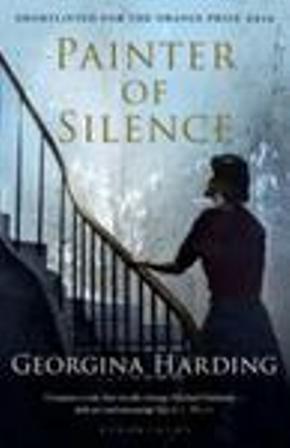
“Painter of Silence” by Georgina Harding SHORTLISTED FOR THE ORANGE PRIZE FOR FICTION 2012 Iasi, Romania, the early 1950s. A nameless man is found on the steps of a hospital. Deaf and mute, he is unable to communicate until a young nurse called Safta brings paper and pencils with which he can draw. Slowly, painstakingly, memories appear on the page. The memories are Safta’s also. For the man is Augustin, son of the cook at the manor house which was Safta’s family home. Born six months apart, they grew up with a connection that bypassed words. But while Augustin’s world remained the same size Safta’s expanded to embrace languages, society – and a fleeting love, one long, hot summer. But then came war, and in its wake a brutal Stalinist regime, and nothing would remain the same.
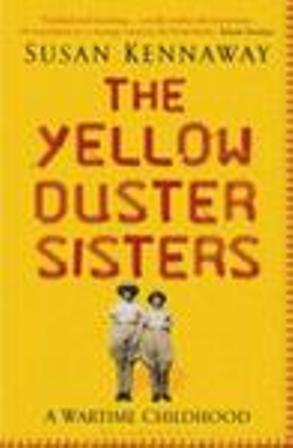
“The Yellow Duster Sisters” by Susan Kennaway 1939. Nine year old Susie and her sister Gyll live in Watford, and all week look forward to their Saturday shopping expedition to Woolworths with their nanny, to buy something nice for Mummy. But as war breaks out in Europe, the girls are evacuated to Africa. Feeling abandoned and alone, the sisters find their new life miserable and get no sympathy from their guardians, who force them to wear patched-up clothes and be in bed by six o’clock. As time passes and letters from home stop arriving, the sisters dream of escape and of returning to idyllic England. Yet when they finally do arrive home, all the changes that await them make for a very different life than the one they had longed for…Intensely funny and charming, Susan Kennaway writes about growing up during the Second World War with rare honesty and insight.
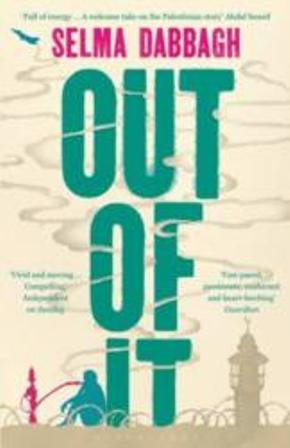
“Out Of It” by Selma Dabbagh Gaza is being bombed. Rashid wakes to discover he’s got a scholarship to London, the escape route he’s been waiting for. Meanwhile, his twin sister, Iman, frustrated by the atrocities and inaction around her, grabs recklessly at an opportunity to make a difference. Sabri, the oldest brother works on a history of Palestine from his wheelchair as their mother pickles vegetables and feuds with their neighbours. Out of It follows Rashid and Iman as they try to forge places for themselves in the midst of occupation, religious fundamentalism and the divisions between Palestinian factions. It tells of family secrets, unlikely love stories and unburied tragedies as it captures the frustrations and energies of the modern Arab World.