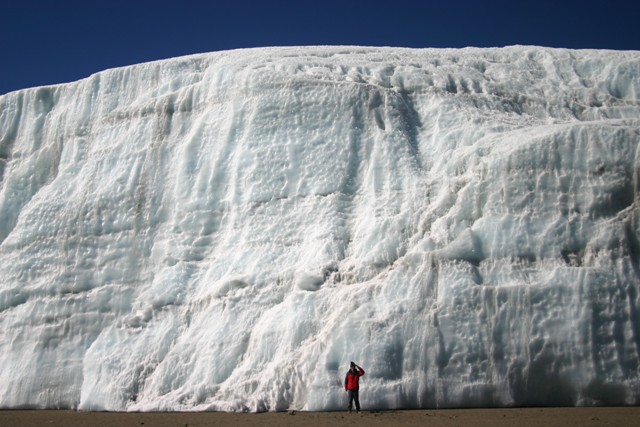
The second winning entry in our Adventures Start at Stanfords competition is by Arthur Cross! Arthur shared this photo with us from his greatest adventure, climbing Kilimanjaro and camping in the crater on Kibo….
Soon after retiring a walking friend asked if I was interested in attempting to walk to the top of Africa. Mount Kilimanjaro is the crown of Tanzania and Africa‘s highest mountain at 19345 feet.
Our party had expanded to six of us. We had discovered the Marangu Hotel on the slopes of Kilimanjaro and had booked our trip directly with them.
Seamus one of the directors of the hotel discussed the various routes for climbing Kilimanjaro. We would start the final ascent later than usual and camp overnight in the crater on Kibo.
Three days into the trek we reached the middle sized cone of Mawenzi. Towering in the distance and across a desert called the saddle was the big, big cone of Kibo. We had seen the white glaciers on its top glinting in the sunshine since the second morning. Poli, poli for six hours across the desert accompanied by a local – a white neck raven and its mate hoping for a free lunch. We camped among the rocks. We were last off the following morning at 4am. The others left about midnight, hoping to achieve the summit at sunrise. The sun greeted us just before six. It was about this point the hard climbing started. At 10am success; we reached the rim of the crater at Gillman’s Point. The ultimate peak was further round was further round the rim of the crater and 300 metres higher. A gentle stroll after that climb, and to our great pleasure the route took us nearly alongside one of the glaciers we had admired from a distance.
UHURU PEAK. The top of Africa. Nearly four miles above sea level. We were there.
After the photos we continued a little further round the rim of crater. In it we could see three tiny dots-our tents. We “skiied” down the fine stones into the crater where afternoon tea awaited us.
We walked across the floor of the crater to the regal and massive glacier that sits on the crater’s floor. We even sunbathed, but way before dark we were in our tents, and fully clothed were in our sleeping bags. Our aluminium drinking bottles filled with hot water were in our sleeping bags with us. Seamus had warned us this would be a very, very cold night. But it did not live up to expectations. It was cold but not excessively cold. When we got out of tents in the morning we discovered to our surprise why. We were covered in snow. In the early hours of the morning the snows of Kilimanjaro had fallen and the clouds that had given the snow had stopped the temperature falling as low as expected. It was still cold and a bit uncomfortable so we left as soon as breakfast was over. We descended in two days through ice cap, alpine desert, moorland and forest, the four distinct zones of Kilimanjaro.